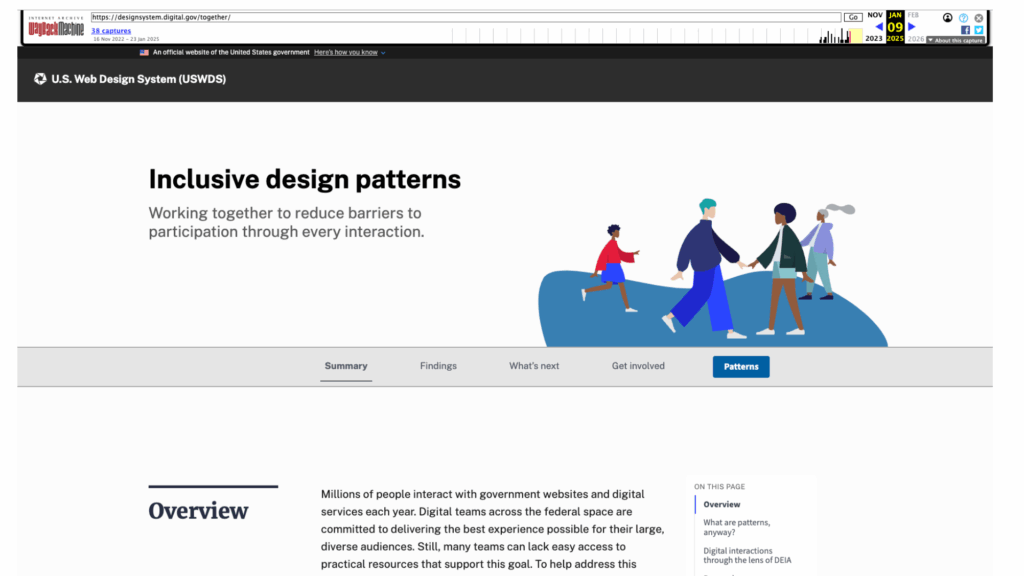
USWDS provides a new library of guidance and examples focused on key digital interactions that foster effective. inclusive, and equitable digital experiences.
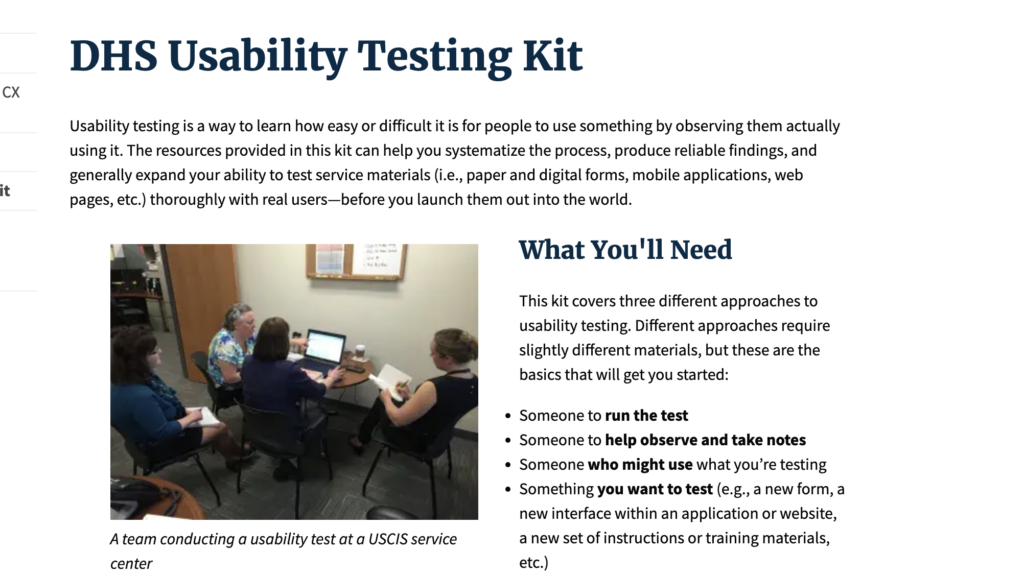
This is a toolkit designed to help Department of Homeland Security teams conduct usability testing for digital services, with templates, guidance, and best practices.
The playbook is a comprehensive guide developed by the Maryland Department of Information Technology to assist state agencies in creating consistent, user-centered, and accessible digital services.
This presentation shares user experience research on the challenges, priorities, and opportunities for improving the journey of Bay Area residents seeking affordable housing.
This blog discusses the 988 Suicide and Crisis Lifeline, a nationwide initiative aimed at providing accessible, immediate support for individuals experiencing mental health crises through the easy-to-remember number 988.
A web-based platform that provides design principles, accessible UI components, and guidance to help teams across the UK government create consistent, user-centered digital services.
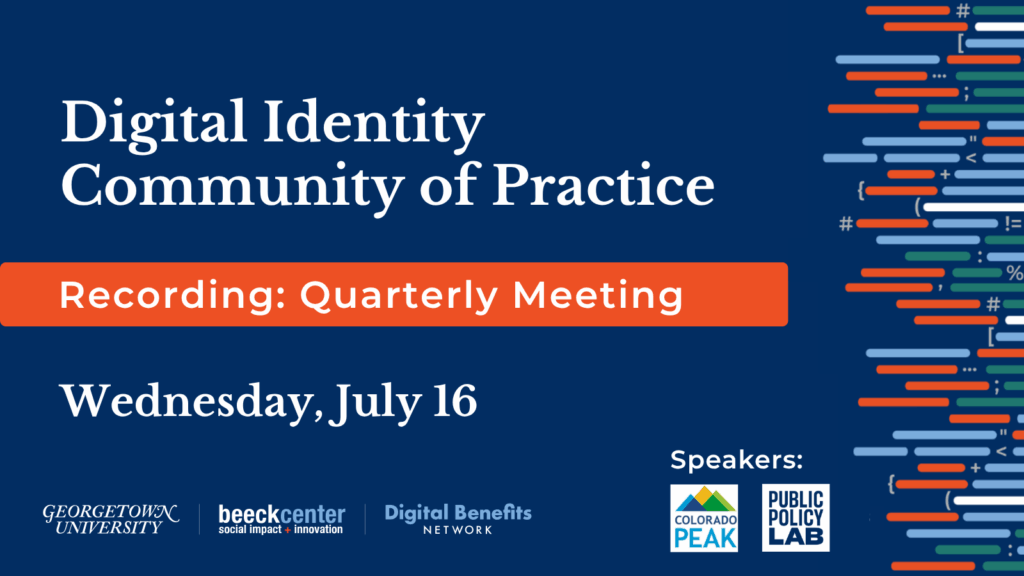
On July 16, members of the Digital Identity Community of practice gathered to learn how peers are gathering beneficiary feedback on their experiences with accounts and proving their identity.
This research paper explores how government design systems function as the “translation layer” of digital public infrastructure, transforming technical systems into accessible, trustworthy citizen experiences.
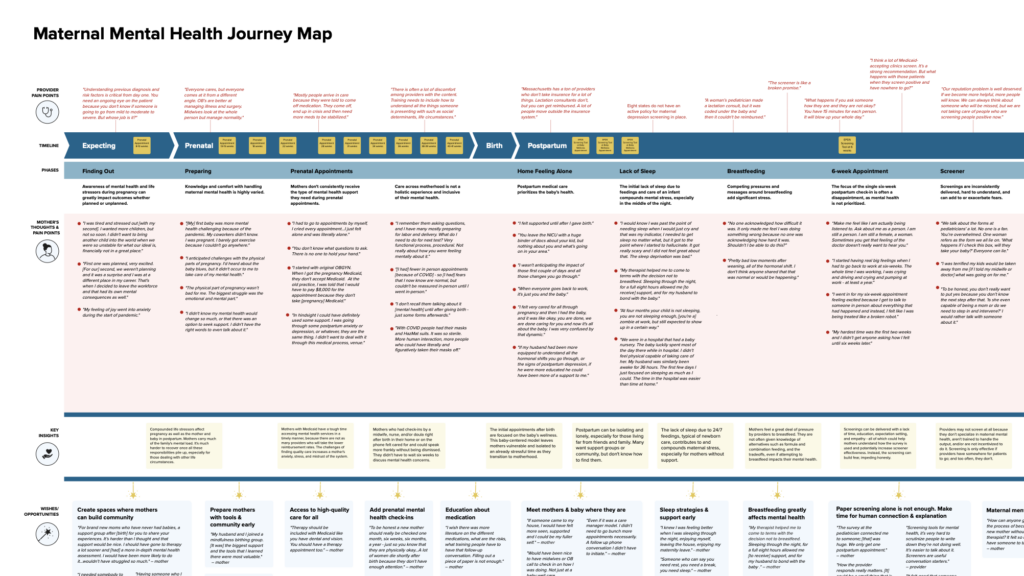
This research visualizes the complex emotional and clinical stages of the maternal mental health experience, from initial pregnancy through postpartum recovery and the return to work.