This course provides Head Start program leaders with strategies and tools to foster inclusive environments for LGBTQIA2S+ individuals within their programs.
U.S. Department of Health and Human Services (HHS)
This brief provides research recommendations to improve programs serving LGBT youth, focusing on homelessness and sexual health education services funded by the U.S. Department of Health and Human Services.
U.S. Department of Health and Human Services (HHS)
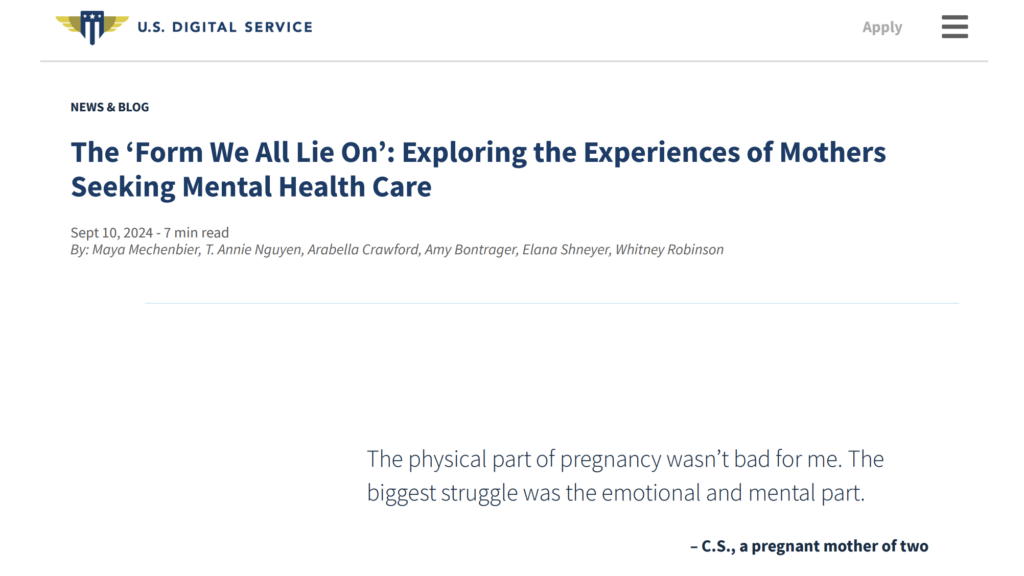
A U.S. Digital Service blog report exploring the lived experiences of mothers seeking mental health care during pregnancy and postpartum, highlighting barriers in screening, diagnosis, and access to treatment.
Nava partnered with California's Employment Development Department (EDD) to rapidly develop two cloud-based digital services, enhancing unemployment benefit access during the COVID-19 pandemic.
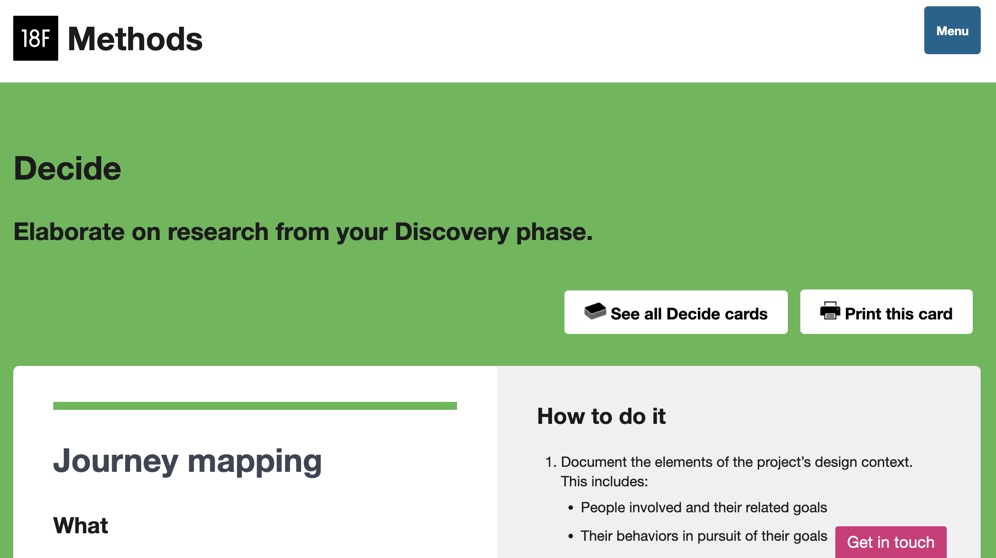
The Decide Methods help you derive insights from the information gathered during the Discovery phase. You’ll validate initial assumptions, develop a deeper understanding of workflows and processes, and develop design hypotheses.
This charter defines the goals, scope and organization of the “Integrated Service Delivery (ISD) Product Office” charged with planning, implementing, governing, and managing all business transformation, change, and systems modernization efforts related to integrated service delivery, focused initially on integrated eligibility and enrollment.