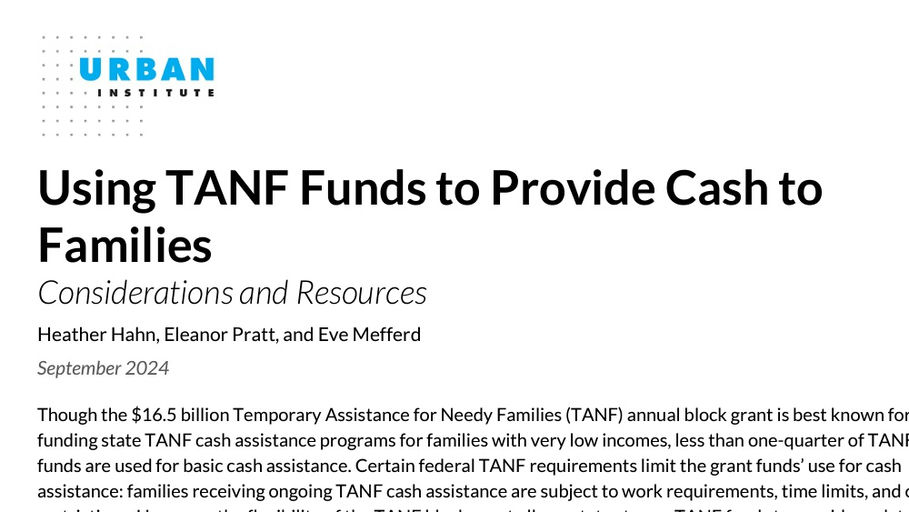
This guide outlines how states can use TANF funds to provide direct cash assistance to families, particularly through flexible mechanisms like nonrecurrent short-term benefits (NRSTs).
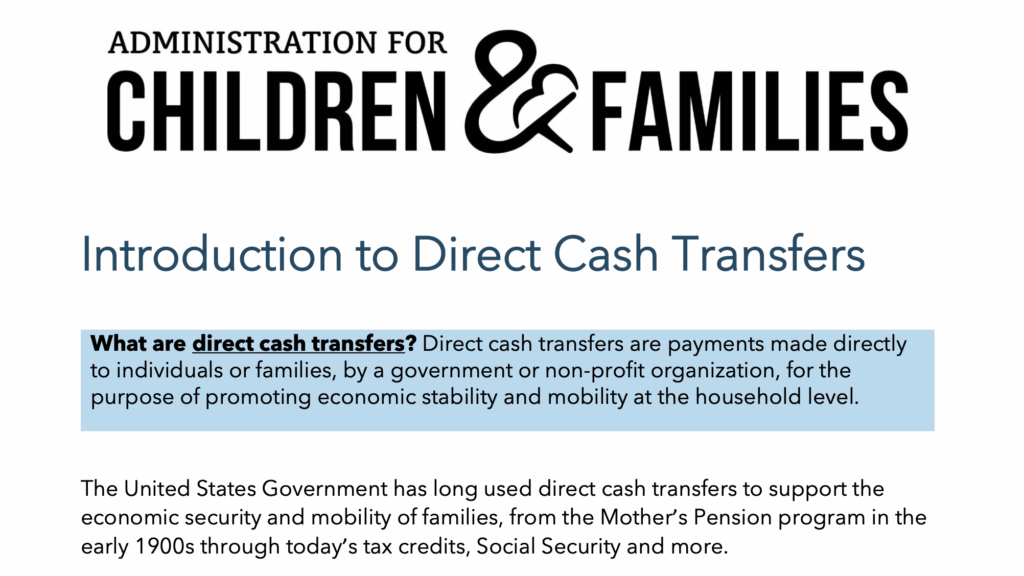
This overview introduces direct cash transfers (DCTs) in the United States, outlining their history, major programs, and findings from contemporary guaranteed income demonstrations that show how cash supports improve family stability, health, and economic mobility
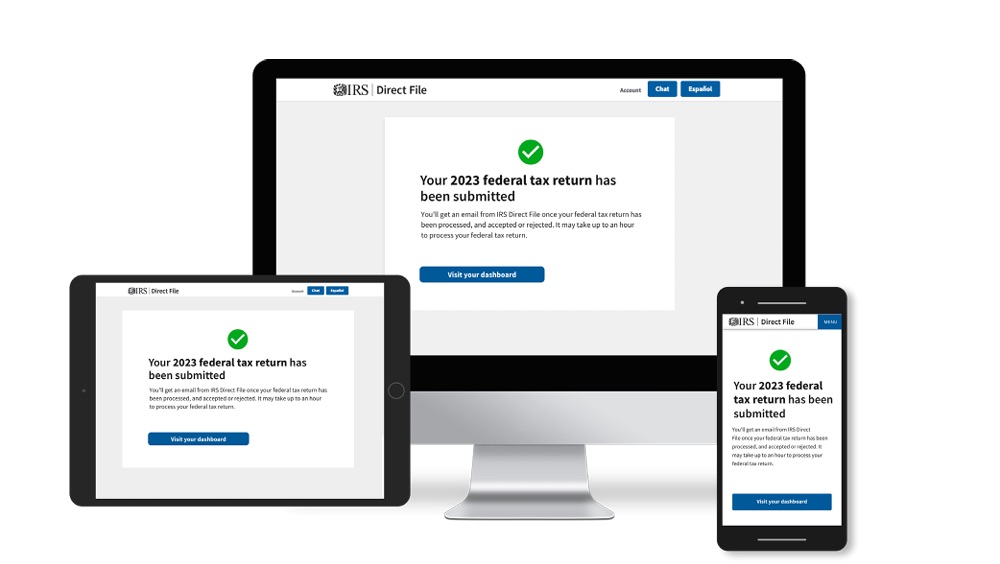
The IRS Direct File Pilot Program After Action Report evaluates the 2024 pilot of a free, government-run tax filing system, assessing taxpayer participation, user experience, and potential for future expansion.
A New America report examines the Volunteer Income Tax Assistance (VITA) program, highlighting its role in aiding low-income tax filers and offering recommendations to enhance public benefit access through improved tax filing assistance.
Disparities in Economic Impact Payment (EIP) receipt during the COVID-19 pandemic disproportionately affected low-income households, communities of color, and individuals without tax filing histories.
Delve into our exploration of the executive orders, legislation, and administrative rules and guidance that shape government digital transformation across states and territories with our database and visualization tools.
The Temporary Assistance for Needy Families (TANF) Data Collaborative Pilot Initiative is a component of the TANF Data Innovation project. The 30-month pilot offered technical assistance and training to support cross-disciplinary teams of staff at eight state and county TANF programs in the routine use of TANF and other administrative data to inform policy and practice.
This paper concludes that the substantial COVID-19 unemployment insurance expansion had limited disincentive effects on job searches, particularly among lower-income individuals, despite high wage replacement rates.
There were over 25 million Medicaid disenrollments in 2023, but national enrollment remained significantly above pre-pandemic levels at over 56 million, with notable state-level variations and near-recovery of child enrollment.
This report outlines state Medicaid program priorities, including expanding access to services, addressing health disparities, and implementing cost-containment measures amid post-pandemic uncertainties.
This report celebrates 50 years of improving maternal and child health in the U.S. through WIC and offers advancements, challenges, and solutions for the future.