Sheev Davé, Product Manager at Notify.gov (GSA), provides an overview of what makes an effective multilingual translation through the principles of designing tools that have the ability to have conversations, meeting communities where they are, use of plain language and prioritize tricky topics, key life events and using trusted delivery sources.
The study investigates how state agencies administering SNAP comply with Title VI of the Civil Rights Act by providing language access for individuals with limited English proficiency (LEP).
This brief synthesizes the manner in which the political and social service environments affect the intergenerational stability of non-citizen families, offering insights into programmatic supports.
American Public Human Services Association (APHSA)
This blog explains how to provide culturally and linguistically appropriate services to individuals who have experienced trafficking, emphasizing the importance of cultural competence and the CLAS Standards.
U.S. Department of Health and Human Services (HHS)
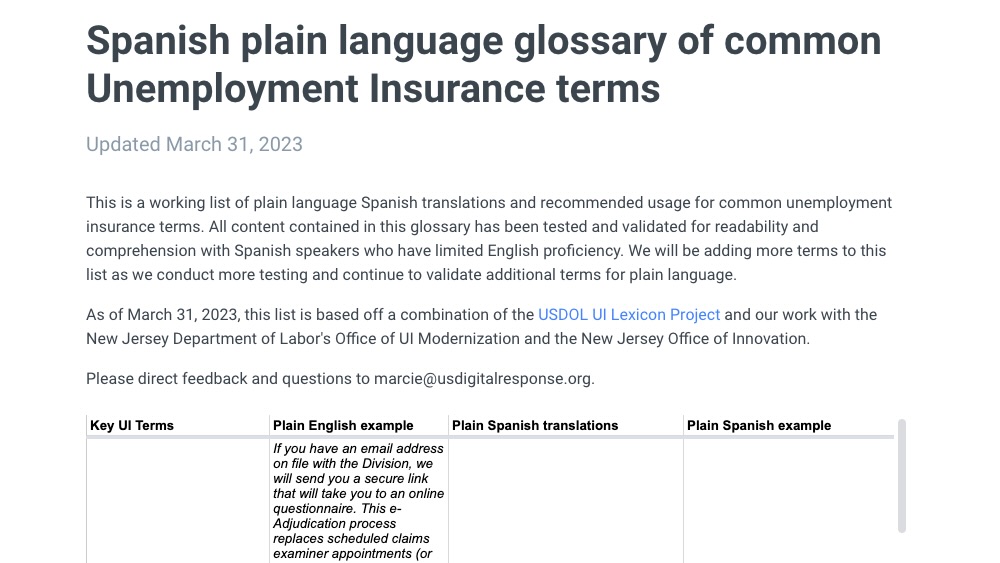
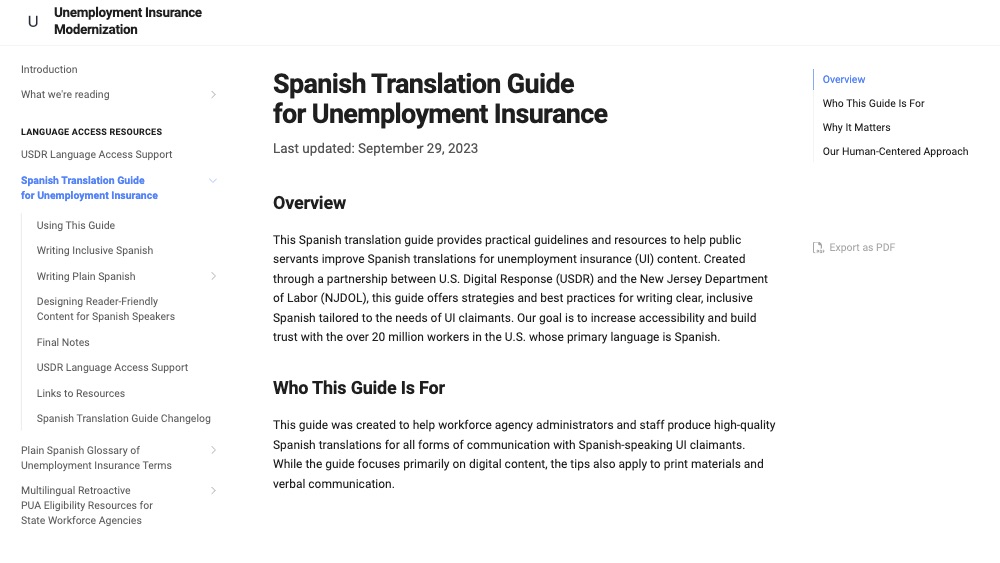
This is a working list of plain language Spanish translations and recommended usage for common unemployment insurance terms. All content contained in this glossary has been tested and validated for readability and comprehension with Spanish speakers who have limited English proficiency.
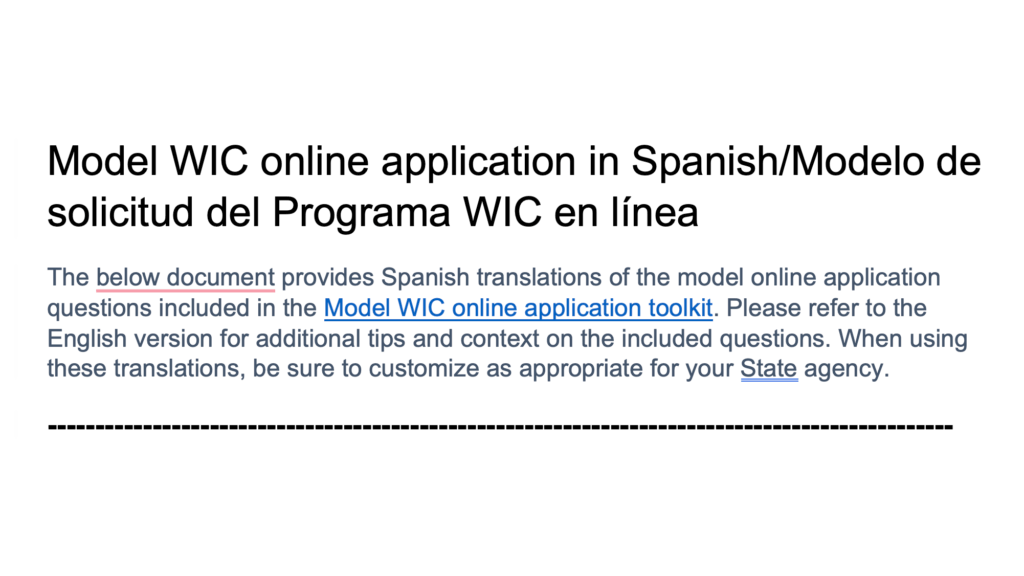
This document is the Spanish-language version of the Model WIC Online Application. It provides a full set of translated application questions and instructions for applying to the Special Supplemental Nutrition Program for Women, Infants, and Children (WIC).
The U.S. Digital Response collaborated with a state workforce agency to develop a multilingual, user-friendly system for retroactive Pandemic Unemployment Assistance (PUA) applications, enhancing claimant comprehension and reducing administrative strain.
This publication shares ten ways states can improve start-to-finish customer experience for unemployment insurance claimants. These approaches can increase overall equitable access and system integrity for UI administration.