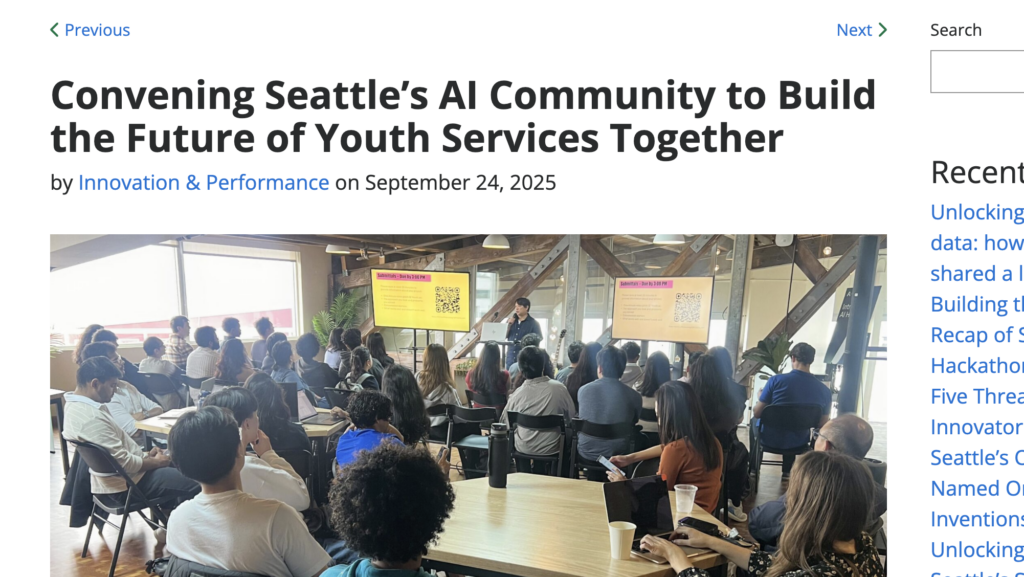
A recap of a community innovation hackathon in Seattle where technologists and students used AI to prototype solutions that help youth discover and access local programs and services.
The AI Insights publication series from the UK Government’s Government Digital Service (GDS) provides technical guidance to help public sector organisations understand, implement, and manage artificial intelligence systems safely and effectively.
An academic research paper introducing SHADES, a multilingual benchmark designed to evaluate how large language models (LLMs) generate and reinforce stereotypes across different languages and cultural contexts.
This policy brief explores how federal privacy laws like the Privacy Act of 1974 limit demographic data collection, undermining government efforts to conduct equity assessments and address algorithmic bias.
NIST has created a voluntary AI risk management framework, in partnership with public and private sectors, to promote trustworthy AI development and usage.
National Institute of Standards and Technology (NIST)
This report explores key questions that a focus on disability raises for the project of understanding the social implications of AI, and for ensuring that AI technologies don’t reproduce and extend histories of marginalization.
This UN report warns against the risks of digital welfare systems, emphasizing their potential to undermine human rights through increased surveillance, automation, and privatization of public services.
This paper argues that a human rights framework could help orient the research on artificial intelligence away from machines and the risks of their biases, and towards humans and the risks to their rights, helping to center the conversation around who is harmed, what harms they face, and how those harms may be mitigated.
This report examines how governments use AI systems to allocate public resources and provides recommendations to ensure these tools promote equity, transparency, and fairness.
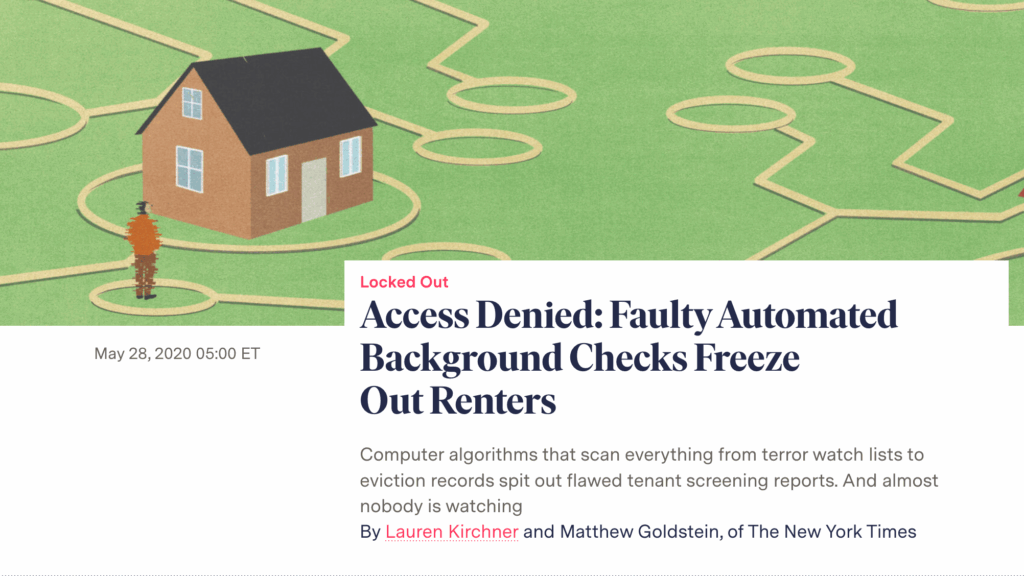
This reporting explores how algorithms used to screen prospective tenants, including those waiting for public housing, can block renters from housing based on faulty information.