This report provides guidance on building equitable and user-friendly affordable housing portals, highlighting best practices from platforms like Bloom Housing and Housing Navigator MA.
This article explores how integrating behavioral science into public administration can improve government effectiveness, equity, and trust by redesigning public services with human behavior in mind.
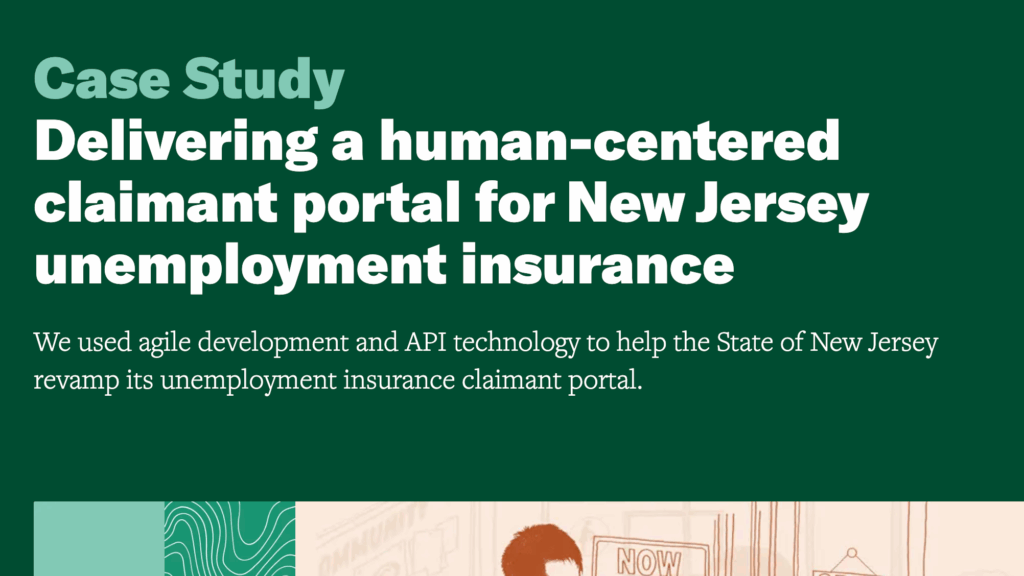
A case study documenting how a human-centered claimant portal was developed for the New Jersey Department of Labor (NJDOL) to modernize unemployment insurance access using agile development and API technology.
Code for America partnered with the CBPP, Civilla, and Nava to launch the Integrated Benefits Initiative, testing and piloting human-centered approaches to improve outcomes and learn what an optimal safety net could look like. This article describes key takeaways from short-term pilots implemented as part of this project.
Teams crafting policy inside and outside government can use the assessment to center their policy-making activities around those most impacted by their proposed programs and policy ideas.
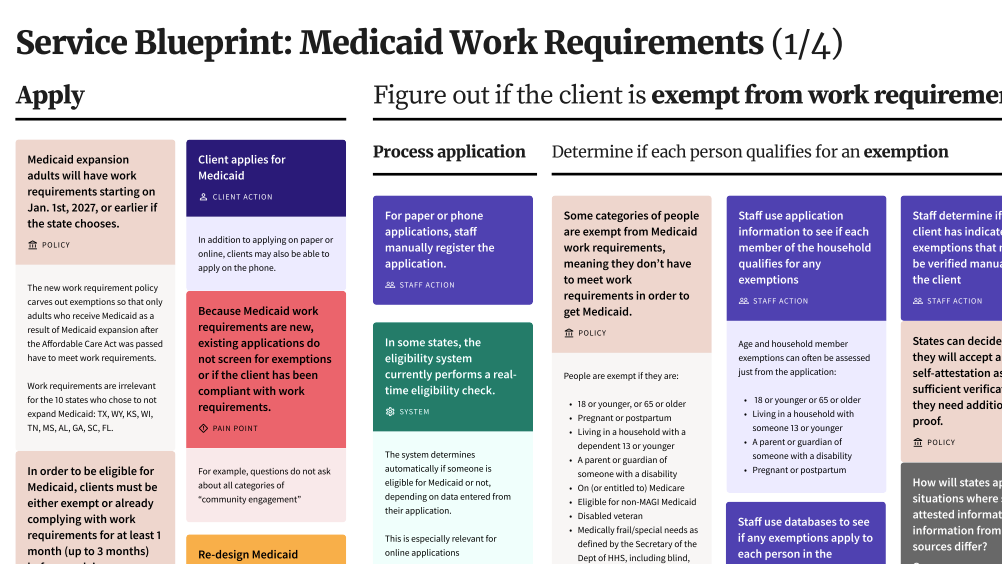
This 8.5x11 service blueprint visually maps how Medicaid work requirements will function once implemented in 2027, detailing each policy step, system interaction, and client experience to help states identify administrative challenges and opportunities for human-centered redesign.
A practical, research-based handbook from The Lab @ DC that teaches public servants how to redesign confusing government forms through user-centered, evidence-based design methods.