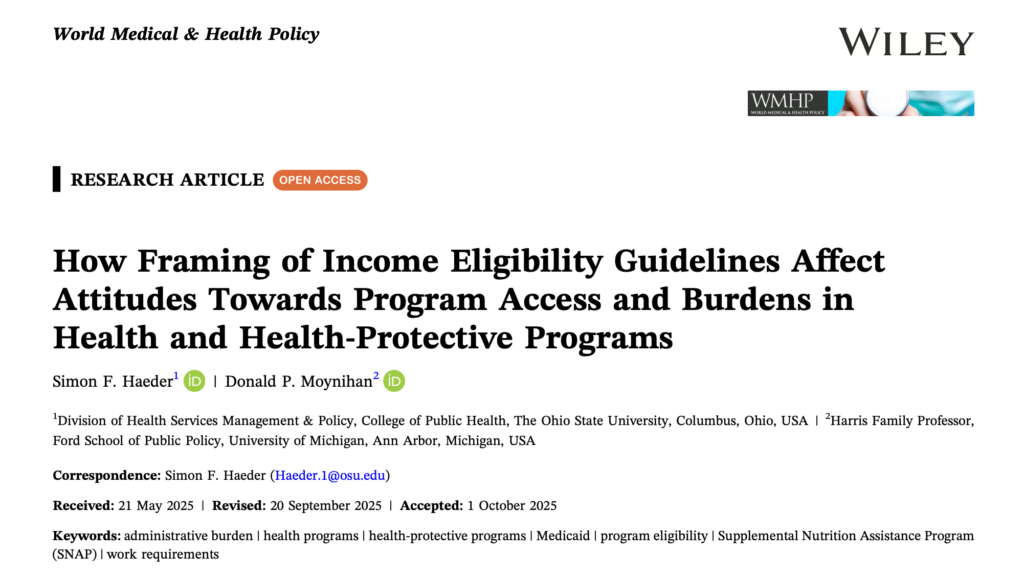
This research article explores how framing income eligibility guidelines in either dollar amounts or as a percentage of the Federal Poverty Line (FPL) affects public attitudes toward program access and administrative burdens in Medicaid and SNAP.
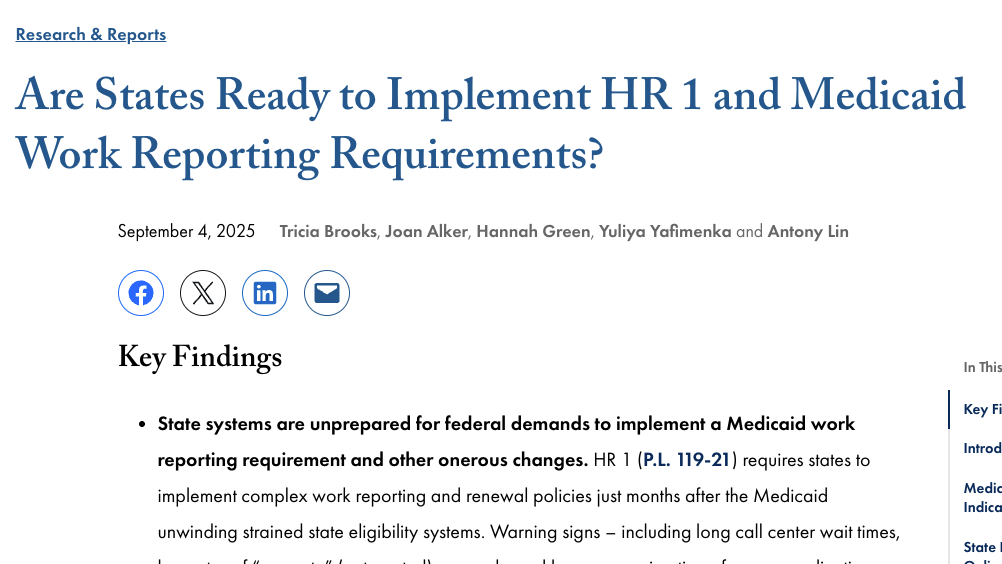
This report poses the question of whether states are prepared to meet the new Medicaid work reporting and renewal mandates introduced by HR 1, given ongoing strain from the post-pandemic “unwinding.”
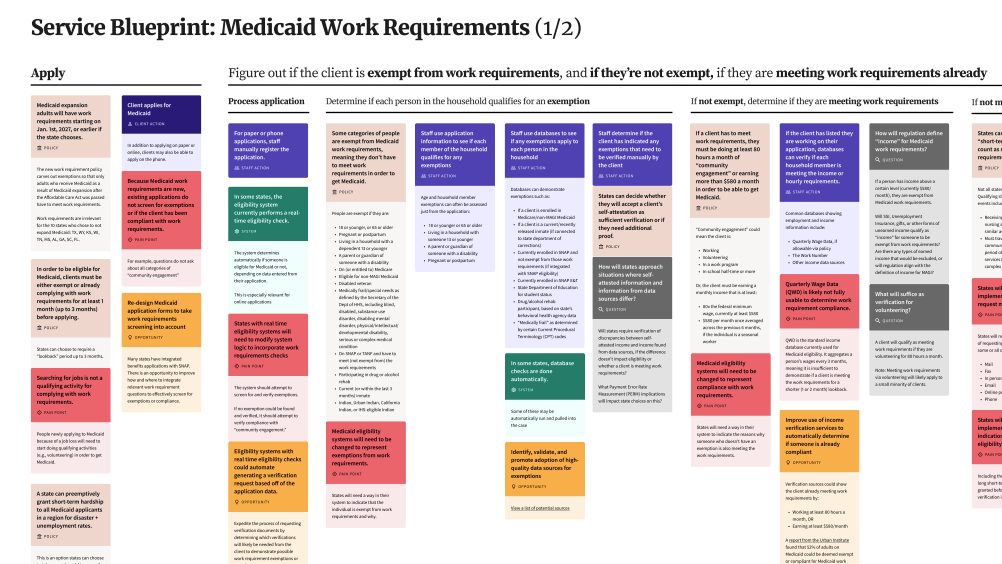
This 11x17 service blueprint visualizes every step, system, and policy decision involved in implementing Medicaid work requirements under H.R. 1—from application to renewal—identifying pain points, questions, and opportunities for states to streamline and humanize the process
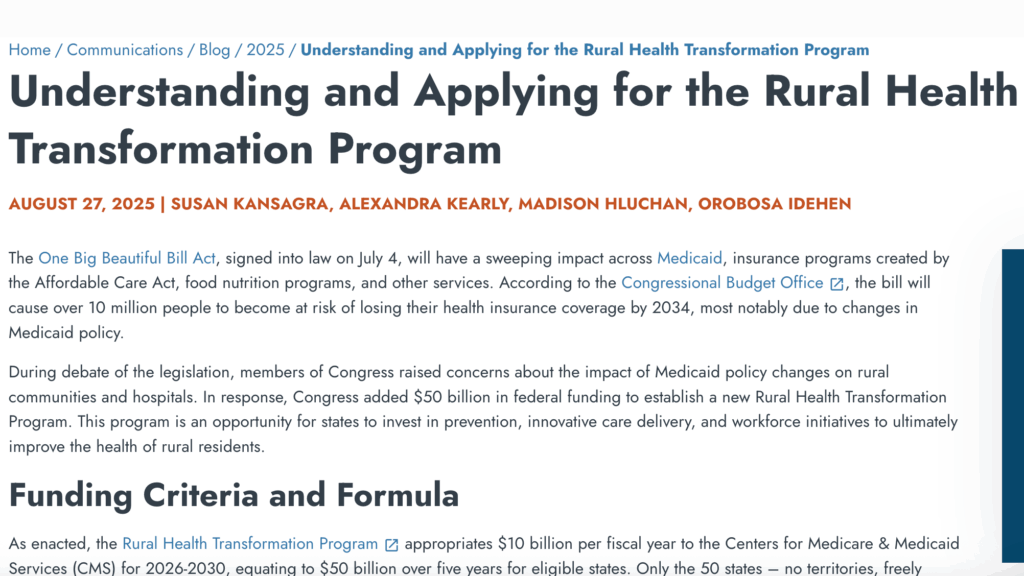
This blog explains how the Rural Health Transformation Program—established under H.R. 1—will channel $50 billion over five years to states to support rural health care, and outlines how states can apply, qualify, and deploy funds strategically.
Association of State and Territorial Health Offices (ASTHO)
This report provides supplemental estimates on how Public Law 119-21—tied to H.R. 1—will affect SNAP participation, benefits, and state administrative costs over 2025–2034.
A report summarizing effective state practices, promising initiatives, and federal resources to improve payment accuracy in the Supplemental Nutrition Assistance Program (SNAP).
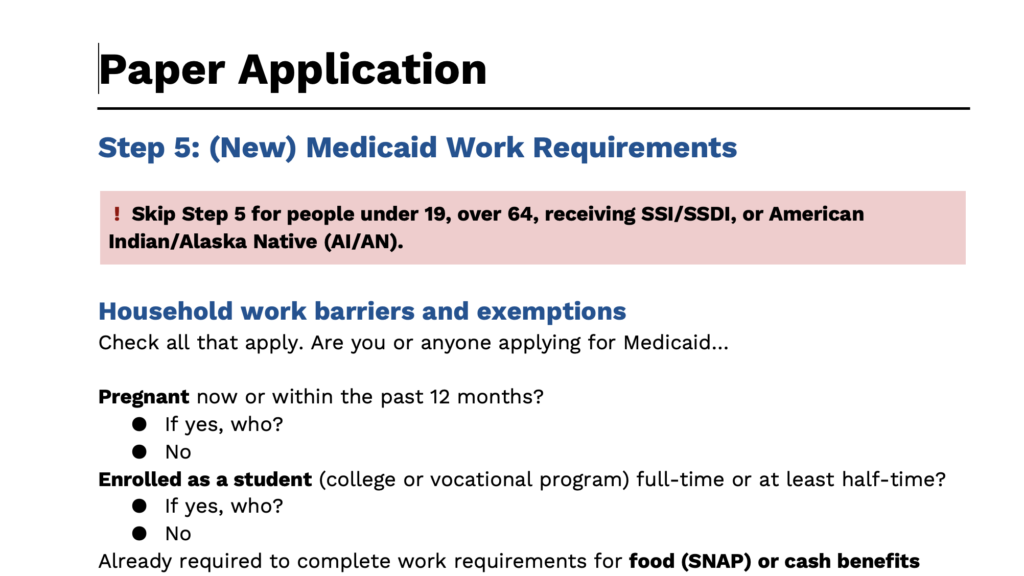
This folder contains Medicaid work requirement implementation toolkit, including policy guidance, application templates, question libraries, and a digital prototype designed to help states integrate work requirement questions into Medicaid applications.
This report summarizes insights from interviews with seven states on how they are adapting integrated eligibility and enrollment (IEE) systems in response to sweeping federal changes to SNAP and Medicaid under H.R. 1.
A practical guide for advocates that explains how automated benefit notices are generated, where common notice failures originate, and how to push for effective fixes.
The article analyzes the impacts of Arkansas's Medicaid work requirements, finding that while coverage losses were reversed after the policy was halted, it did not improve employment and led to negative consequences such as increased medical debt and delayed care.