This brief offers a new, anti-racist vision for transforming the Child Care and Development Fund (CCDF) into a program that actively pushes back against structural racism and advances racial equity and economic prosperity for all families.
This article emphasizes the need for local leaders to prioritize disability equity in advancing upward mobility, addressing systemic barriers that hinder disabled individuals' escape from poverty.
This course provides Head Start program leaders with strategies and tools to foster inclusive environments for LGBTQIA2S+ individuals within their programs.
U.S. Department of Health and Human Services (HHS)
This resource helps individuals with aligning their work with the needs of the communities they wish to serve, while reducing the likelihood of harms and risks those communities may face due to the development and deployment of AI technologies.
This brief highlights key takeaways from APHSA’s work on young families, starting with an overview of the young families work and its early years, followed by key takeaways and highlights from its final year, ending with opportunities for future work in the young families space.
American Public Human Services Association (APHSA)
Report by the Aspen Institute discussing Benefits21, a multi-stakeholder, multi-faceted initiative to integrate and modernize benefits systems. This paper provides an overview of Benefits21, along with a discussion of the shortcomings of current public and private benefit systems.
Initially created to inform federal staff at the U.S. Department of Health and Human Services, this tool describes how to conduct intensive equity assessments of existing programs, policies, and processes. It may be useful for state and local governments, tribal governments, and other private or non-profit organizations focused on programs and policies relating to health and human services.
Office of the Assistant Secretary for Planning and Evaluation (ASPE)
Medicaid and SNAP have reduced racial and ethnic disparities in healthcare access and food security, but some administrative and eligibility policies continue to create inequitable barriers.
Initially created to inform federal staff at the U.S. Department of Health and Human Services, this tip sheet provides key considerations for how organizations can identify potential diverse external partners, conduct outreach to them, and build and sustain productive relationships with them.
Office of the Assistant Secretary for Planning and Evaluation (ASPE)
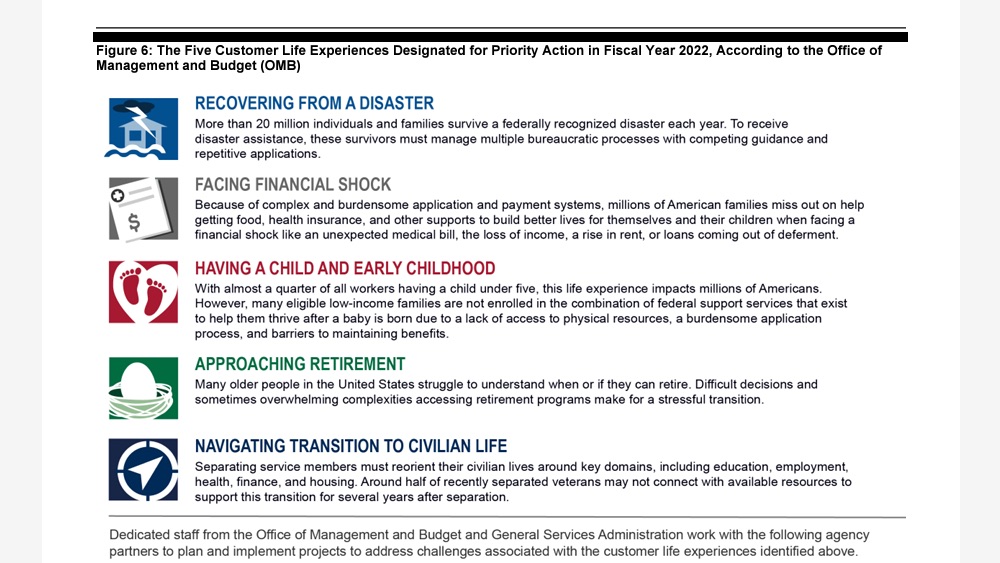
The 2021 President’s Management Agenda identified federal customer experience as a priority area for improvement. GAO was asked to review OMB and selected federal agencies’ efforts to improve federal customer experience.