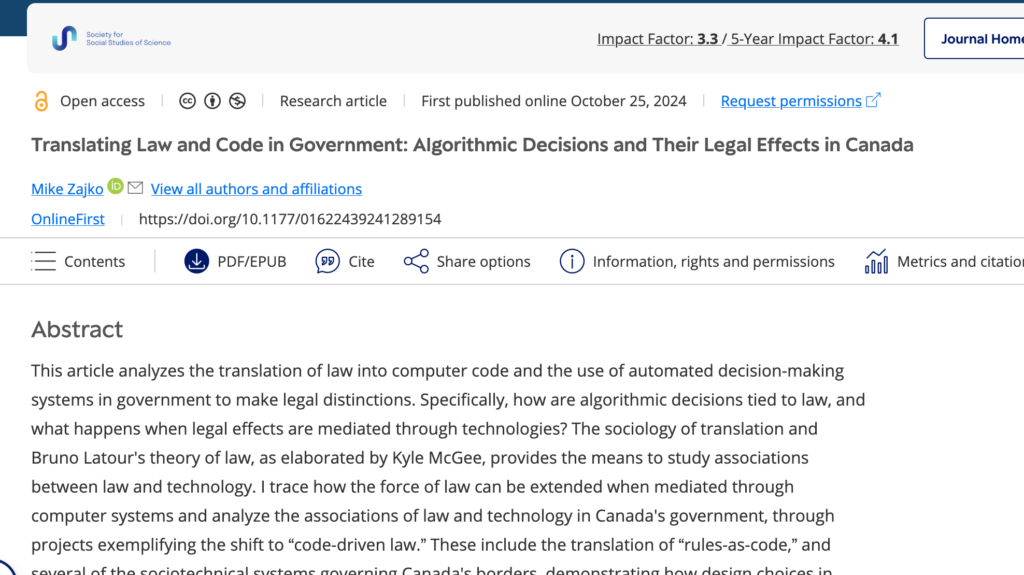
This article analyzes the translation of law into computer code and the use of automated decision-making systems in government to make legal distinctions. Specifically, how are algorithmic decisions tied to law, and what happens when legal effects are mediated through technologies?
This publication explains current state integrated eligibility and enrollment (IEE) system implementation processes, approaches, and opportunities for future processes and technologies. It is a resource for state officials, advocates, funders, and tech partners working to implement these systems.
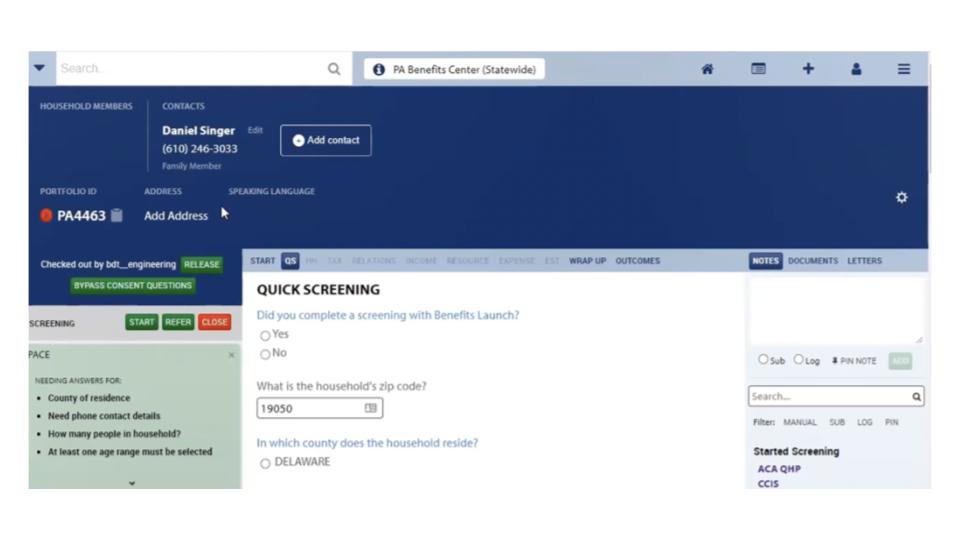
Benefits Data Trust (BDT) is a nonprofit that connects people to public benefits through a streamlined, phone-based application system called Benefits Launch, which reduces redundant questions and speeds up the process for multiple programs. BDT's approach, supported by a custom-built rules engine, has facilitated over 800,000 benefit enrollments, helping secure over $9 billion for eligible households across seven states.
The team developed an application to simplify Medicaid and CHIP applications through LLM APIs while addressing limitations such as hallucinations and outdated information by implementing a selective input process for clean and current data.
This article explores how legal documents can be treated like software programs, using methods like software testing and mutation analysis to enhance AI-driven statutory analysis, aiding legal decision-making and error detection.
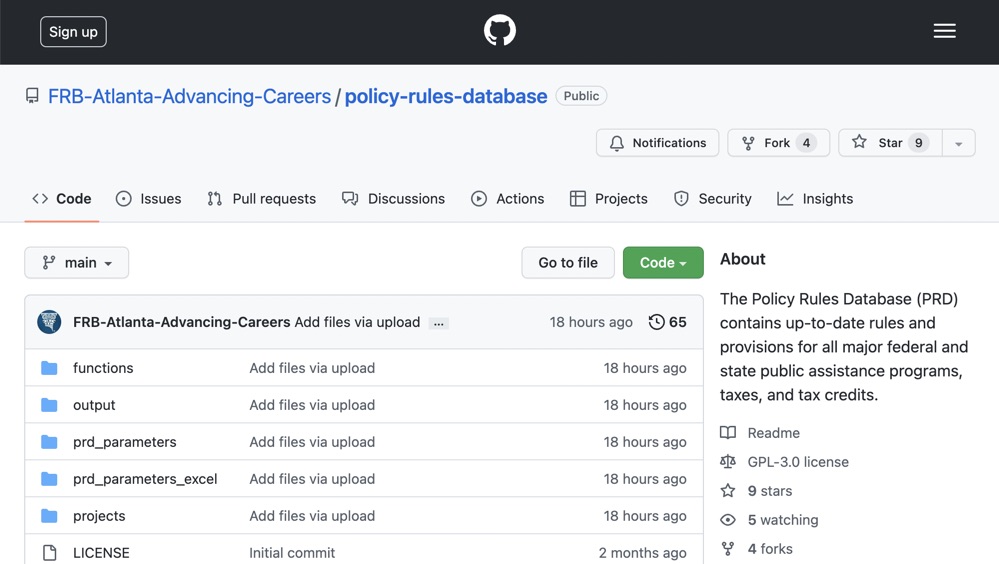
Github repository for Policy Rules Database, which encodes up-to-date rules and provisions for all major federal and state public assistance programs, taxes, and tax credits.
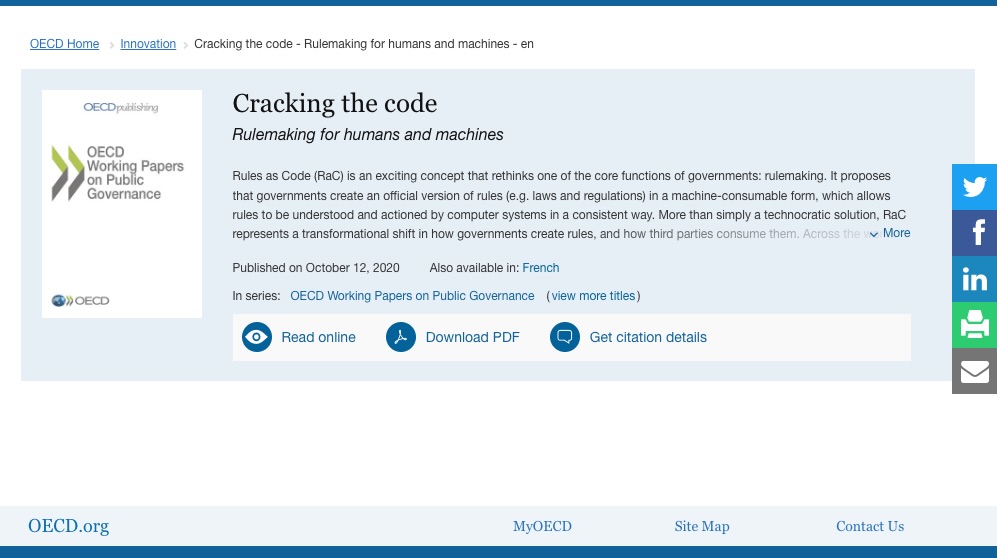
The OECD report explores the concept of "Rules as Code" (RaC), proposing a transformation in government rulemaking by developing machine-consumable regulations alongside human-readable versions.
Organisation for Economic Co-operation and Development (OECD)
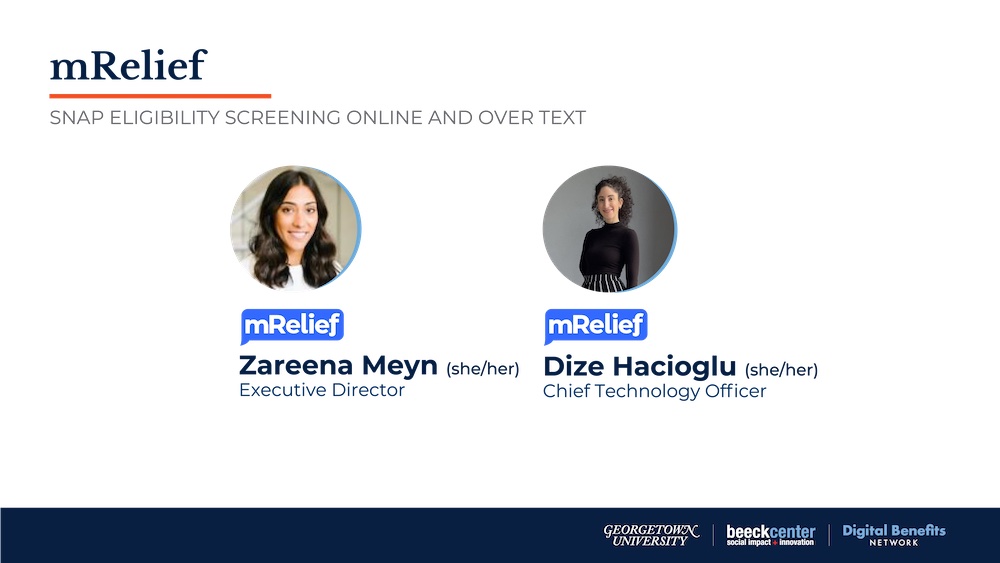
At Rules as Code Demo Day Executive Director Zareena Mayn and Chief Technology Officer Dize Hacioglu of mRelief demoed the code for their Supplemental Nutrition Assistance Program (SNAP) eligibility screener. mRelief is a women-led team that provides a web-based and text message-based SNAP eligibility screener to all 53 states and territories that participate in SNAP. They demonstrated how they have modularized their code to host federal program rules and state-specific rules.
At Rules as Code Demo Day Seth Hartig from the National Center for Children in Poverty (NCCP) and Bank Street College demoed the Policy Rules Database (PRD), a collaborative effort between the Federal Reserve Bank of Atlanta and the NCCP. The primary purpose of the PRD is to simplify the interpretation of all programs by creating a common structure and a common terminology. The repository allows for research on public assistance programs and tax policies, and helps users model benefits cliffs on career pathways. The PRD is supported by a technical manual with pseudocode that helps guide integration and usage in other platforms.