In this panel conversation, presenters at the Better Identity Coalition’s 2022 policy forum “Identity, Authentication, and the Road Ahead” discuss the challenges of identity verification and access in pandemic unemployment benefits.
This primer is written for a non-technical audience to increase understanding of the terminology, applications, and difficulties of evaluating facial recognition technologies.
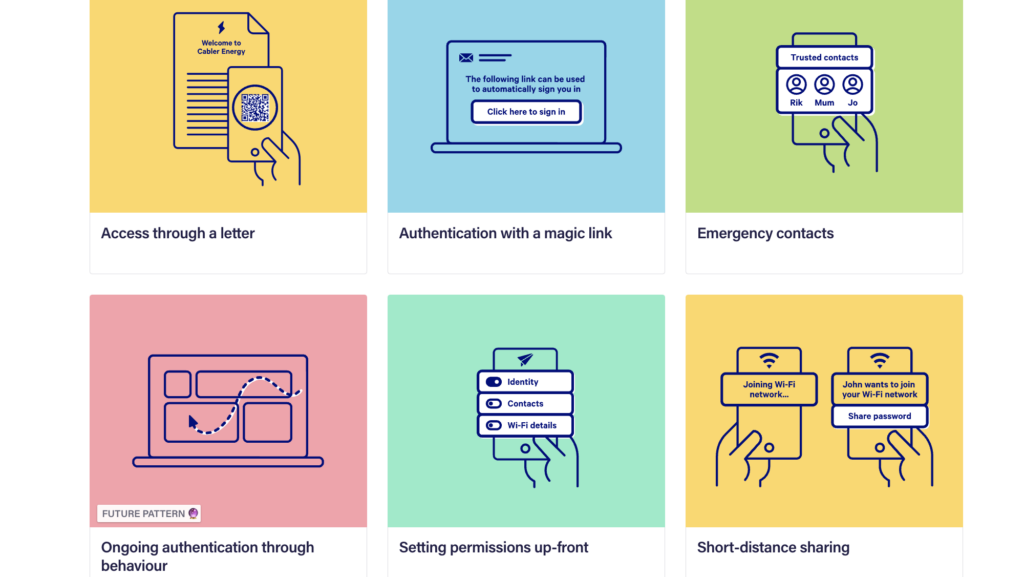
A catalogue to help teams design trustworthy services that work for people. Categories including informing decisions, signing into services, giving and removing consent, and doing security checks.
The Enterprise Single Sign-On (SSO) Playbook is a practical guide to help federal agencies implement or modernize an SSO service for federal employee access to government applications.
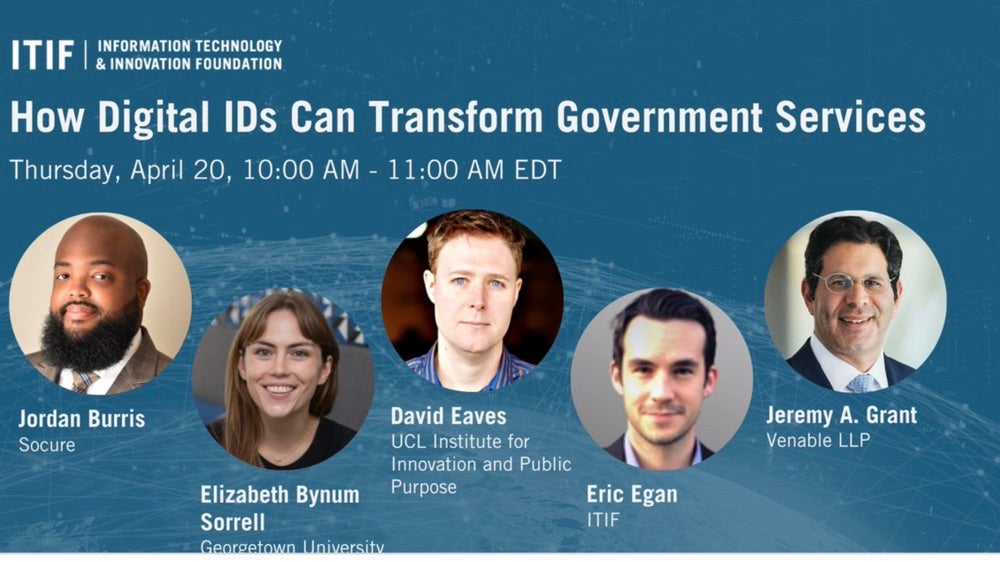
Governments around the world are digitizing how they deliver services to citizens. And yet, without a secure and reliable way for people to prove their identity online, digital transformation efforts face a considerable barrier. This panel discussion, hosted by the Information Technology & Innovation Foundation (ITIF), focuses on the potential benefits and concerns surrounding digital ID and identity proofing technology as well as the legal and technical barriers for use.
Information Technology & Innovation Foundation (ITIF)
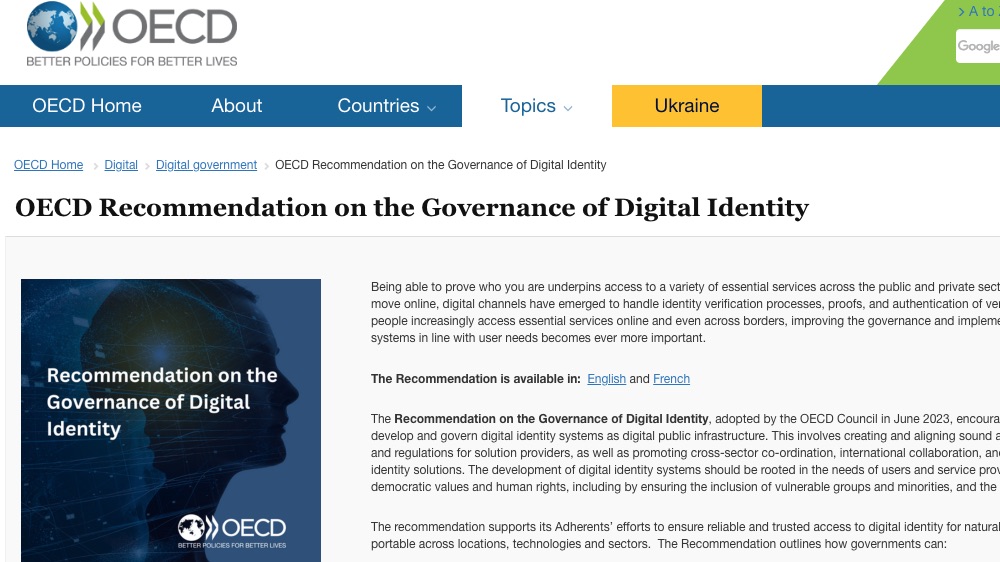
The OECD's Recommendation on the Governance of Digital Identity, adopted on 8 June 2023, provides guidelines for member countries to establish secure and user-centric digital identity systems that enhance trust and facilitate access to online services.
Organisation for Economic Co-operation and Development (OECD)
Revision 4 of the National Institute of Standards and Technology (NIST) Special Publication 800-63, Digital Identity Guidelines, responds to the changing digital landscape that has emerged since the last major revision of this suite was published in 2017.
The Digital Identity Community of Practice kick-off event featured key resources, a new research publication on account creation and identity proofing, and insights from multiple speakers.
This resource provides updated draft digital identity guidelines for identity proofing, authentication, and federation, aiming to improve security, privacy, usability, and equity in digital identity systems.
Federal guidelines for digital identity services, outlining technical and procedural requirements for identity proofing, authentication, and federation.
National Institute of Standards and Technology (NIST)