This guide outlines ethical frameworks and best practices for responsibly collecting and using demographic and other sensitive data to build equitable digital products.
DSN Spotlights are short-form project profiles that feature exciting work happening across our network of digital government practitioners. Spotlights celebrate our members’ stories, lift up actionable takeaways for other practitioners, and put the resources + examples we host in the Digital Government Hub in context.
A statewide framework to improve data literacy among Oregon public sector employees by identifying core competencies, learning goals, and implementation strategies across various roles and skill levels.
This guidance document provides a framework for developing an agency-wide data strategy that aligns data governance, management, and analytics with organizational goals and service delivery.
Governments and leaders are required to regulate change while mitigating risk, so IFTF's Governance Futures Lab developed this decision-making guide for them. In a world where technologies are transforming faster than we can keep up, anticipatory governance is crucial in order to safeguard against both the intended and unintended effects of technological advances.
This research brief summarizes the ideas and recommendations from sessions with dozens of cross-sector stakeholders within the technology ecosystem to identify conditions for better, healthier, more secure digital ecosystems that could help guide the next generation of open protocols and platforms.
An updated guide for public sector and civic data users to embed racial equity and community voice throughout the data life cycle—from planning to dissemination.
This report provides an overview of the task force’s work in assessing, guiding, and recommending policies for the safe, ethical, and effective use of generative AI across Alabama’s executive-branch agencies.
State of Alabama Generative Artificial Intelligence (GenAI) Task Force
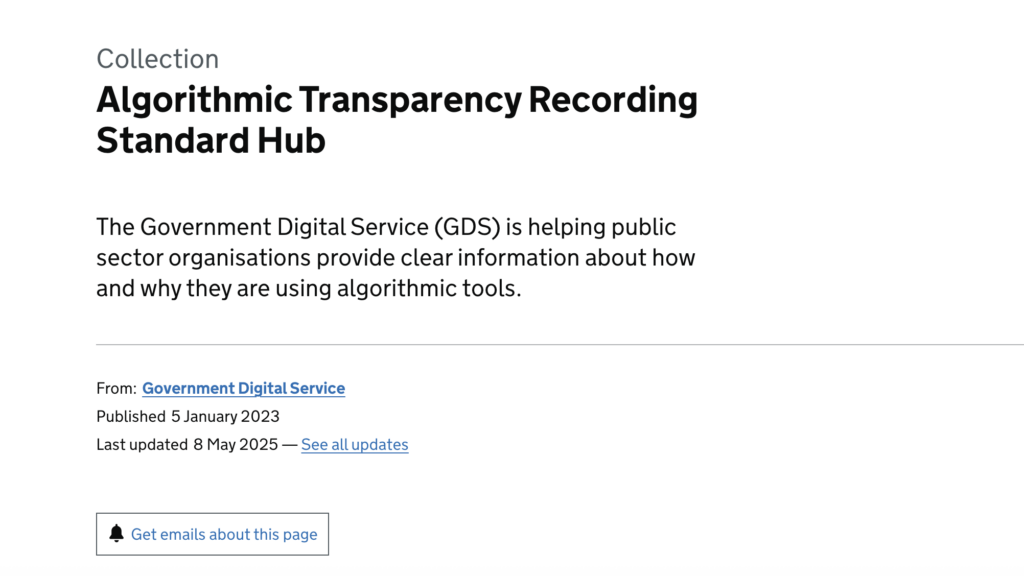
A central hub of guidance, standards, and supporting documentation explaining how UK public sector bodies should record and publish information about algorithmic systems to ensure transparency and accountability.