This video demonstrates how to use Iowa's Child Care Connect (C3), a centralized data system that integrates near-real-time child care data to support families, providers, policymakers, and economic development efforts across the state.
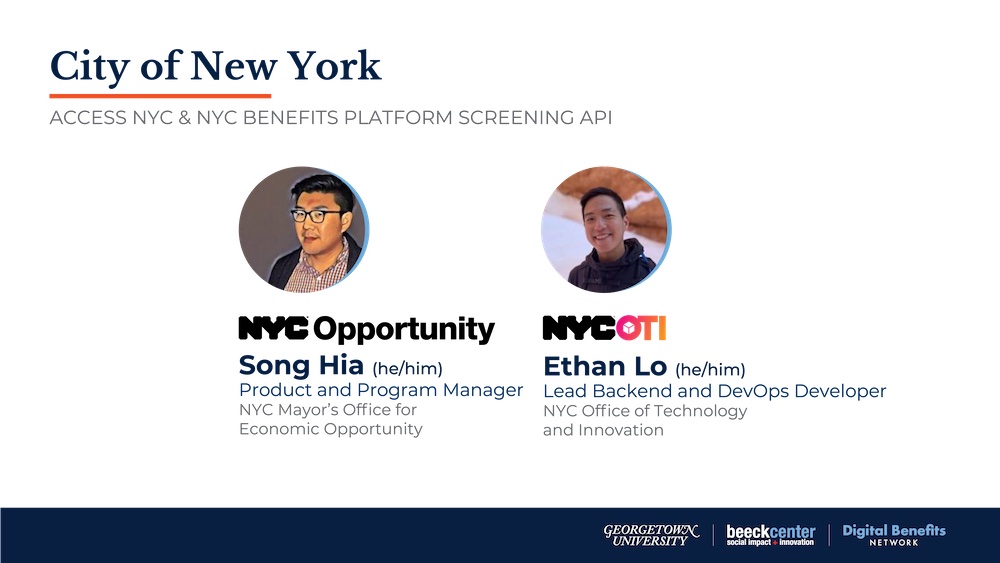
At Rules as Code Demo Day we heard from Song Hia of the NYC Mayor’s Office for Economic Opportunity and Ethan Lo of the NYC Office of Technology and Innovation who demoed the NYC Benefits Platform Screening API which provides machine-readable calculations and criteria for benefits screening that power the ACCESS NYC screening questionnaire. This makes it easier for NYC residents to discover multiple benefits they may be eligible for. The City is now extending the API to support the new MyCity platform, a one-stop shop for all services and benefits.
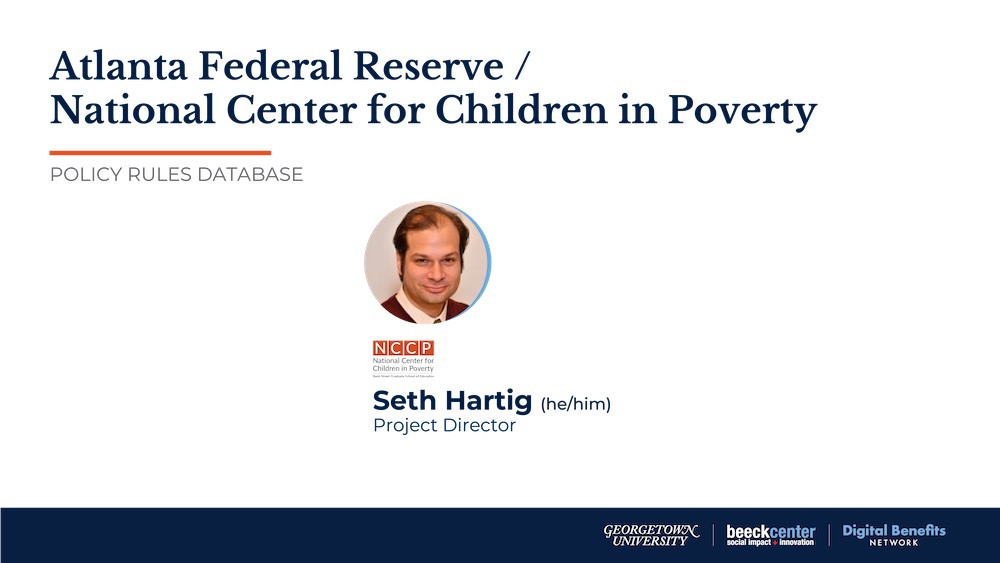
At Rules as Code Demo Day Seth Hartig from the National Center for Children in Poverty (NCCP) and Bank Street College demoed the Policy Rules Database (PRD), a collaborative effort between the Federal Reserve Bank of Atlanta and the NCCP. The primary purpose of the PRD is to simplify the interpretation of all programs by creating a common structure and a common terminology. The repository allows for research on public assistance programs and tax policies, and helps users model benefits cliffs on career pathways. The PRD is supported by a technical manual with pseudocode that helps guide integration and usage in other platforms.
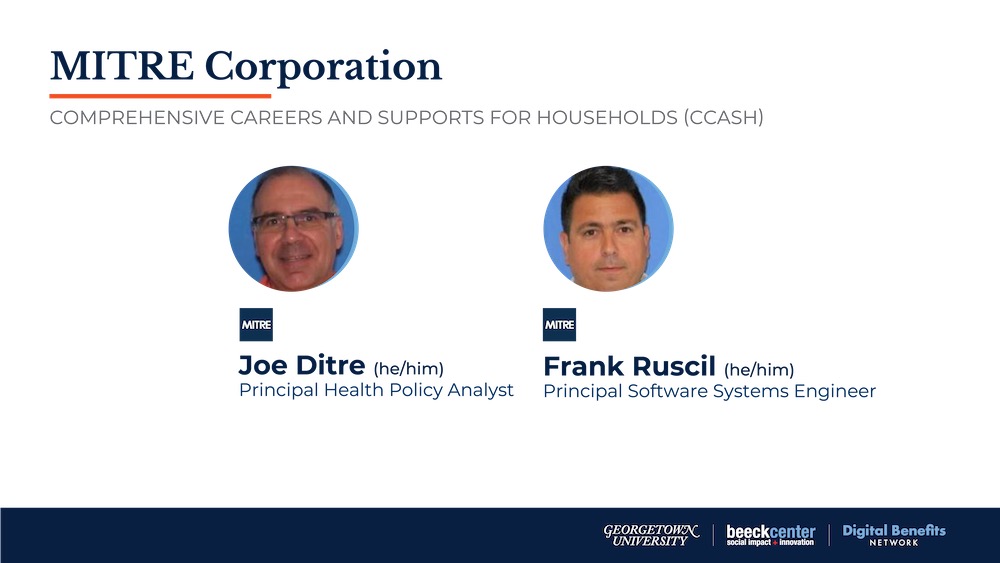
MITRE’s Joe Ditre and Frank Ruscil demoed the code for the Comprehensive Careers and Supports for Households (C-CASH) at Rules as Code Demo Day. The MITRE team expanded the accessibility of the Policy Rules Database and the Cost-of-Living Database (the prior demo) by creating a web service API and a front-end Window’s application called C-CASH Analytic Tool (CAT). CAT provides a more scalable, flexible, and portable functionality which allows end-users to generate various households to run eligibility scenarios across different U.S. counties and states. They are currently working to create a national data hub and analytics tool, starting with utilizing U.S. Census data and populating the data warehouse by pushing large amounts of data through the PRD.
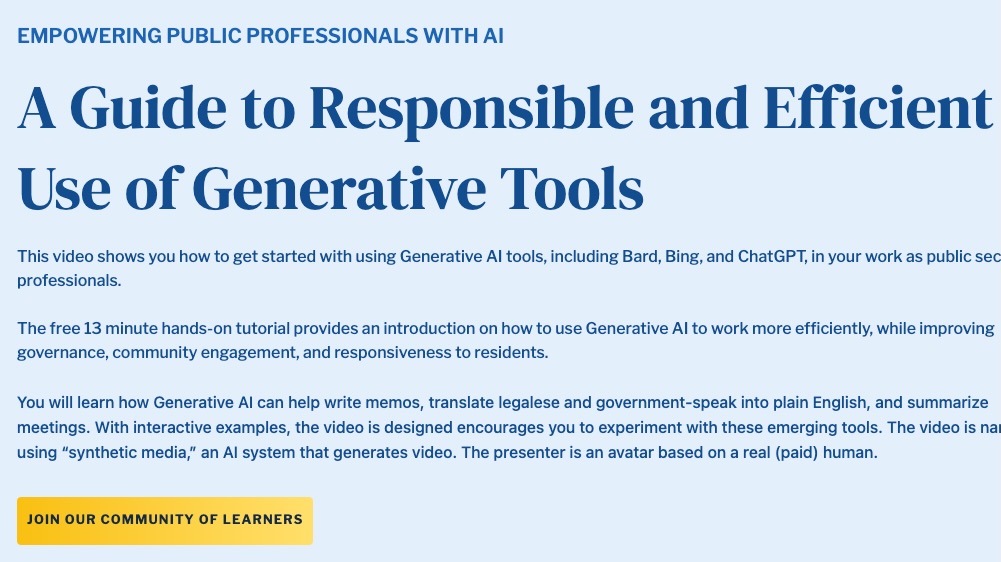
This video shows you how to get started with using Generative AI tools, including Bard, Bing, and ChatGPT, in your work as public sector professionals.
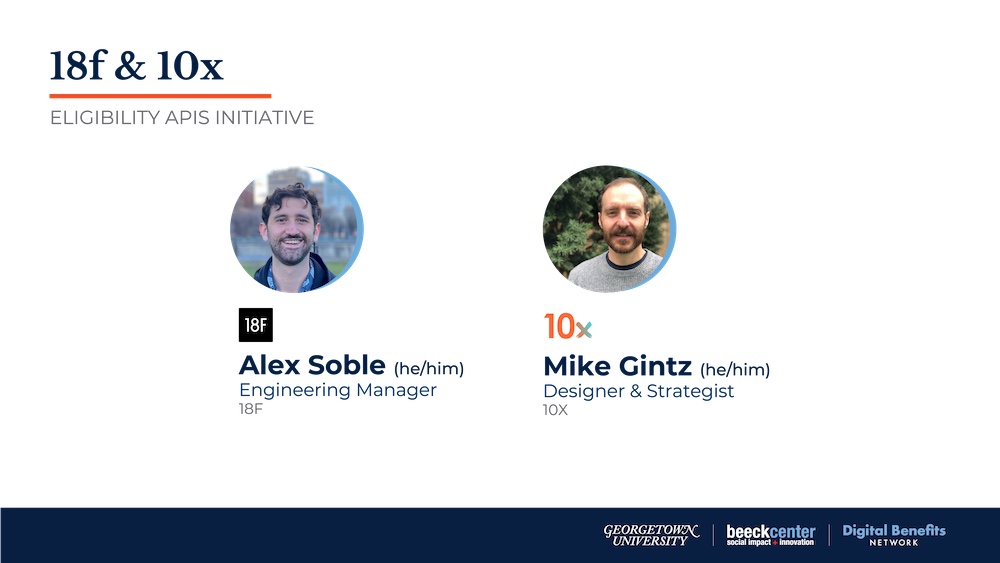
We kicked off Rules as Code Demo Day with Alex Soble of 18F and Mike Gintz of 10x presenting their Eligibility APIs Initiative that explores whether APIs and rules as code might improve the efficiency and effectiveness with which federal public benefits programs communicate their policy to states. They demonstrated their original prototype, and how the open source code has now been extended into several initiatives.
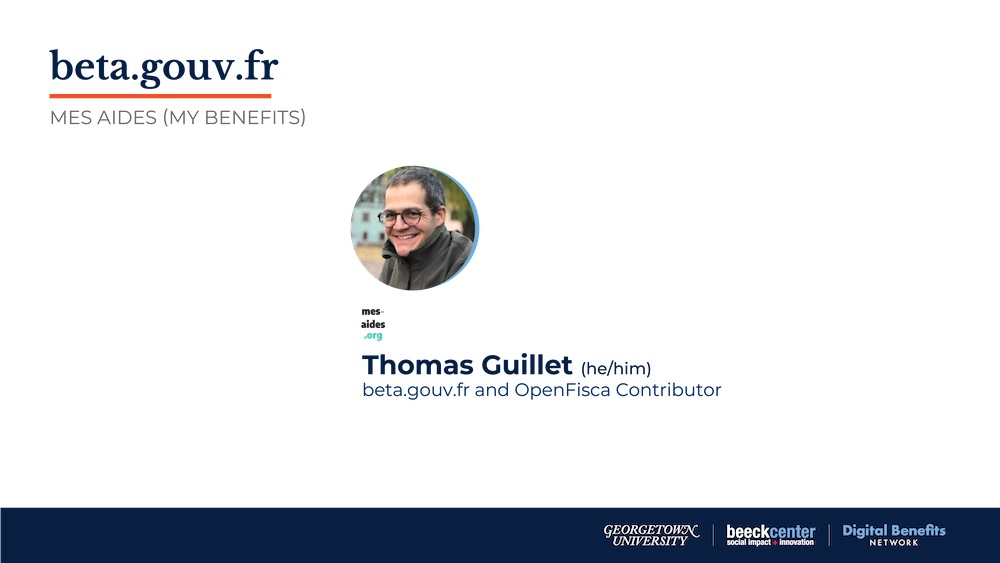
The first half of Rules as Code Demo Day was wrapped up with Thomas Guillet who has contributed to Open Fisca France and beta.gouv. He demoed the code for Mes Aides—or My Benefits—which is France’s social benefit simulator that leverages open source rule models for over 600 benefits while keeping the displayed complexity to its minimum.
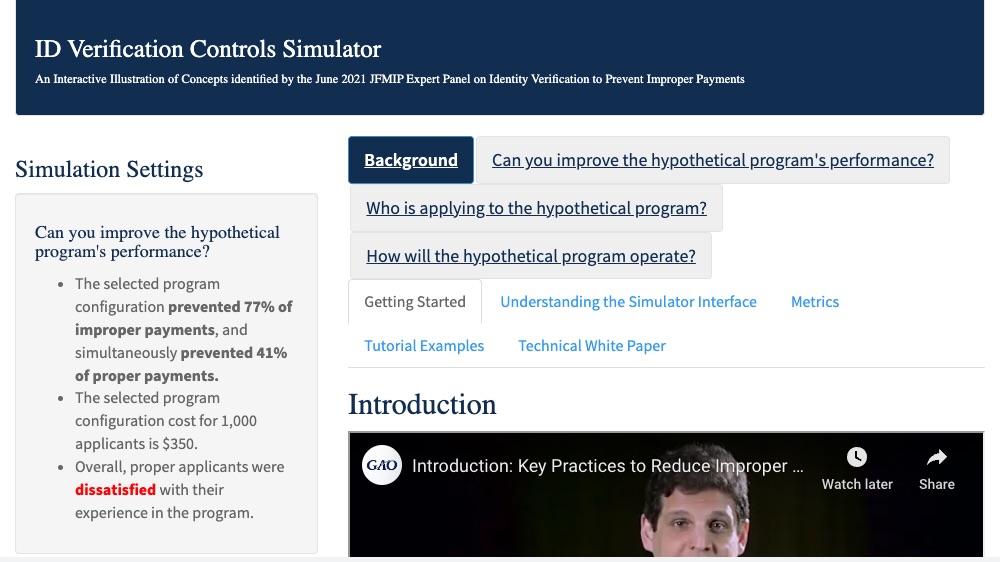
This simulator, created by the Joint Financial Management and Improvement Program (JFMIP), allows users to model program performance for a hypothetical government program, based on different identity verification decisions. The simulator illustrates concepts from the JFMIP report on payment integrity.
Joint Financial Management and Improvement Program (JFMIP)
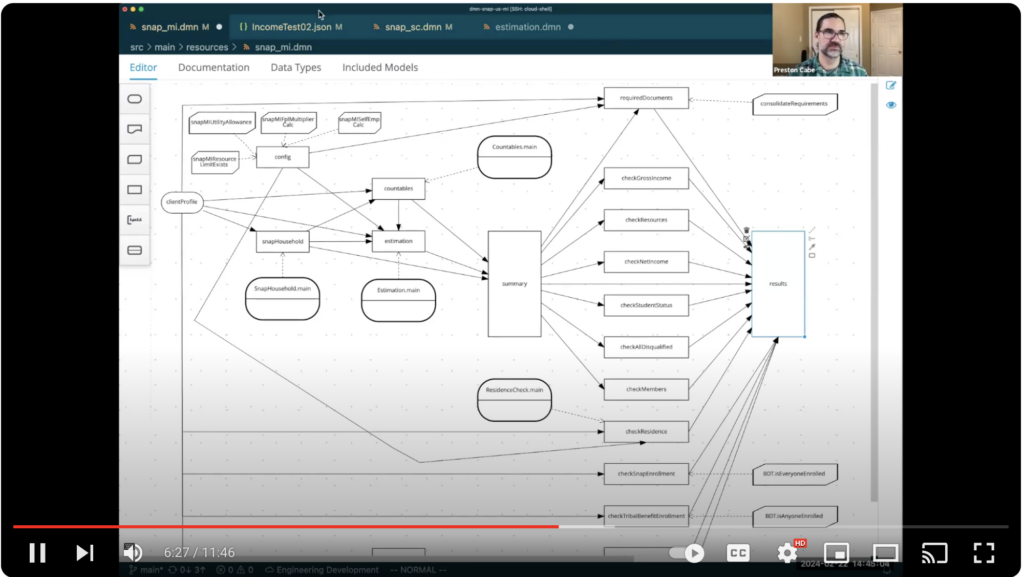
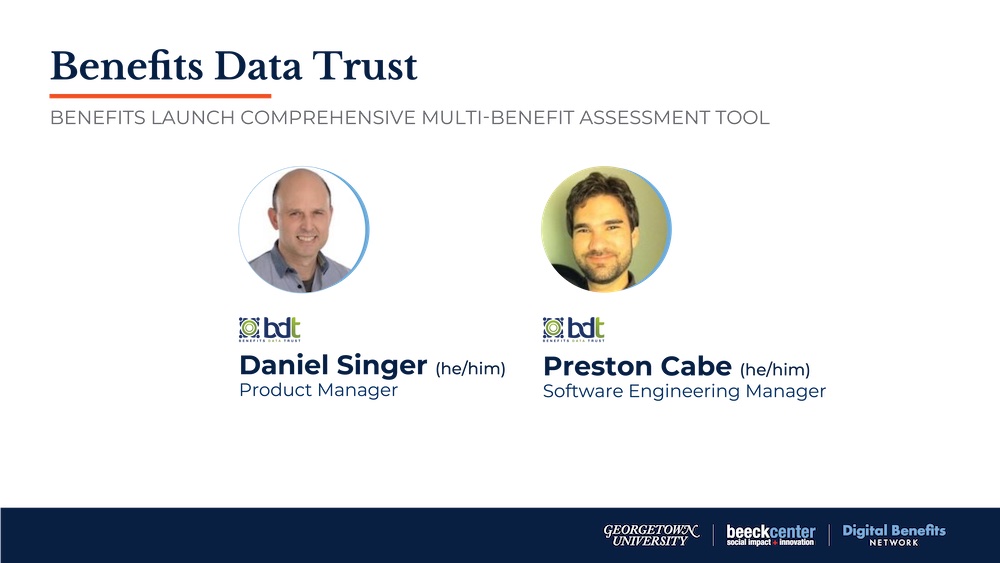
We continued Rules as Code Demo Day with Daniel Singer and Preston Cabe from Benefits Data Trust. Benefits Data Trust provides benefit outreach and application assistance services in seven states. Using Benefits Launch, their in-house interview and rules engine, they support two hundred contact center employees as they screen and apply thousands of clients each year. They also offer a self-service screener, Benefits Launch Express. Additionally, they offer an eligibility API to integrate with other services.
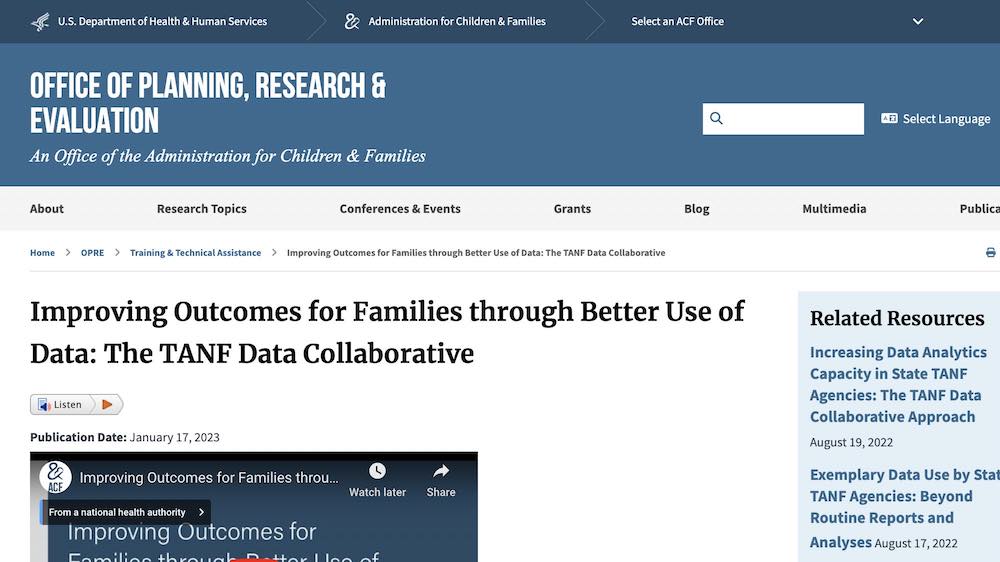
This video, produced after the completion of the TDC Pilot, features staff members from the California, Colorado, Minnesota, and Virginia TANF agencies reflecting on their challenges, accomplishments, and general experiences during the pilot.
U.S. Department of Health and Human Services (HHS)