This mainstage session from FormFest 2024 featured behind-the-scenes stories about the IRS’ work to turn tax forms from static PDFs into a user friendly digital experience.
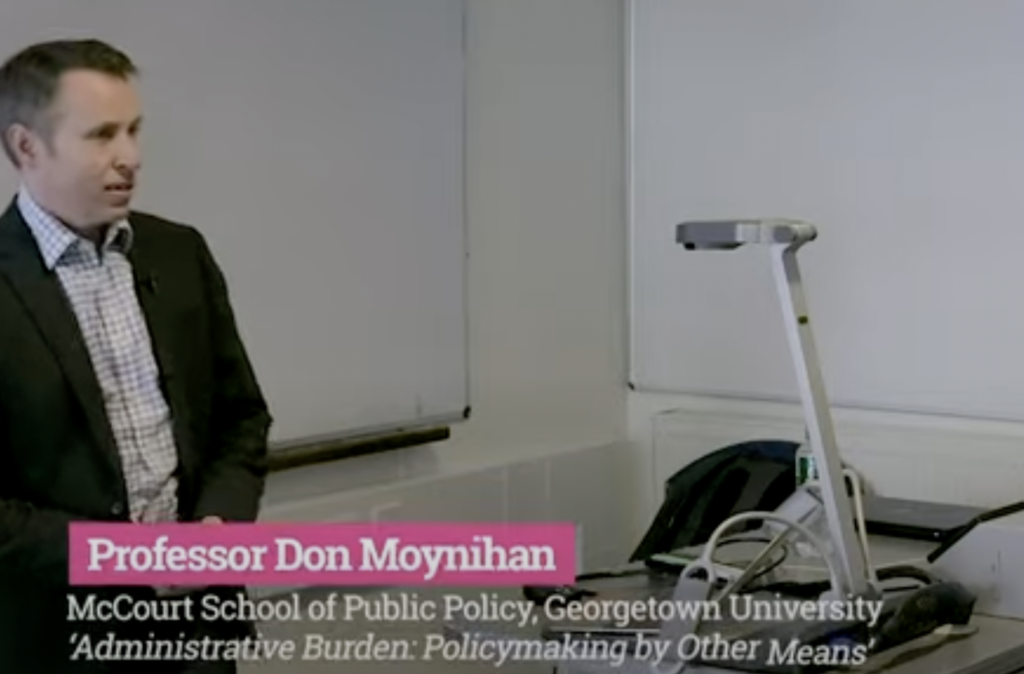
Professor Don Moynihan discusses how administrative burden is an effective tool to make it difficult for people to access certain types of benefits, noting that this is particularly harmful to communities of color.
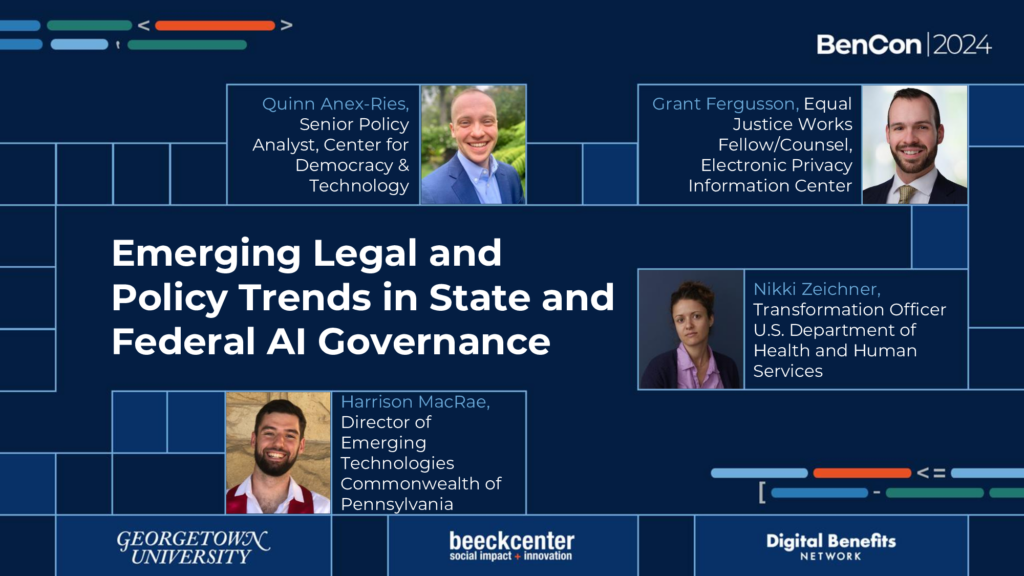
BenCon 2024 explored state and federal AI governance, highlighting the rapid increase in AI-related legislation and executive orders. Panelists emphasized the importance of experimentation, learning, and collaboration between government levels, teams, agencies, and external partners.
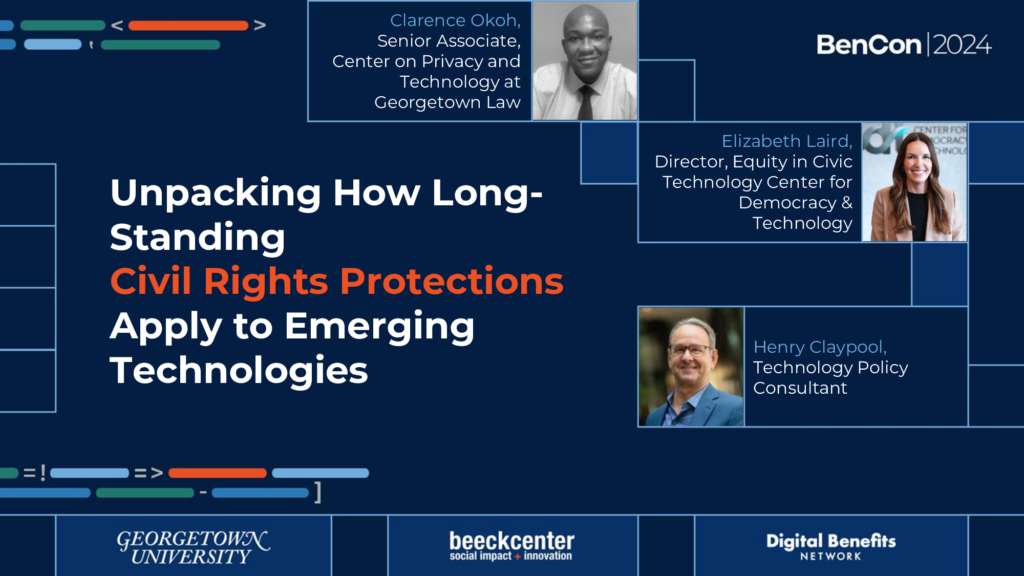
A panel of experts discuss the application of civil rights protections to emerging AI technologies, highlighting potential harms, the need for inclusive teams, and the importance of avoiding technology-centric solutions to social problems.
The team introduced "Policy Pulse," a tool to help policy analysts understand laws and regulations better by comparing current policies with their original goals to identify implementation issues.
The team introduced an AI assistant for benefits navigators to streamline the process and improve outcomes by quickly assessing client eligibility for benefits programs.
The team developed an AI-powered explanation feature that effectively translates complex, multi-program policy calculations into clear and accessible explanations, enabling users to explore "what-if" scenarios and understand key factors influencing benefit amounts and eligibility thresholds.