A foundational guide that introduces the principles, governance considerations, and technical approaches involved in sharing and integrating administrative data across organizations.
The report beings by briefly describing the challenge that disabled workers face in accessing UI and the benefits of reforming the system to better serve these workers. The report then presents a list of considerations for UI reform in the areas of administrative process and technology improvements as well as considerations for policy change.
In this report, the Strike Team outlines its recommendations and suggested next steps for the EDD to address the backlog and improve on future processing of unemployment claims.
EBT theft has deeply damaged the lives of the lowest-income Americans. The following insights reveal a system that leaves people in the dark and fails to protect a crucial lifeline.
mRelief recently completed a research study to investigate whether there are specific parts of the Supplemental Nutrition Assistance Program (SNAP; also known as food stamps) benefits application process that make it difficult to complete. We conducted interviews with mRelief users and SNAP outreach workers (individuals whose job responsibilities include providing SNAP application assistance in person or over the phone) in Illinois. We also conducted group interviews with SNAP outreach workers to collaborate with them to uncover findings and develop recommendations.
This analysis explores the potential reduction in poverty rates across all U.S. states if every eligible individual received full benefits from seven key safety net programs, highlighting significant decreases in overall and child poverty.
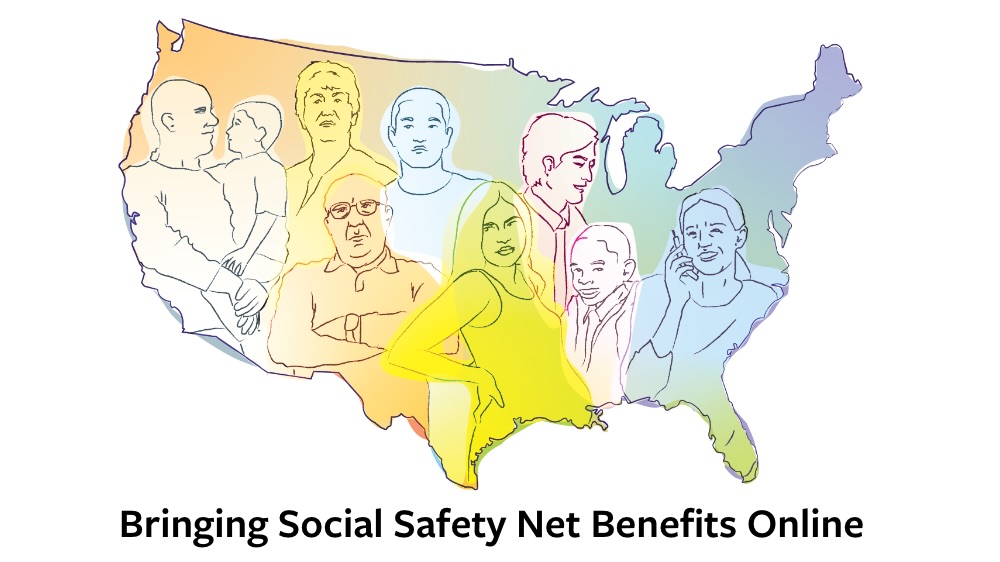
This visualized report is a first first-of-its-kind view of the state of benefits applications across the nation from a client perspective, including information on application availability online, combined benefit applications, application completion times, as well as login and identity proofing requirements.
Coordinating SNAP & Nutrition Supports (CSNS) is a cohort program developed by the American Public Human Services Association (APHSA) and No Kid Hungry, a national campaign run by Share Our Strength.
American Public Human Services Association (APHSA)
When COVID-19 hit, the State of New Jersey recognized the need to both receive data on the spread of the disease from the public and provide information to them on how to mitigate it.
This report outlines critical actions states should take to maintain Medicaid coverage as the COVID-19 Public Health Emergency (PHE) concludes, aiming to prevent widespread loss of health insurance among eligible individuals.