A statewide framework to improve data literacy among Oregon public sector employees by identifying core competencies, learning goals, and implementation strategies across various roles and skill levels.
An economic analysis estimating how recipients of emergency SNAP benefits during the pandemic allocated additional funds, primarily to food consumption.
Outlines recommendations from the U.S. House of Representatives for the responsible adoption, governance, and oversight of artificial intelligence technologies across state agencies.
Bipartisan House Task Force on Artificial Intelligence
This report provides an early 2025 snapshot of state Medicaid and CHIP policies as they return to normal operations post‑pandemic, focusing on eligibility, enrollment, and renewal processes.
An evaluation of the impact of the USDA’s FFRCA waivers on the WIC program during the COVID-19 pandemic, focusing on how temporary flexibilities such as remote certification and relaxed physical presence requirements affected participant access, program operations, and staff capacity.
A 2025 policy agenda outlining comprehensive federal and state recommendations to eliminate benefits cliffs and strengthen economic mobility for families transitioning off public assistance.
A report examining how risk assessment tools are used to improve payment accuracy in nutrition assistance programs and identifying effective practices for their design and implementation.
This publication explains current state integrated eligibility and enrollment (IEE) system implementation processes, approaches, and opportunities for future processes and technologies. It is a resource for state officials, advocates, funders, and tech partners working to implement these systems.
This publication summarizes a body of research about how state benefits administering agencies build and maintain integrated eligibility and enrollment (IEE) systems. It is an easy to reference guide for state administrators, legislators, advocates, and delivery partners.
A research report examining how privacy and security risks are unevenly experienced across socioeconomic, racial, and ethnic groups, and how digital inequality shapes people’s exposure to harm and access to protective resources.
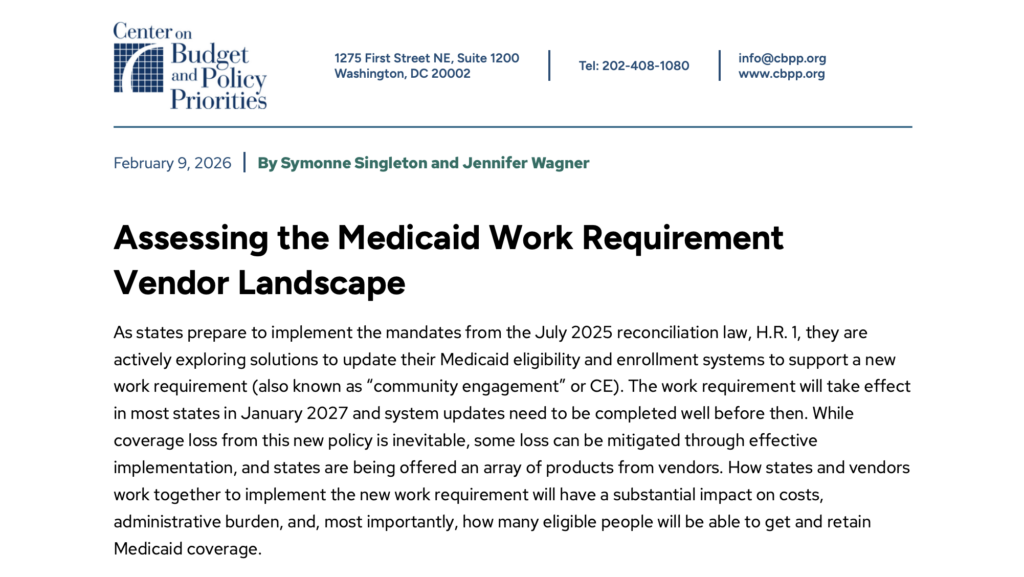
This paper evaluates the technical vendor landscape as states prepare to implement Medicaid work requirements mandated by the H.R. 1 reconciliation law.