As they transition to providing more services online, there are ways governments can get creative working around talent shortages and entrenched bureaucracies.
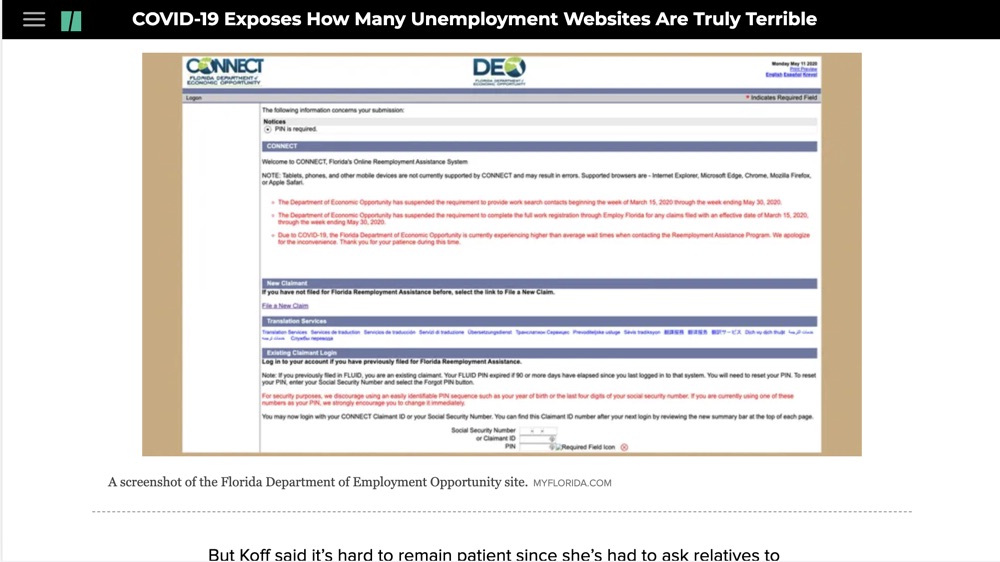
This HuffPost article investigates the widespread failures of state unemployment websites during the COVID-19 pandemic, highlighting outdated technology, accessibility issues, and the human impact of these systemic breakdowns.
It is necessary give the public servants who manage safety-net systems the technology tools and incentives to track critical outcomes and meet people where they are.
The pandemic has shown how difficult it can be for the US to succeed with major technology projects. Various leading design thinkers discuss strategies for building more efficient and effective government technology.
This article examines how outdated state unemployment insurance (UI) systems struggled during the COVID-19 pandemic, leading to delays, technical failures, and widespread frustration for job seekers.
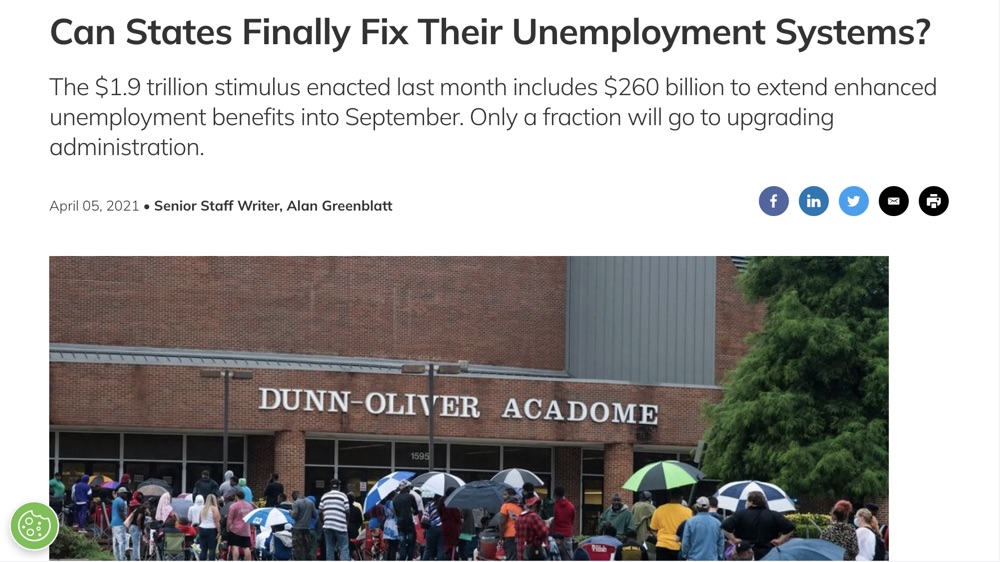
This article explores ongoing efforts to modernize state unemployment insurance (UI) systems, addressing long-standing inefficiencies and challenges exposed by the COVID-19 pandemic.
In early 2023, Wired magazine ran four pieces exploring the use of algorithms to identify fraud in public benefits and potential harms, deeply exploring cases from Europe.
Article announcing five new projects by the Office of Management and Budget that will improve experiences the public has with the government during significant movements in their lives. These “life experience” projects are at the center of a new model for how the Federal Government should better design and deliver benefits, services, and programs to the American people during the moments in their lives that matter most.
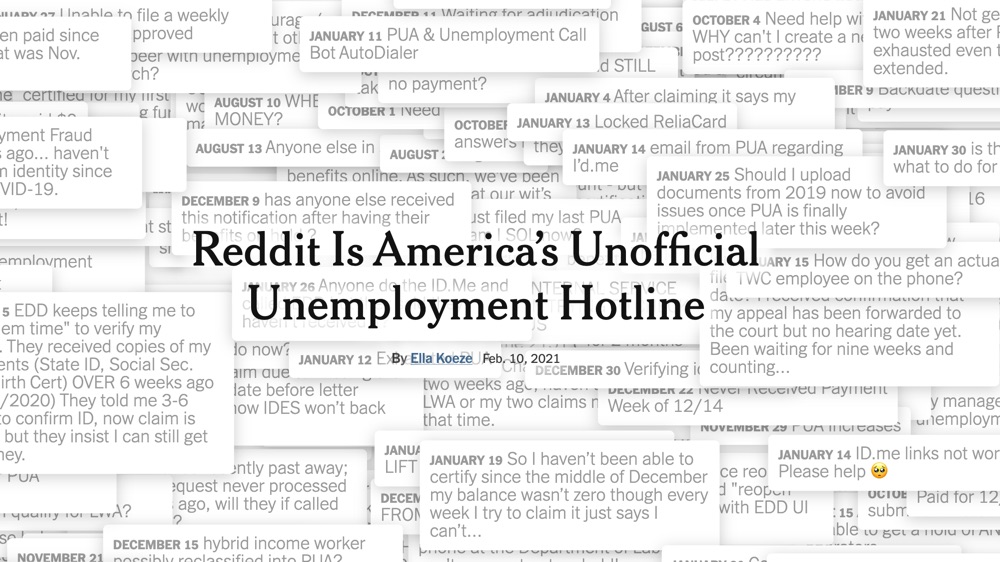
Reddit's unemployment forums have become vital support networks during the pandemic, offering advice, emotional support, and a sense of community to those navigating job loss and financial hardship.
The $600 cash payments provided by the CARES act prevented joblessness from turning into actual income loss for millions of families. It also gave Americans breathing room to wait for better jobs, rather than settling for bad ones out of desperation.