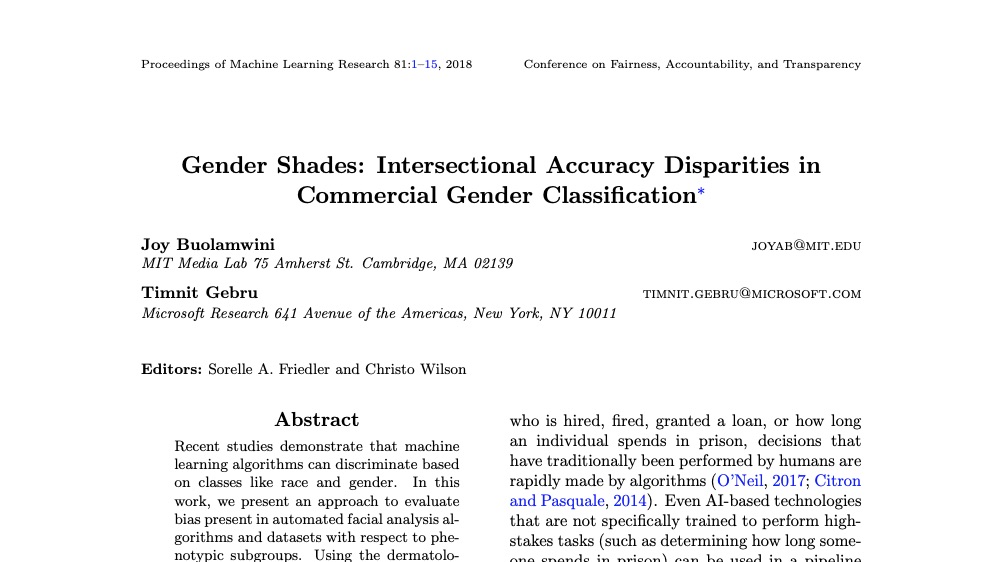
Recent studies demonstrate that machine learning algorithms can discriminate based on classes like race and gender. This academic study presents an approach to evaluate bias present in automated facial analysis algorithms and datasets.
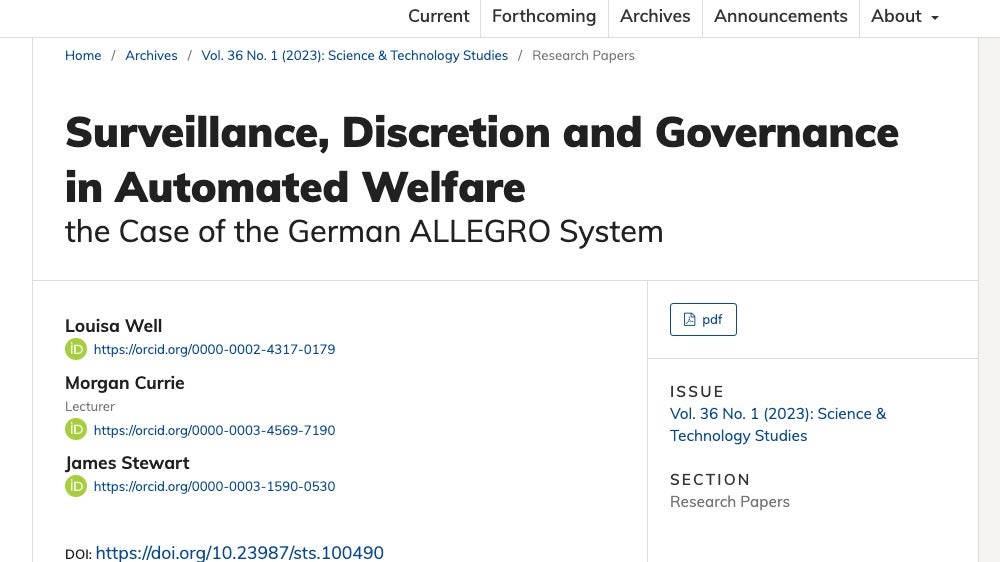
This academic article develops a framework for evaluating whether and how automated decision-making welfare systems introduce new harms and burdens for claimants, focusing on an example case from Germany.
This paper examines three key questions in participatory HCI: who initiates, directs, and benefits from user participation; in what forms it occurs; and how control is shared with users, while addressing conceptual, ethical, and pragmatic challenges, and suggesting future research directions.
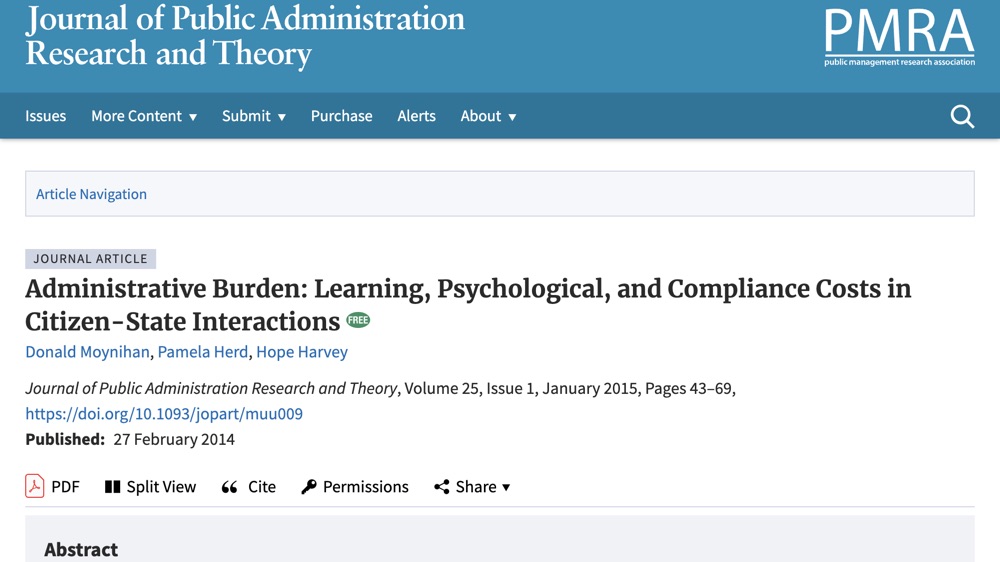
This foundational article develops the concept of administrative burden, defining it as the learning, psychological, and compliance costs individuals face when interacting with government, and argues that these burdens are often shaped by political choices.
Journal of Public Administration Research and Theory
This report puts forth an anti-racist reimagining of Medicaid and CHIP that actively reckons with the racist history of the Medicaid program and offers principles and recommendations that capitalize on the transformative potential of the programs. The principles center the voices and agency of program participants and prioritize direct community involvement at all stages of the policy process.
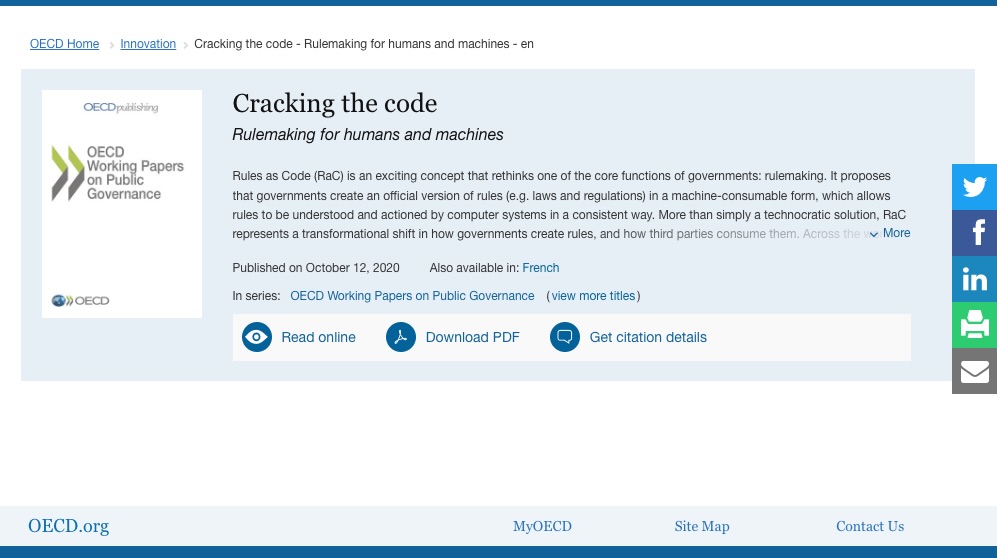
The OECD report explores the concept of "Rules as Code" (RaC), proposing a transformation in government rulemaking by developing machine-consumable regulations alongside human-readable versions.
Organisation for Economic Co-operation and Development (OECD)
This paper argues that a human rights framework could help orient the research on artificial intelligence away from machines and the risks of their biases, and towards humans and the risks to their rights, helping to center the conversation around who is harmed, what harms they face, and how those harms may be mitigated.
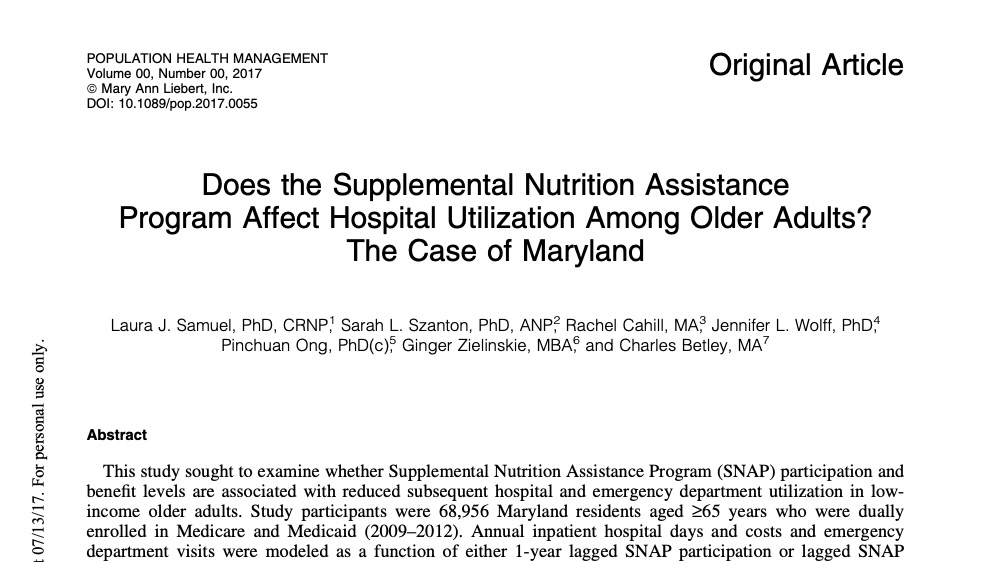
Accounting for the strong effects of health care access, this study finds that SNAP is associated with reduced hospitalization in dually eligible older adults. Policies to increase SNAP participation and benefit amounts in eligible older adults may reduce hospitalizations and health care costs for older dual eligible adults living in the community.
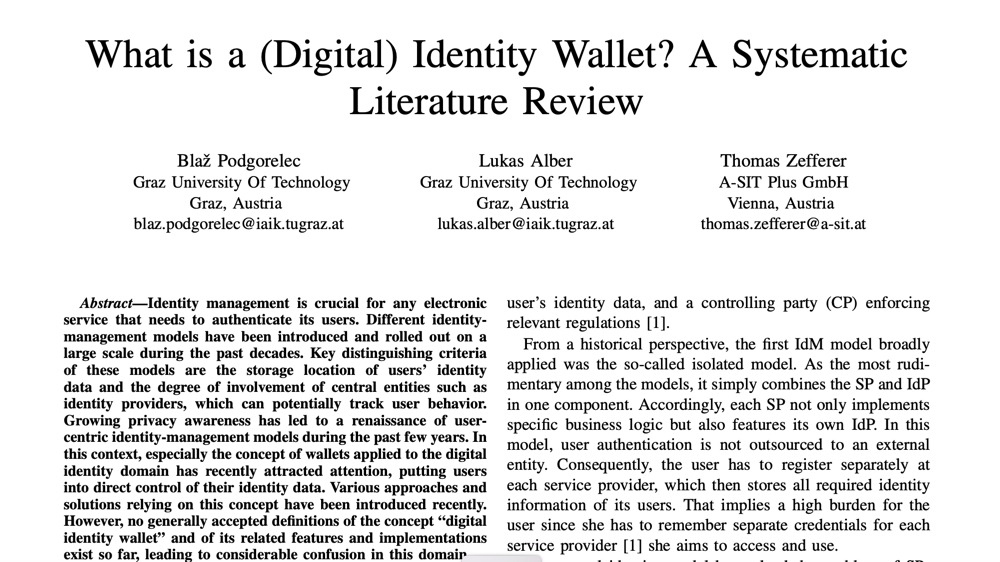
The report examines how current remote identity proofing methods can create barriers to Medicaid enrollment and suggests improvements to ensure equitable access for all applicants.
Annual Computers, Software, and Applications Conference (COMPSAC)
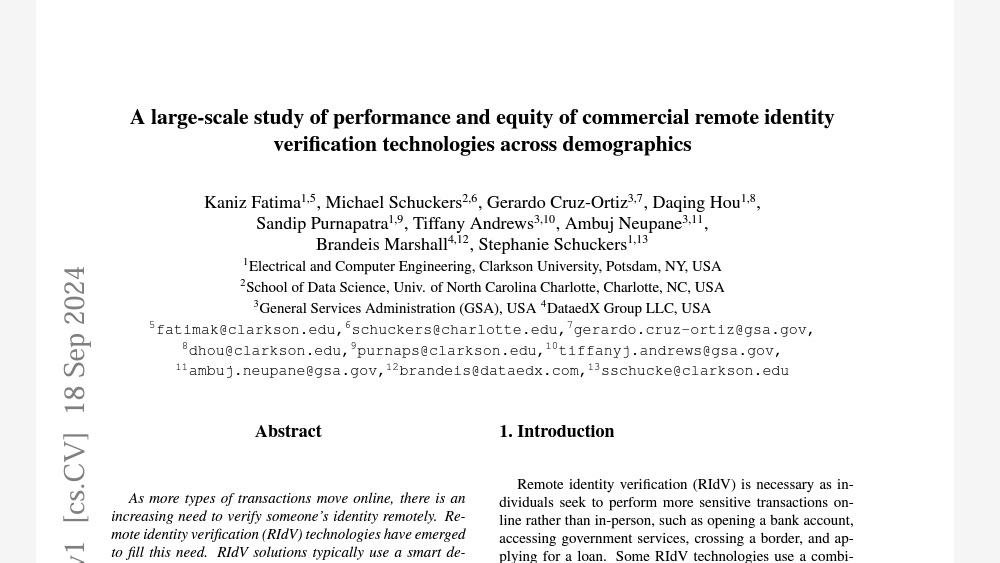
This study assesses five commercial RIdV solutions for equity across demographic groups and finds that two are equitable, while two have inequitable performance for certain demographics.