Strengthening the Early Education Workforce in King County: A Digital Government Network Spotlight
DGN Spotlights are short-form project profiles that feature exciting work happening across our network of digital government practitioners. Spotlights celebrate our members’ stories, lift up actionable takeaways for other practitioners, and put the resources + examples we host in the Digital Government Hub in context.
To respond to the high cost of care and low wages for early childhood education (ECE) workers in Washington State, King County allocated levy funds to the Best Starts for Kids Child Care Subsidy, which helps families pay for ECE services, and the Best Starts for Kids Child Care Wage Boost Pilot, which supplements the income of early childhood educators. The county dedicated $163 million to the subsidy program and $30 million to the wage-boost initiative.
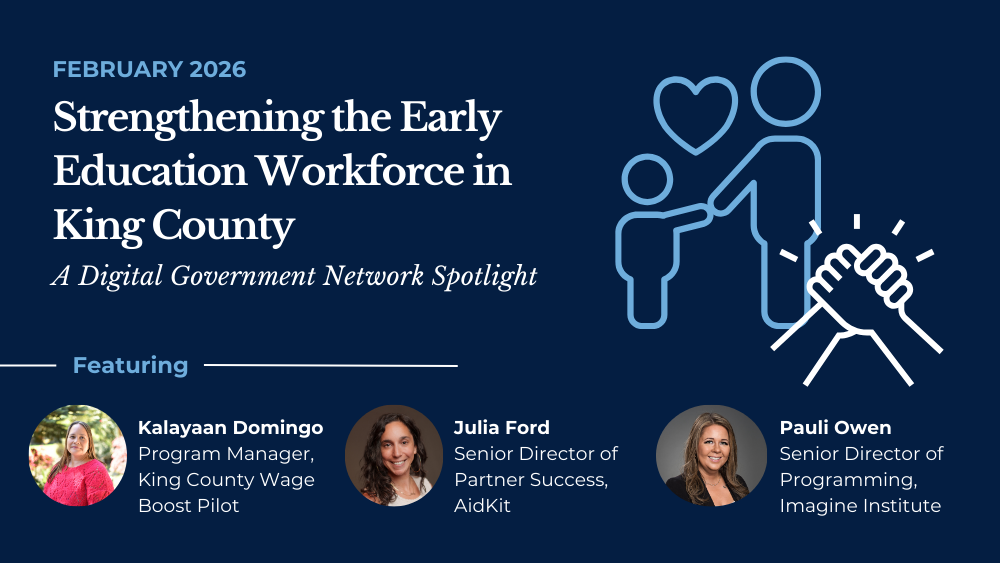
The Wage Boost Pilot is a complex, collaborative effort led by King County and multiple partner organizations. To learn more, the Beeck Center’s Digital Service Network (DSN) spoke with Kalayaan Domingo, Program Manager for King County’s Wage Boost Pilot; Julia Ford, Senior Director of Partner Success at AidKit; and Pauli Owen, Senior Director of Programming at the Imagine Institute.
Strategic Partnerships for Systemic Change
Early childhood educators face persistent economic challenges that affect their mental and physical wellbeing. In Washington, the average salary for educators is about $20.61 per hour. Although this is 23 percent above the national average, roughly 45 percent of early childhood educator households in Washington participated in at least one public safety net program as of 2022. Because of financial instability, many educators seek employment elsewhere, negatively affecting the early childhood education (ECE) industry.
The Wage Boost Pilot was created to provide immediate income support to educators and to study the impact of government child care investments and gather evidence for sustained investment. “[Educators] would have incentive to stay in the workforce, which would increase stability within facilities in the child care sector in King County,” said Domingo.
To promote greater impact, King County enlisted several external partners. The county released a request for proposal that clearly outlined its needs. Because the project was multifaceted, they required partners who could design the pilot, administer payments, and work closely with community members.
The Imagine Institute, a Washington-based nonprofit that supports ECE providers, was selected to design the pilot because of its local knowledge and relationships within the child care sectors. AidKit, a technology organization that builds infrastructure for aid and relief payments, was selected to manage disbursements. “We were able to do a lot more than what we would be able to do on our own with our partnerships with AidKit and the Imagine Institute,” Domingo said.
“[With our partners,] we were able to do a lot more than what we would be able to do on our own.”
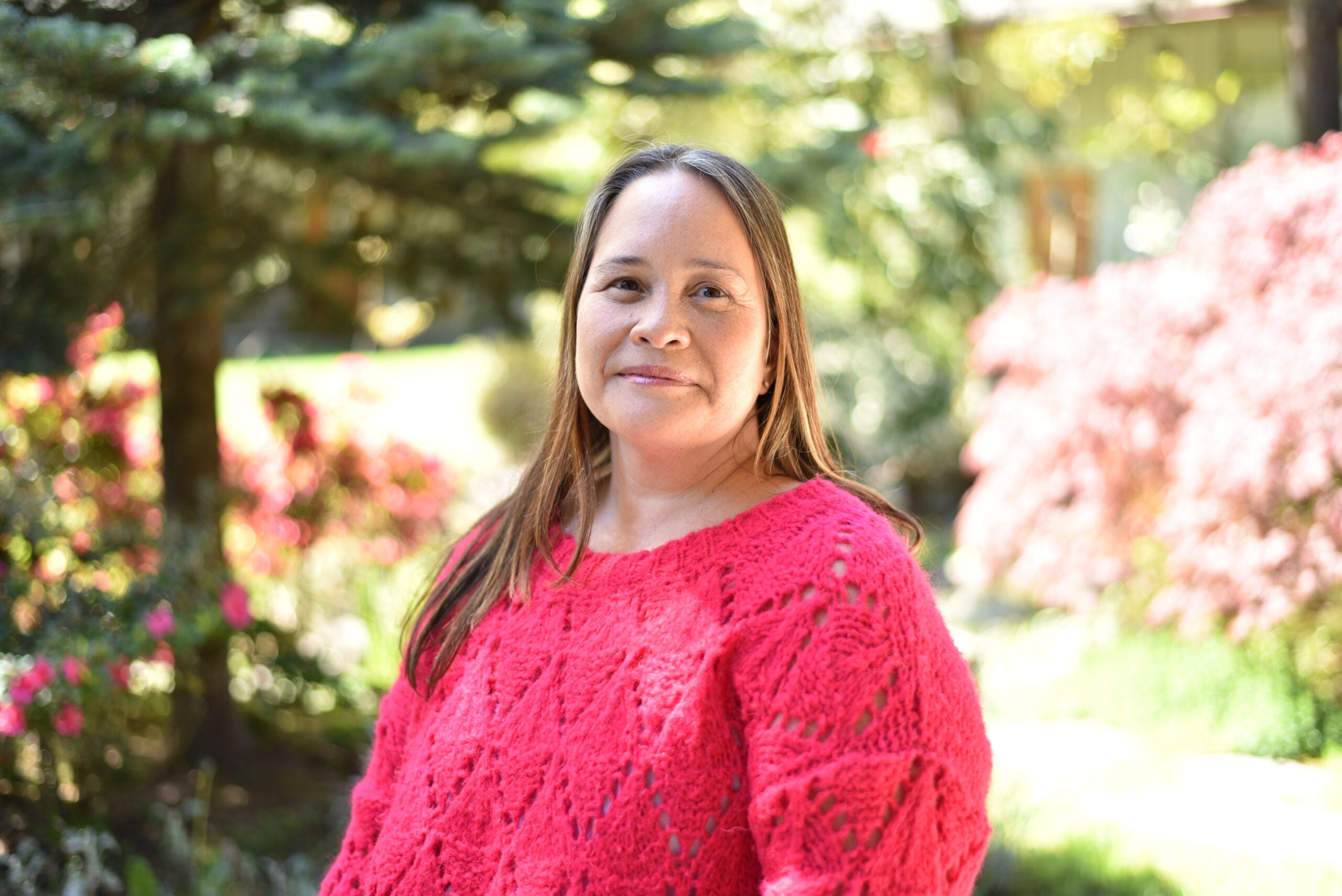
Kalayaan Domingo Program Manager for King County’s Wage Boost Pilot
King County also partnered with Uncommon Bridges, Cardea Services, and the Urban Institute to evaluate the program’s broader community impact.
The partners met weekly, and planning took over a year to ensure smooth implementation. “The dynamic between different people and organizations was friction-filled at points, but in my mind, it led to the program being flawless,” said Ford.
Designing a System That Puts Educators First
A key goal of the pilot was creating a seamless, all-in-one user experience. AidKit was responsible for building the technical infrastructure, which involved four main steps. First, they developed robust forms to collect information from users for enrollment. Second, they built applicant engagement tools that allowed two-way communication, enabling AidKit specialists to leave notes, send emails, make calls, schedule meetings, and send notifications. Third, they focused on a strong verification system to prevent fraud by confirming user identities before moving forward. Finally, they created a payment platform that offered full transparency about where the funds were going.
Providers applied through an online application, and had a month to complete the process. To ensure accessibility, King County and its partners offered technical assistance and conducted extensive outreach. “I think my team made 2,100 individual calls to make sure that everybody knew [this pilot] was there,” said Owen.
After applications closed, King County used a two-part lottery system to select facilities. Applicants were first sorted by council district, then by the type of ECE provider, such as center-based care, family home care, or school-aged care. This approach ensured broad representation across the county and by facility type.
Once facilities were selected, workers at the selected facilities received a voluntary enrollment form. To date, about 133 facilities are enrolled, and over 800 workers are receiving payments. Full-time employees working over 25 hours per week receive $2,080 per quarter, while part-time employees receive $1,040 for working 10 to 24 hours. To date, King County workers have received three rounds of payments.
Participation in the pilot was optional, in part to support individuals receiving public benefits or who could experience impacts by claiming additional income on tax reporting. The Imagine Institute helped providers understand the program by assisting with paperwork and explaining the tax and financial implications.
“We filled out their paperwork, and answered their questions—regarding counseling, tax implications, and advice—to ensure that they had everything they needed,” said Owen.
AidKit also prioritized accessibility in payment distribution. Since not all providers had bank accounts, they offered multiple payment options, including ACH deposits and physical debit cards. This flexibility helped remove barriers and demonstrated the importance of designing systems adapted to users’ needs.
Co-Creating Solutions Through Community Feedback
King County and its partners emphasized the importance of designing programs that centered the needs of the community. They actively incorporated feedback from early childhood educators throughout the pilot’s development.
Ford described attending numerous community events and consortiums to understand provider needs and barriers. “Imagine and the other community partners did a lot of work to talk to early childhood educators to understand what they wanted—the technological and language barriers,” said Ford.
This early dialogue made the design and implementation process smoother. The pilot platform was made accessible on desktop, tablet, and mobile devices, and office hours were held for those who needed extra help. To further reduce barriers for non-English speakers, the platform offered assistance in 30 languages, and Imagine Institute staff spoke seven languages.
Imagine Institute also organized focus groups with 15 participants, including family home center directors, owners, workers, and community members. Their input shaped the design and ensured the pilot reflected real-world needs.
The pilot, still in its early stages, has had a positive impact at both the facility level and with individual workers. Thanks to additional program resources, Wage Boost participants reported increased morale and a greater ability to meet personal and financial goals.
Ultimately, the team felt that success hinged on building programs with people at the center. “We do not build for them, we build with them,” said Owen.
“We do not build for them, we build with them.”
Julia Ford Senior Director of Partner Success at AidKit
Lessons Learned
External partnerships drive impact when roles, responsibilities, and product details are clearly defined. By enlisting specialized partners for design, payments, and evaluation, King County ensured that each organization could focus on what it did best. Clearly defining requirements and responsibilities from the start, and keeping government in the driver’s seat, allowed each group to collaborate effectively while maintaining accountability for the pilot’s success.
Building with, not for, communities ensures long-term success. The Wage Boost Pilot was launched with the user experience at its core.The most important lesson from King County’s experience was that meaningful change happened when programs were built alongside the people they served. Offering multilingual forms, multiple payment options, and dedicated technical support ensured that providers of all backgrounds could participate. The focus on removing barriers—from language and technology to financial access—built credibility with the community and strengthened adoption. By prioritizing collaboration and centering community voices, the county created a model that not only improved ECE workforce retention, but also set a standard for future policy and digital delivery initiatives.
Explore the resources
To see how this work was put into practice, explore the following resources in the Hub:
A case study that reflects on the design, implementation, and early outcomes of a local child care wage boost pilot aimed at improving job quality and retention in the child care workforce.
A data snapshot summarizing enrollment, participation, and early characteristics of workers and facilities participating in a child care wage boost pilot.
A pre-launch survey brief that documents the financial, emotional, and physical well-being of a local child care workforce before the start of a wage boost pilot.
An on-demand webinar showing how counties can design, fund, and measure local wage boost pilots to strengthen the child care workforce and support economic participation.
A participant handbook that explains how a child care wage boost pilot works, including eligibility, enrollment, payments, privacy protections, and ongoing responsibilities for facilities and workers.