This article advises government agencies to prioritize cybersecurity methods over AI-driven approaches when combating identity fraud in benefits programs, highlighting potential risks that automated systems pose to legitimate applicants.
A comprehensive analysis of how government digital service teams document and communicate their impact across federal, state, and local levels. This report aims to identify key reporting trends and practices to help teams develop impact narratives that demonstrate their value to stakeholders.
This report offers a detailed assessment of how AI and emerging technologies could impact the Social Security Administration’s disability benefits determinations, recommending guardrails and principles to protect applicant rights, mitigate bias, and promote fairness.
An updated guide for public sector and civic data users to embed racial equity and community voice throughout the data life cycle—from planning to dissemination.
This toolkit outlines actionable changes for government practitioners looking to improve the accuracy and accessibility of the questions on their forms that collect information about a user’s gender.
DSN Spotlights are short-form project profiles that feature exciting work happening across our network of digital government practitioners. Spotlights celebrate our members’ stories, lift up actionable takeaways for other practitioners, and put the resources + examples we host in the Digital Government Hub in context.
The report examines how AI deployment across state and local public administration such as chatbots, voice transcription, content summarization, and eligibility automation are reshaping government work.
This report analyzes the growing use of generative AI, particularly large language models, in enabling and scaling fraudulent activities, exploring the evolving tactics, risks, and potential countermeasures.
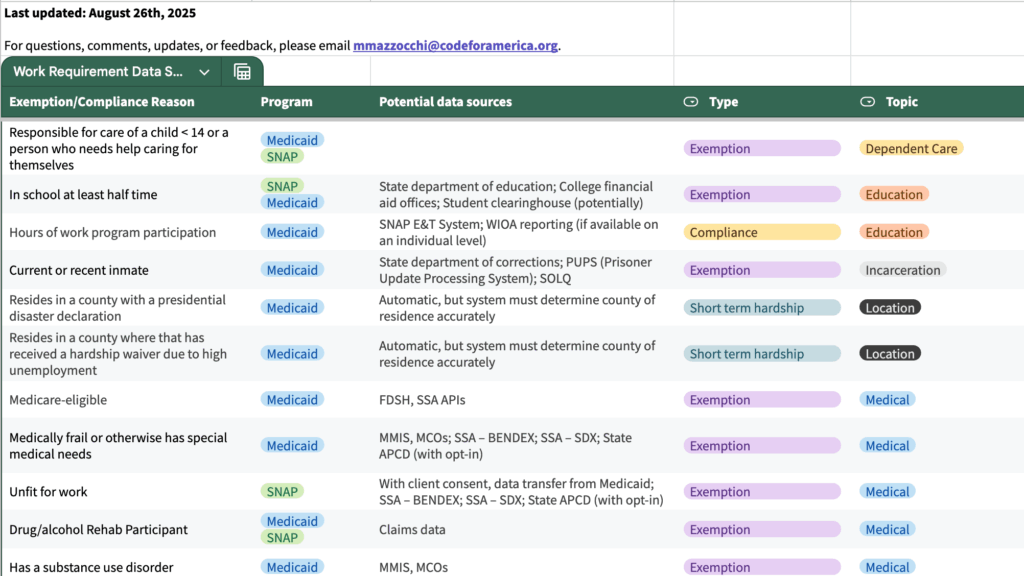
This article offers three human‑centered strategies to help state agencies implement expanded work reporting requirements in SNAP and Medicaid under H.R. 1 with minimal burden on clients and staff.