This report examines how recent federal spending cuts and policy changes are shifting costs onto county governments, potentially burdening local budgets and services.
This report summarizes insights from interviews with seven states on how they are adapting integrated eligibility and enrollment (IEE) systems in response to sweeping federal changes to SNAP and Medicaid under H.R. 1.
Practitioner Picks is a quarterly series designed to add fresh resources to the Digital Government Hub’s library, helping people improve government digital service delivery. Each issue spotlights resources chosen by practitioners in a specific service delivery area along with their insights on why these picks are valuable additions to the Hub.
Technology that automates different processes can save time for caseworkers and constituents, but it can also significantly reduce the transparency of government operations. This paper describes how Pennsylvania advocates addressed the low rate of automated Medicaid renewals.
This article describes how Code for America conducted qualitative research within its GetCalFresh application by asking families to tell them about their familial, housing, and financial situations. From client messages, they gathered information regarding how to make changes to their product to keep their work people-centered.
Our work with Pennsylvania to implement user experience and user interface changes shows that innovation can be easier to implement than it might seem.
WIC enrollment has declined over the last decade, preventing millions of eligible low-income individuals from accessing its benefits. This report examines state WIC outreach pilots and discusses the effectiveness of text message outreach and key considerations when developing and launching targeted text outreach campaigns.
Code for America describes its work building the P-EBT online application and the consulting it provided to 10 states regarding implementing the program in a quick, effective, and human-centered way. Despite herculean efforts among human services and education agencies to get P-EBT off the ground, there were a few key technological, operational, and logistical barriers that consistently got in the way and hampered a smooth rollout of the program across the country.
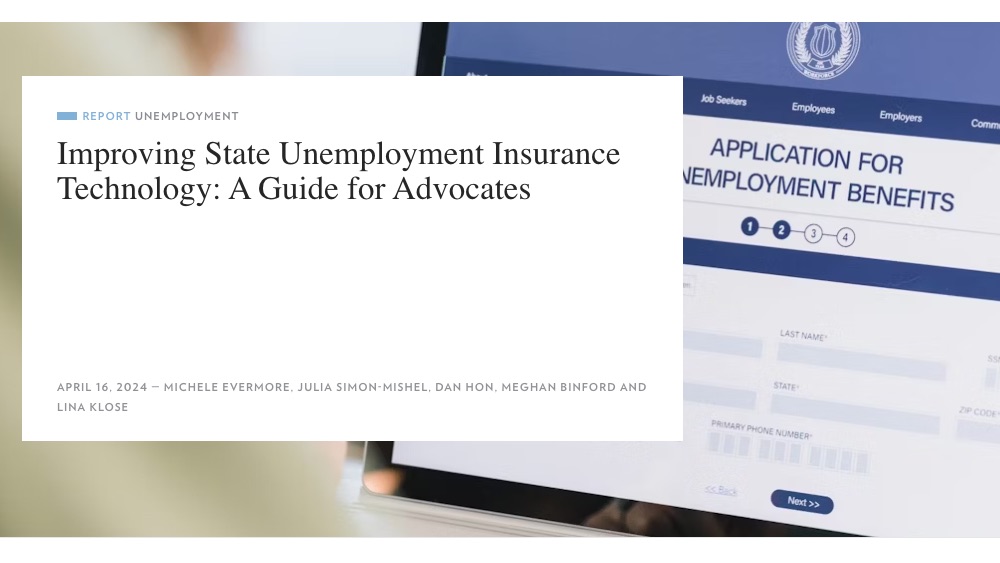
This guide is intended to provide everything else, with a focus on the basics of UI technology projects, guidance on standards for equitable uses of technology, and strategies for how to have a positive impact on these projects.
This toolkit provides individuals and organizations with guidance, drawn from learning and experience, on how to use administrative and other data to inform program improvements. It collects concrete strategies and practitioner-tested tools designed to advance these efforts. These materials were developed in pilot projects with local Temporary Assistance for Needy Families (TANF) agencies as part of the TANF Data Collaborative (TDC).