This toolkit is designed to assist state and local TANF agencies in accessing, linking, and analyzing employment data from unemployment insurance (UI) systems.
This report provides specific actions the federal government could take to reduce identity fraud and establish a whole-of-government victim redress approach.
The goal of the brief is to encourage policy makers and employers to consider benefits cliffs as they look to create mandatory wage increases, with a look at a legislative action in NYC.
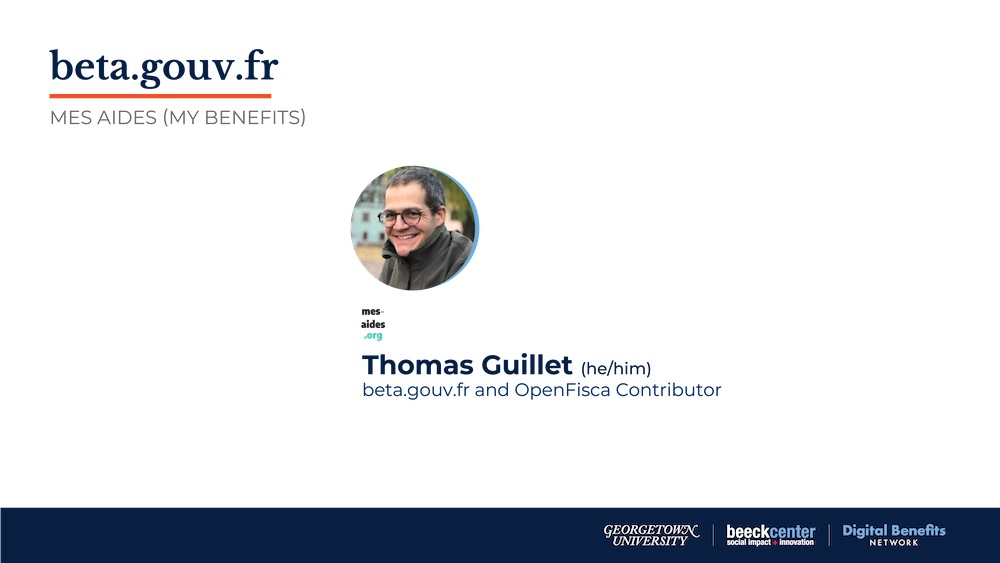
The first half of Rules as Code Demo Day was wrapped up with Thomas Guillet who has contributed to Open Fisca France and beta.gouv. He demoed the code for Mes Aides—or My Benefits—which is France’s social benefit simulator that leverages open source rule models for over 600 benefits while keeping the displayed complexity to its minimum.
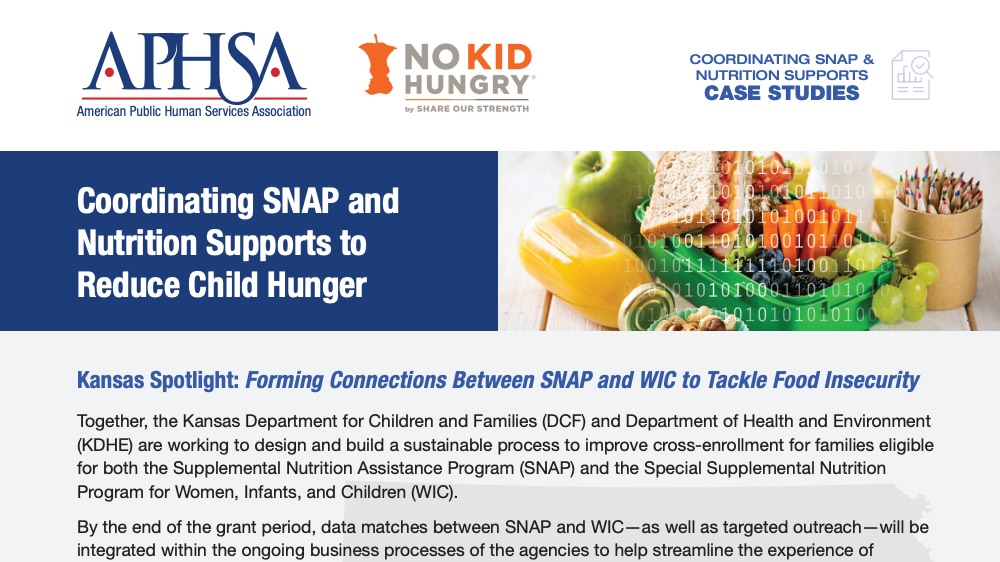
Together, the Kansas Department for Children and Families (DCF) and Department of Health and Environment (KDHE) are working to design and build a sustainable process to improve cross-enrollment for families eligible for both the Supplemental Nutrition Assistance Program (SNAP) and the Special Supplemental Nutrition Program for Women, Infants, and Children (WIC). This report outlines how Kansas will integrate data matches between SNAP and WIC—as well as targeted outreach— within the ongoing business processes of the agencies to help streamline the experience of accessing nutrition supports for clients. These functions will contribute to the agencies’ shared goal of reducing rates of food insecurity in Kansas.
American Public Human Services Association (APHSA)
This playbook outlines the ways Community Action and human services agencies worked together to meet the pandemic challenge—what worked well, obstacles and difficulties, and lessons learned to inform the path forward, partnering to achieve a more equitable recovery. It also explains how communities have leveraged opportunities to partner on approaches that hold the promise of deeper, longer lasting changes for families—work shaped by families’ wishes and strengths and designed to advance both family-level and systems-level change.
American Public Human Services Association (APHSA)
The Center on Budget and Policy Priorities (CBPP) report discusses how reducing administrative burdens in Medicaid can enhance health outcomes and promote racial equity.
Through the interviews, ULP sought to capture details of claimant experience, see how and why system failures occurred, and make recommendations for reform now—before another financial or public health crisis suddenly causes state unemployment rates to spike.