This Code for America article discusses how tax filing can be a powerful tool for economic justice, highlighting efforts to make the tax system more accessible and equitable for low-income individuals.
This report explores the role that academic and corporate Research Ethics Committees play in evaluating AI and data science research for ethical issues, and also investigates the kinds of common challenges these bodies face.
In 2018 the Better Identity Coalition released a Policy Blueprint outlining five key initiatives that to solve the majority of America’s challenges in the digital identity space. This report from 2024 grades progress on each of the original Blueprint’s five key initiatives – as well as the 19 items that were contained in the “action plan” to support those initiatives.
Based on state agency survey responses, this report summarizes key findings from the first calendar year of pandemic response and provides policy considerations for the future of SNAP.
American Public Human Services Association (APHSA)
This report outlines the guiding principles, policy priorities, and tools for the National Collaborative for Integration of Health and Human Services, aimed at improving health and well-being outcomes through the integration of health care and human services programs.
American Public Human Services Association (APHSA)
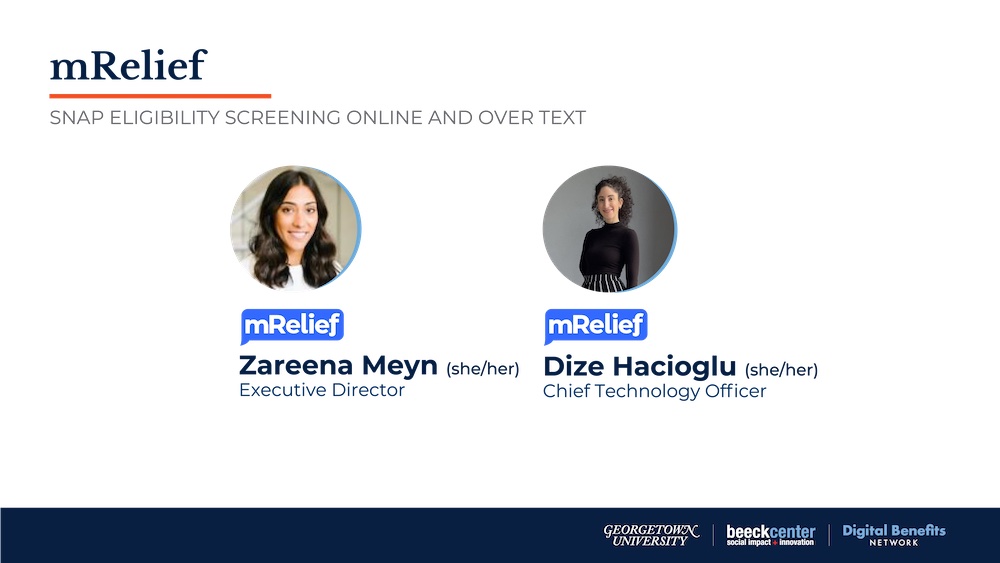
At Rules as Code Demo Day Executive Director Zareena Mayn and Chief Technology Officer Dize Hacioglu of mRelief demoed the code for their Supplemental Nutrition Assistance Program (SNAP) eligibility screener. mRelief is a women-led team that provides a web-based and text message-based SNAP eligibility screener to all 53 states and territories that participate in SNAP. They demonstrated how they have modularized their code to host federal program rules and state-specific rules.
APHSA explains how certain tools and recommendations about when people apply for help, engage in services, and maintain benefits can have a powerful effect to either counter or exacerbate structural barriers to accessing assistance.
American Public Human Services Association (APHSA)
The Center for Democracy and Technology's brief clarifies misconceptions about artificial intelligence (AI) in government services, emphasizing the need for precise definitions, awareness of AI's limitations, recognition of inherent biases, and acknowledgment of the significant resources required for effective implementation.
This resource allows policymakers, employers, benefits providers, and researchers assess benefits performance for constituents and identify opportunities in market and policy innovation to ensure equitable benefits distribution.
Through analyzing hundreds of research studies and surveying thousands of Americans this report identifies 28 life experiences that drive lifetime income, called mobility experiences.