Issued on February 2, 2023, this Executive Order provides guidance to combat discrimination and advance equal opportunity, including by redressing unfair disparities and removing barriers to government programs and services.
This session from FormFest 2024 featured the Department of Homeland Security and the United States Digital Service talking about their work to reduce form burdens for internal and external users.
This report shares the progress of the Biden-Harris Administration on health care access, prescription drug affordability, mental health, maternal health, and public health investments.
This Blueprint is a whole-of-government effort that aims to provide a resource to assist federal decisionmakers in leveraging social and behavioral science to improve policy and program design and delivery.
This handbook highlights the flexibilities in the Federal Acquisition Regulation (FAR) that can help agencies implement “plays” from the Digital Services Playbook, with a particular focus on how to use contractors to support an iterative, customer-driven software development process.
This report summarizes progress made with agencies and members of the public to identify and reduce burdens that individuals, families, and small businesses face every day when interacting with government programs.
The White House Office of Science and Technology Policy has identified five principles that should guide the design, use, and deployment of automated systems to protect the American public in the age of artificial intelligence. These principles help provide guidance whenever automated systems can meaningfully impact the public’s rights, opportunities, or access to critical needs.
The US General Services Administration announces that it is seeking a limited number of state and local government partners to take advantage of login.gov to administer their federally funded programs.
Executive Order 13985, titled "Advancing Racial Equity and Support for Underserved Communities Through the Federal Government," was issued by President Joe Biden on January 20, 2021, to promote equity across federal agencies.
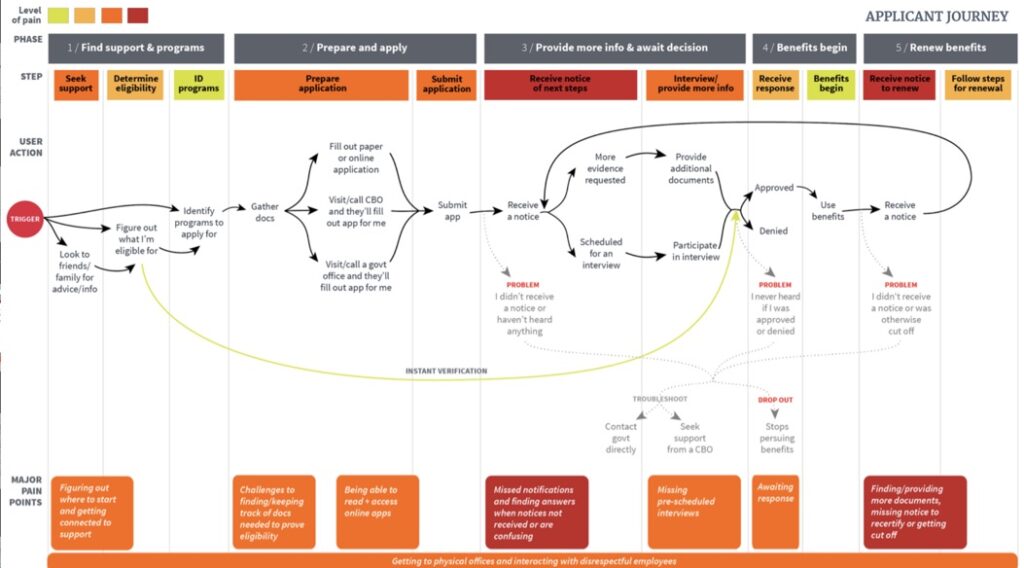
Applicants to federal aid programs face numerous barriers in accessing benefits they are eligible for. The Centers for Medicaid and Medicare conducted an extensive qualitative user research study to better understand applicant experience in enrolling in public assistance programs. Based on the results, the study emphasizes the need for simplified, streamlined and less burdensome application processes.