This case study examines how Michigan’s Department of Health and Human Services uses data practices to advance racial equity in child welfare through identity-informed data collection and anonymous decision-making.
U.S. Department of Health and Human Services (HHS)
This report highlights the agency's role in transforming federal digital services through human-centered design, agile technology, and cross-agency collaboration.
The AI RMF Playbook offers organizations detailed, voluntary guidance for implementing the NIST AI Risk Management Framework to map, measure, manage, and govern AI risks effectively.
National Institute of Standards and Technology (NIST)
The Service and Digital Toolkit is a bilingual, practical resource developed by the Canadian Digital Service to help government teams design and deliver user-centered, accessible, and agile digital services aligned with federal policies and standards.
This report catalogs the policy choices, demonstration projects, and waivers each state uses to administer SNAP, highlighting how states adapt federal rules to local needs.
Canada’s Digital Standards are a set of principles that guide how public servants design, build, and run government digital services so they’re user-centered, accessible, secure, open, and trustworthy.
This framework provides a structured approach for ensuring responsible and transparent use of AI systems across government, emphasizing governance, data integrity, performance evaluation, and continuous monitoring.
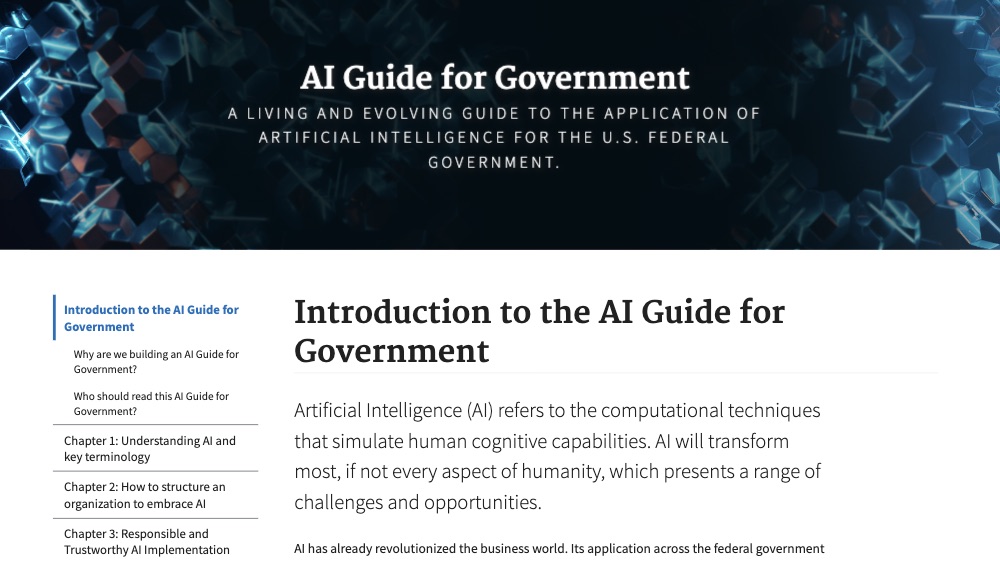
A guide from the General Service Administration to help government decision makers clearly see what AI means for their agencies and how to invest and build AI capabilities.
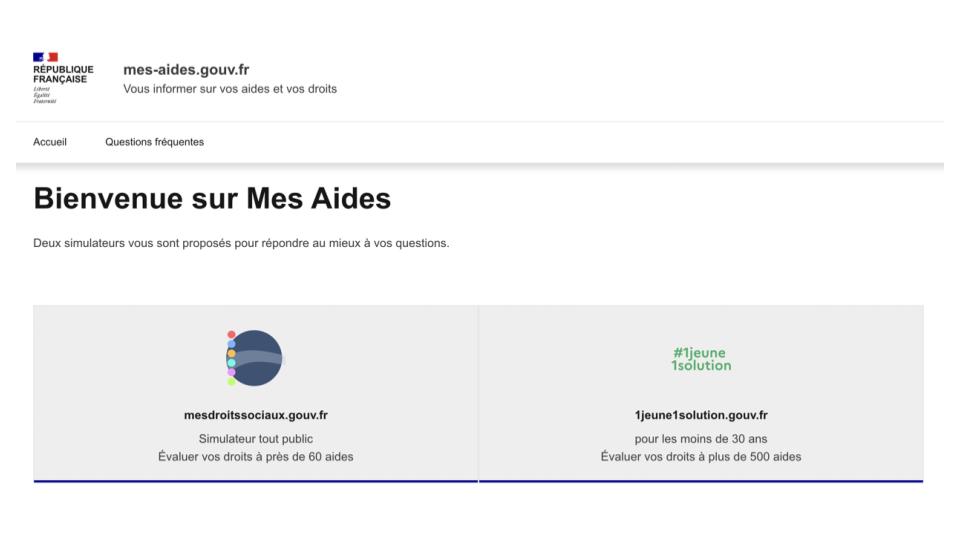
beta.gouv.fr, a French government incubator, developed Mes Aides, an online benefits simulator launched in 2014 to help residents assess their eligibility for various social programs, addressing the issue of unclaimed benefits. The tool, built with open-source technology, enabled users to quickly estimate their potential benefits but was later integrated into a broader platform in 2020 following internal government disputes over authority.
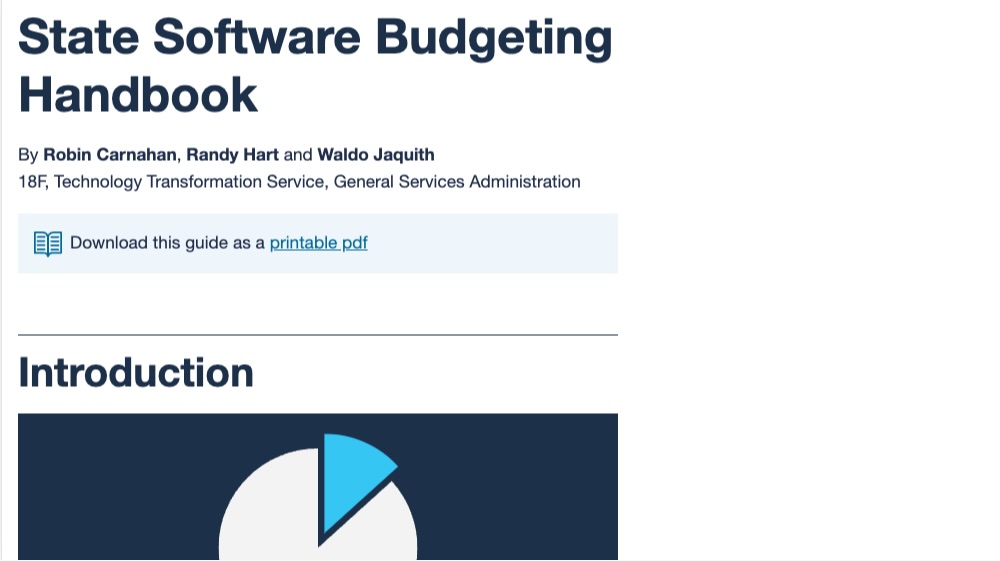
Handbook by 18F designed for executives, budget specialists, legislators, and other “non-technical” decision-makers who fund or oversee state government technology projects that receive federal funding and implement the necessary technology to support federal programs. It aids in setting projects up for success by asking the right questions, identifying the right outcomes, and equally important, empowering decision-makers with a basic knowledge of the fundamental principles of modern software design.