This post explores the lessons learned and opportunities for improvement from USDR's research on families' experiences as they navigate the child care journey.
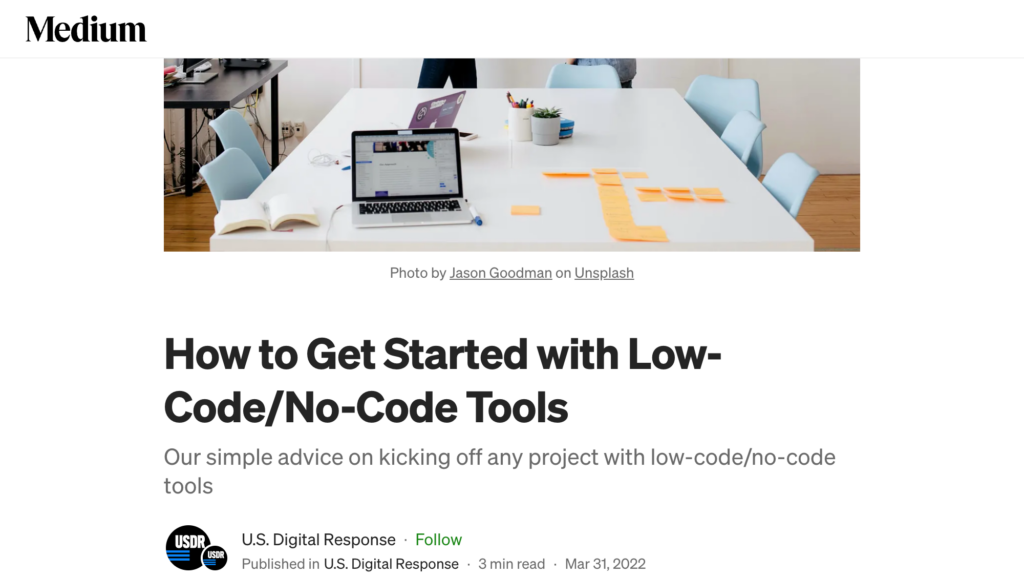
Understanding the strengths and weaknesses of the available low-code/no-code tools will help you pick the right tool for the job and balance their sometimes significant weaknesses with their tremendously valuable strengths.
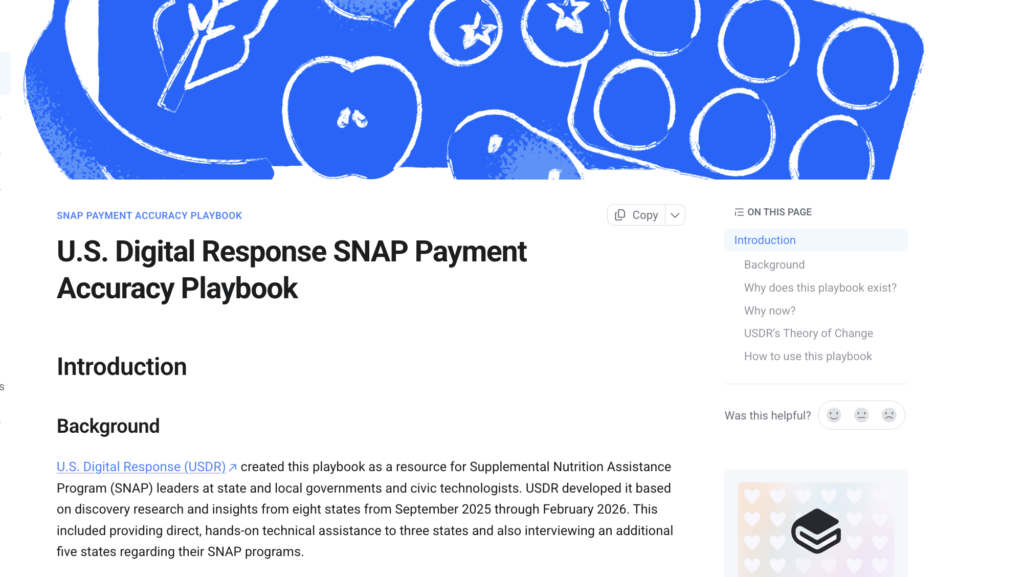
An advisory playbook to help state and local government leaders improve SNAP payment accuracy and lower administrative burdens following the passage of H.R. 1.
This presentation was recorded at the Texting and Notification Working Group meeting coordinated in part by the Aspen Institute Financial Security Program on February 28, 2024.
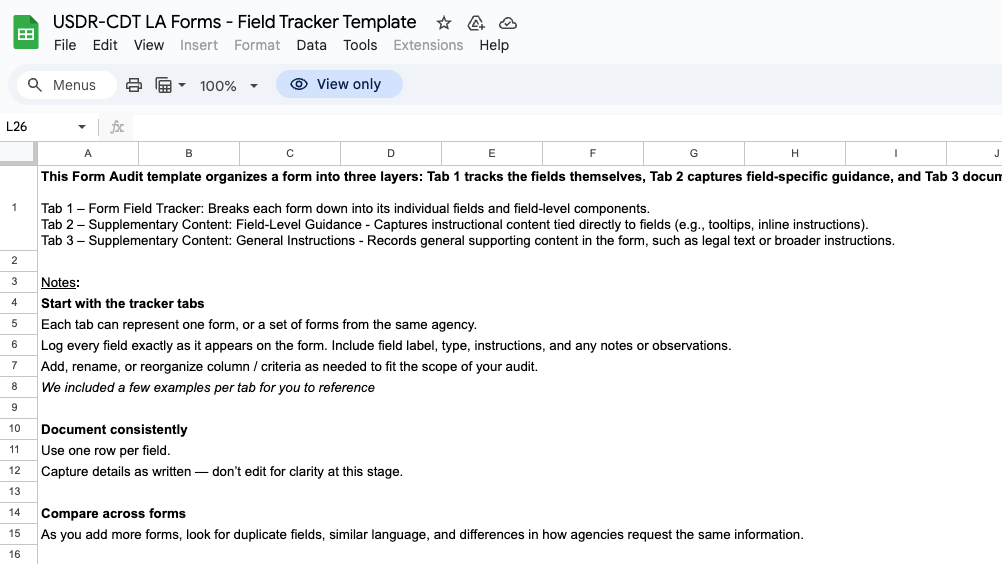
A structured spreadsheet template designed to audit, compare, and standardize government forms by breaking them down into individual fields, guidance, and general instructions.
This guide provides practical financing strategies for governments to build, maintain, and expand integrated data systems (IDS) and evaluation capacity using federal and non-federal funding sources.
Blog post authored by U.S. Digital Response discussing best practices for creating inclusive, accessible, and affirming government services for LGBTQ+ populations gleaned from their recent work in the City of Boston.
Using low-code/no-code tools successfully requires knowing how to pick the right tool and knowing the kind of challenges that merit calling in a technical team for consultation and advice.