This section of the Building Resilience plan outlines comprehensive strategies to help states prevent, detect, and recover unemployment insurance (UI) fraud while protecting legitimate claimants.
This report outlines the U.S. Department of Labor’s comprehensive action plan to strengthen the unemployment insurance (UI) system by addressing chronic underfunding and proposing legislative reforms to support long-term modernization and resilience.
These principles and best practices for AI developers and employers to center the well-being of workers in the development and deployment of AI in the workplace and to value workers as the essential resources they are.
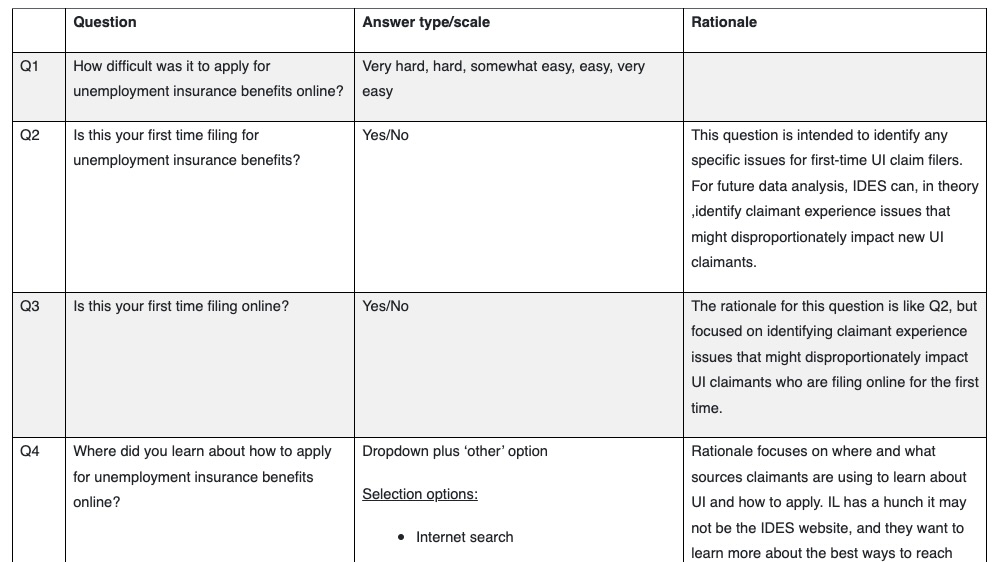
In the Fall of 2022, the USDOL Office of Unemployment Insurance Modernization (OUIM) consulted with the Illinois Department of Employment Security (IDES) to provide hands-on support with IT modernization and customer experience strategy. Primary discussions focused on making informed product, service, and business decisions based on qualitative and quantitative data— how might IDES leverage existing data streams to identify the most pressing technology issues in their unemployment insurance system, and how might IDES act upon this information in a timely and impactful manner?
For the past year, modernization teams at the Department of Labor (DOL) have been helping states identify opportunities to automate rote, non-discretionary, manual tasks, with the goal of helping them speed up the time that it takes to process claims. This post provides more context on Robotic Process Automation (RPA) and potential use cases in unemployment insurance.
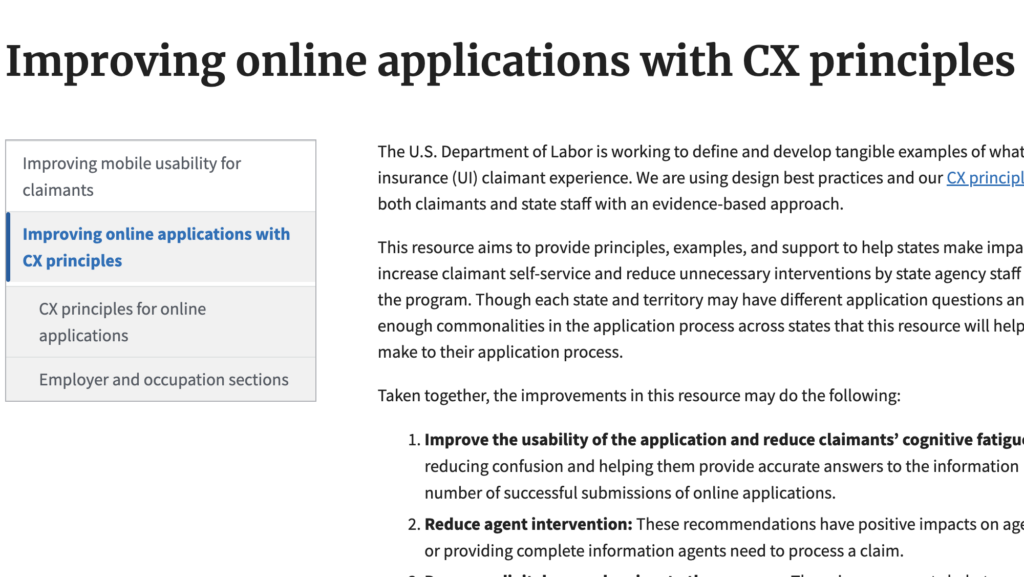
This research used observational research with unemployment insurance (UI) claimants to identify pain points in the application process and inform customer experience improvements.
The GAO placed the UI system on its High Risk List in June 2022, leading the DOL to develop a transformation plan detailing activities and strategies for building a resilient UI system capable of responding effectively to future economic challenges.
This section of the Building Resilience plan outlines strategies to improve the long-term solvency and sustainability of state unemployment insurance (UI) trust funds through better funding practices and legislative reform.
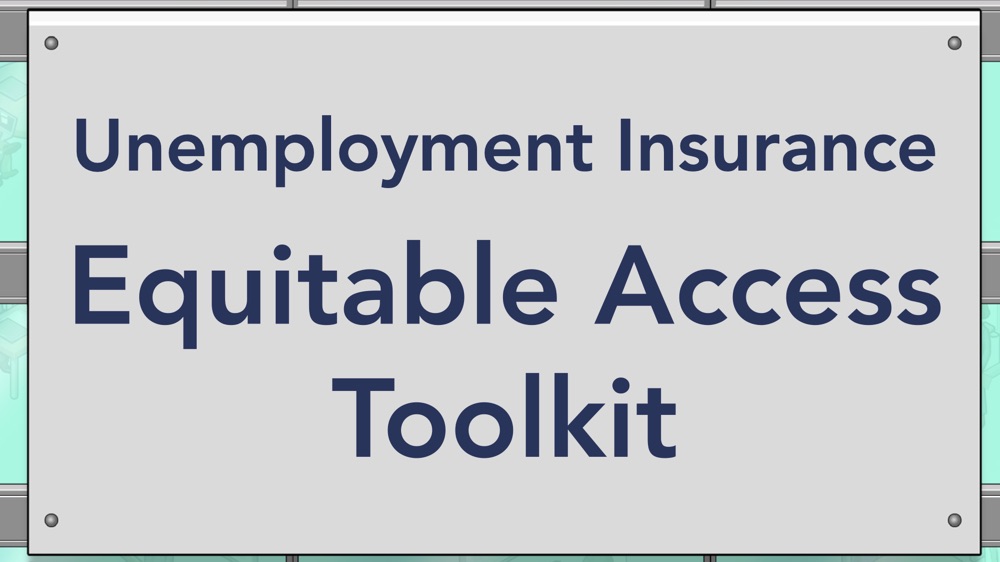
The Unemployment Insurance Equitable Access Toolkit contains common equity recommendations, promising practices, and insights, represented visually as a different floor of an agency office building, compiled in one interactive document.