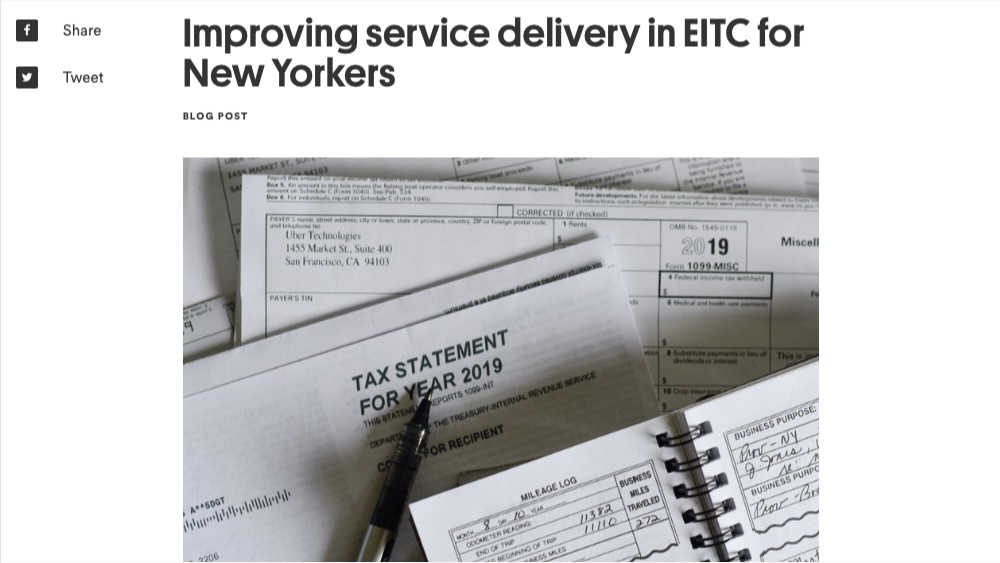
The Improving Service Delivery in EITC for New Yorkers initiative explores ways to enhance access to the Earned Income Tax Credit (EITC) through improved outreach, application processes, and service delivery.
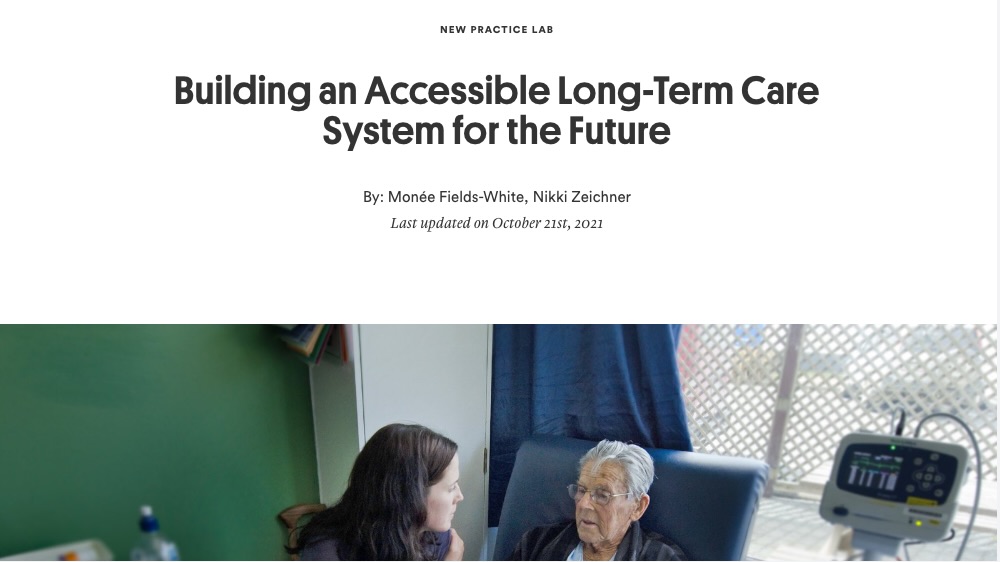
The nation’s long-term care system has struggled for many years, and those constraints are expected to deepen as our nation ages. In 2019, Washington State became the first in the United States to pass legislation that would enable a public state-operated long-term care insurance program, the Washington Cares Fund. We conducted research with the goal to identify concrete ways for Washington State to implement this fund so that it is accessible to all and it supports living-wage jobs for care workers. In this report, we discuss our research methods, we present personas of individuals seeking long-term supports and services from the Washington Cares Fund, and we offer a list of recommendations that, while intended for Washington State, we see as applicable to other states that will embark on offering similar long-term services to residents.
The IRS is arguably the single most critical benefits administrator in the country, given its responsibility for tax credit-based relief programs, and COVID-19 relief payments. Despite these programs’ incredible progress in reducing poverty, and despite great strides by the IRS to implement them successfully, accessing IRS benefits remains too difficult for many low-income families. This report presents a comprehensive agenda to increase benefit coverage rates, simplify Americans’ interactions with the IRS, and decrease the portion of IRS benefits diverted to third parties.
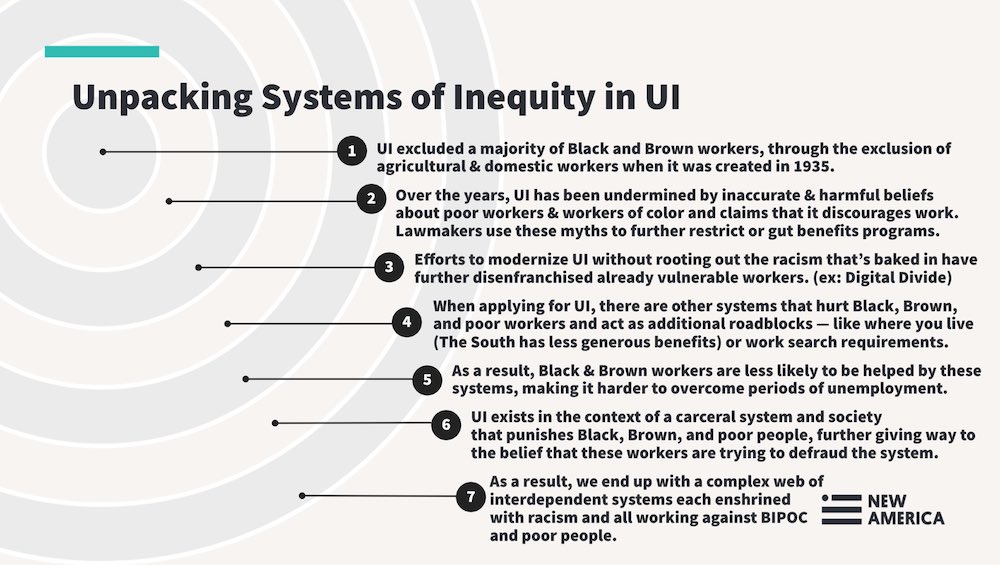
New America’s New Practice Lab discusses insights into racial inequities within the Unemployment Insurance System, and provides recommendations its framework for rectifying inequality in policies and programs moving forward.
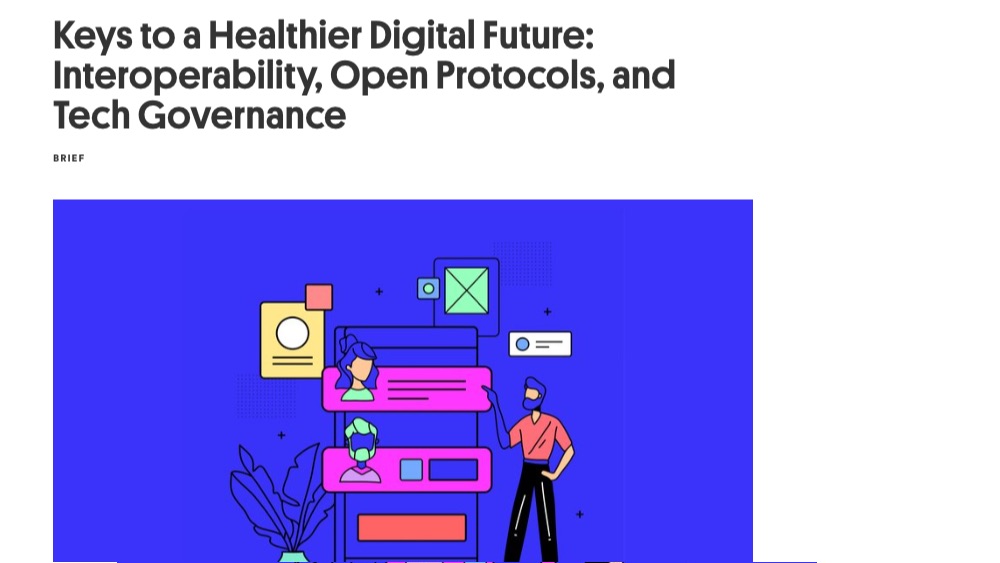
This research brief summarizes the ideas and recommendations from sessions with dozens of cross-sector stakeholders within the technology ecosystem to identify conditions for better, healthier, more secure digital ecosystems that could help guide the next generation of open protocols and platforms.
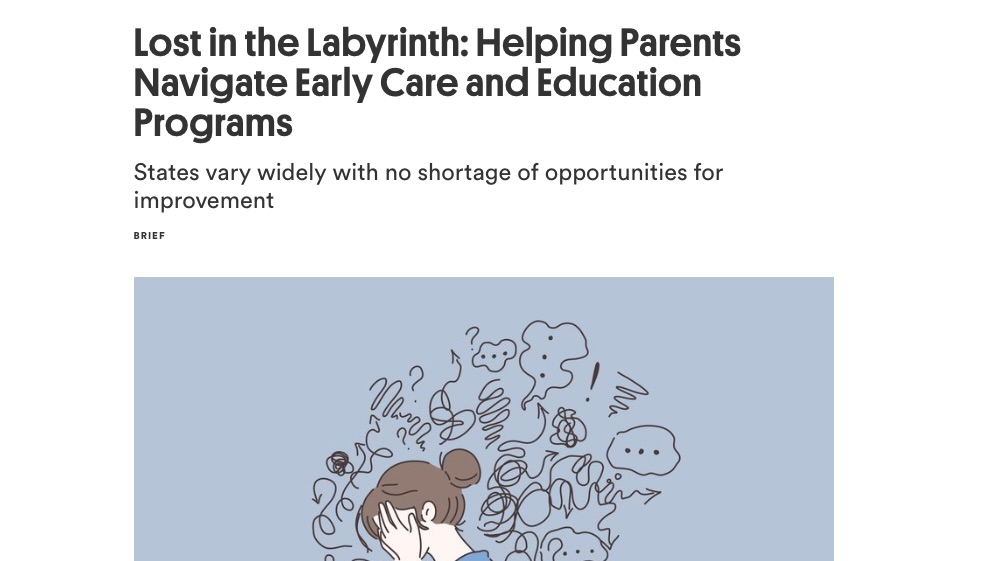
The Lost in the Labyrinth brief examines how fragmented early care and education (ECE) programs across the U.S. create challenges for families seeking services for young children.