This project portfolio page details a human-centered service design partnership with the Michigan Unemployment Insurance Agency (UIA) to revitalize and streamline the state's unemployment benefits system following crisis-level strain.
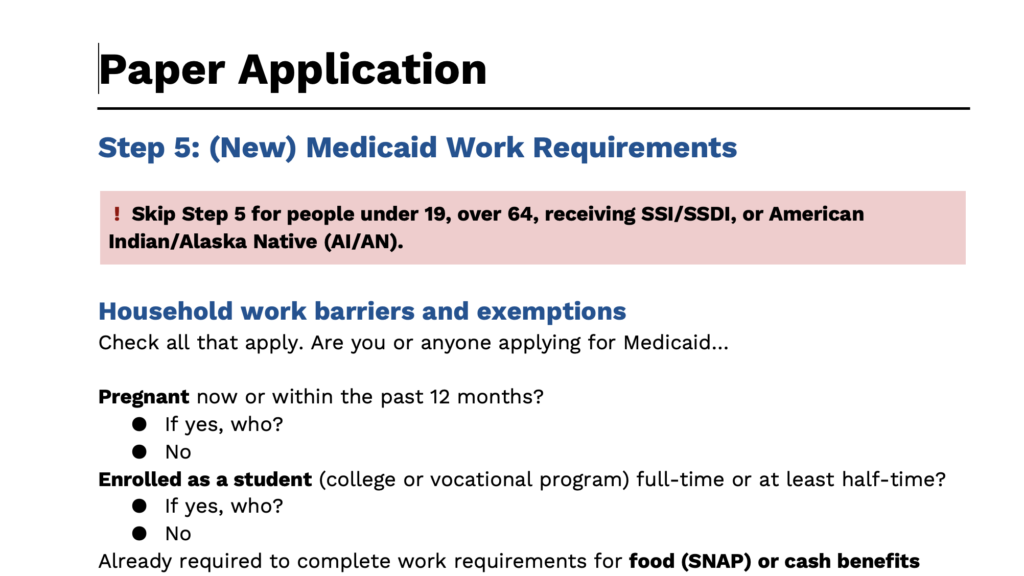
This folder contains Medicaid work requirement implementation toolkit, including policy guidance, application templates, question libraries, and a digital prototype designed to help states integrate work requirement questions into Medicaid applications.
This report provides human-centered design templates and implementation guidance to help states integrate Medicaid work requirement questions into benefits applications while minimizing administrative burden and coverage loss.
This guide highlights approachable ideas for state and local public benefits agencies to improve applications, renewals, and correspondence. As outlined in this resource, even small improvements can be transformative for residents and caseworkers alike.
A report outlining human-centered design strategies to help states implement new federal Medicaid work requirements in ways that minimize coverage loss and administrative burden
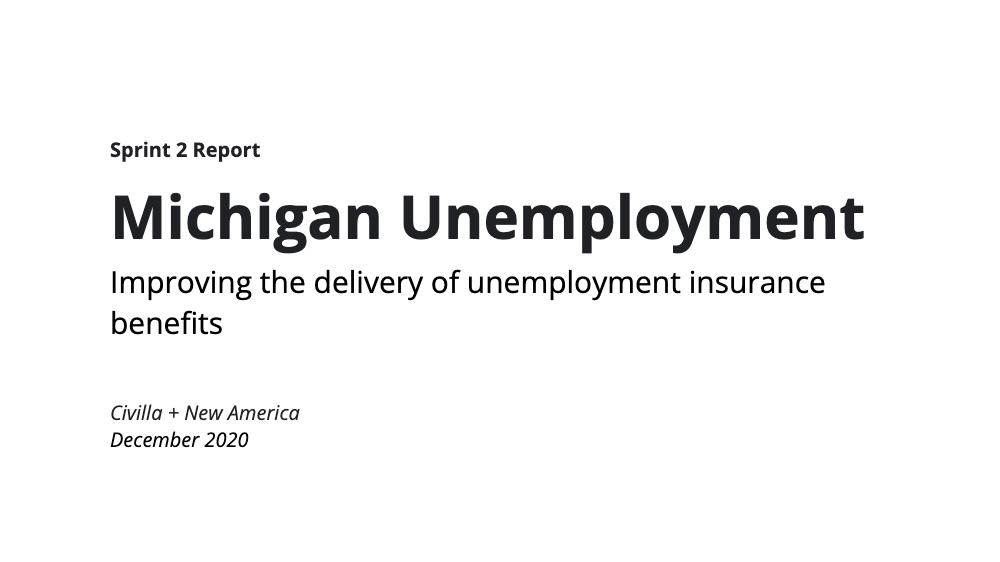
The Sprint 2 Report: Michigan UI Claimant Experience by Civilla and New America examines challenges in Michigan’s unemployment insurance (UI) system and provides human-centered design recommendations to improve accessibility, clarity, and user experience.
This guide provides practical insights for benefits administrators on redesigning benefits systems using human-centered design to ensure all eligible residents can access crucial social safety net resources.