This presentation, from the Data Sharing Working Group, highlights a Michigan Department of Health and Human Services and Benefits Data Trust project to increase enrollment in the Women, Infants, and Children (WIC) program.
Accounting for the strong effects of health care access, this study finds that SNAP is associated with reduced hospitalization in dually eligible older adults. Policies to increase SNAP participation and benefit amounts in eligible older adults may reduce hospitalizations and health care costs for older dual eligible adults living in the community.
WIC enrollment has declined over the last decade, preventing millions of eligible low-income individuals from accessing its benefits. This report examines state WIC outreach pilots and discusses the effectiveness of text message outreach and key considerations when developing and launching targeted text outreach campaigns.
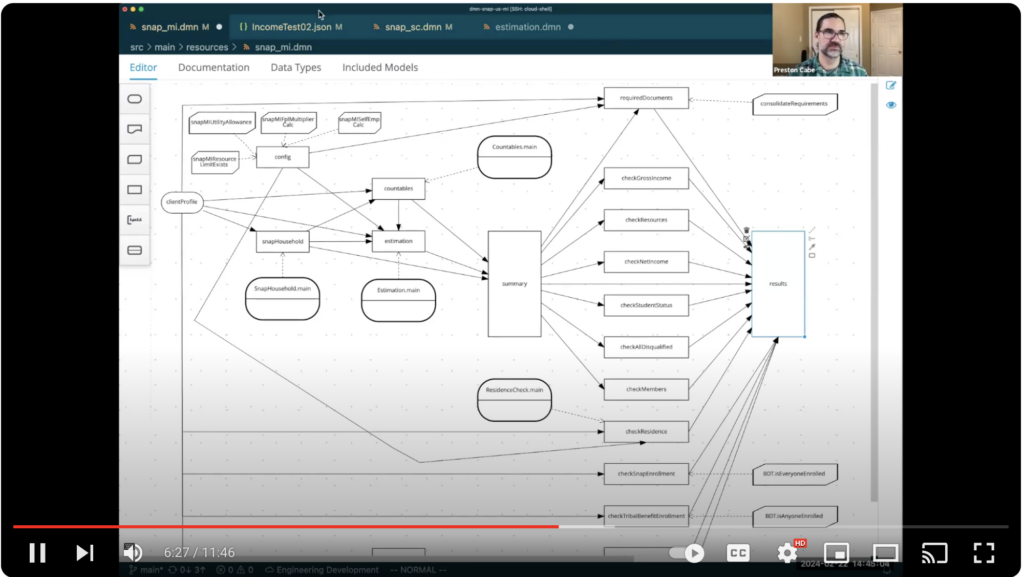
Clearing applicant backlogs is an important solution to the UI crisis. State governments and federal agencies could facilitate access to public benefits by collaborating to develop interoperable technology platforms that use open source software and modular design. Panelists discuss opportunities to prevent future UI crises by reimagining how governments deliver benefits to their citizens.
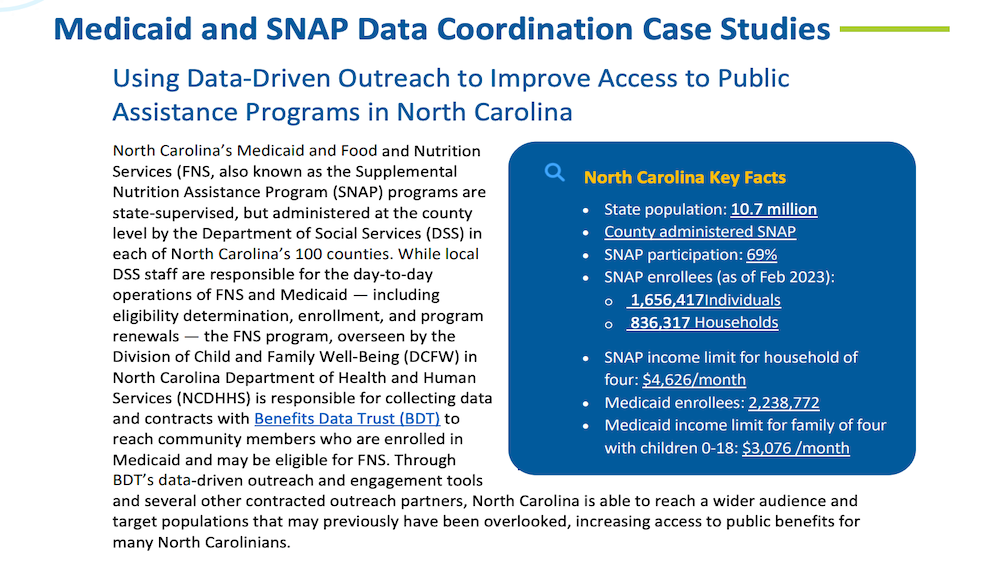
A study shows that Benefits Data Trust’s outreach and application assistance significantly increased SNAP enrollment among North Carolina seniors, improving health outcomes and reducing Medicaid costs.
This report examines the extent to which proposed options included in the Student Food Security Act, Let Students Eat proposal, and the EATS Act impact specific demographics of students, either by increasing access or by streamlining the process for qualifying students to demonstrate eligibility.
This case study series highlights innovative state strategies to improve data coordination between SNAP and Medicaid agencies and increase access for eligible people.
Benefits Data Trust (BDT), in collaboration with the Center for Health Care Strategies (CHCS), conducted a nationwide analysis of how states coordinate across Medicaid and SNAP programs to streamline access to benefits.