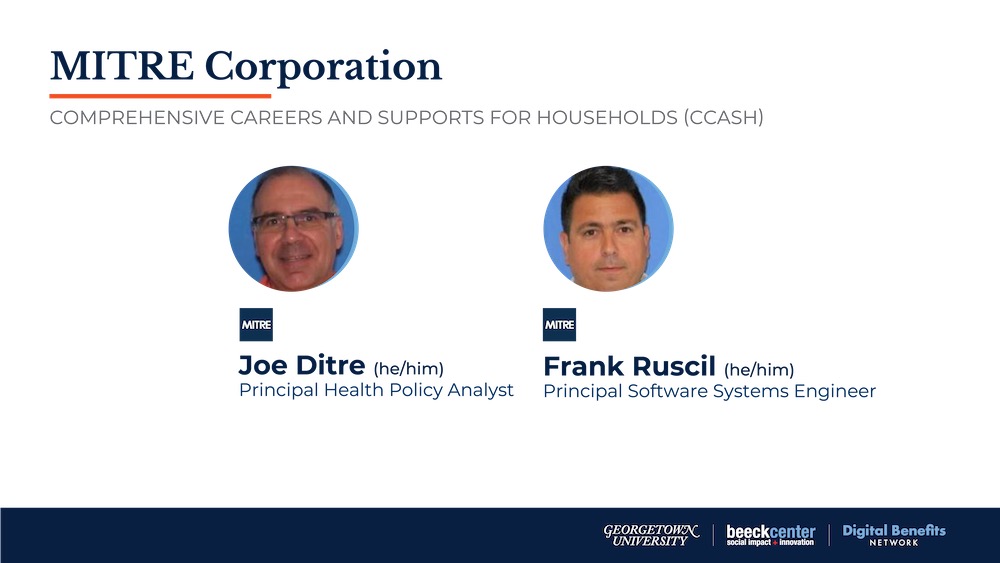
MITRE’s Joe Ditre and Frank Ruscil demoed the code for the Comprehensive Careers and Supports for Households (C-CASH) at Rules as Code Demo Day. The MITRE team expanded the accessibility of the Policy Rules Database and the Cost-of-Living Database (the prior demo) by creating a web service API and a front-end Window’s application called C-CASH Analytic Tool (CAT). CAT provides a more scalable, flexible, and portable functionality which allows end-users to generate various households to run eligibility scenarios across different U.S. counties and states. They are currently working to create a national data hub and analytics tool, starting with utilizing U.S. Census data and populating the data warehouse by pushing large amounts of data through the PRD.
On May 19, 2023, the Digital Benefits Network published a new, open dataset documenting authentication and identity proofing requirements across online SNAP, WIC, TANF, Medicaid, child care (CCAP) applications, and unemployment insurance applications.
This page includes data and observations about authentication and identity proofing steps specifically for online applications that include MAGI Medicaid.
During the call, we heard from two speakers: April Dunlap, Policy Administrator for Arizona’s Department of Economic Security and Professor Michele Gilman, Venable Professor of Law and Associate Dean for Faculty Research and Development at the University of Baltimore School of Law.
The report highlights a project to improve the Philadelphia Office of Homeless Services' (OHS) prevention and intake processes by implementing trauma-informed practices. In collaboration with staff, participants, and trauma experts, the project aimed to reduce distress for those accessing services while equipping staff with tools and training to better manage trauma-related interactions, creating a more supportive and empathetic service environment.
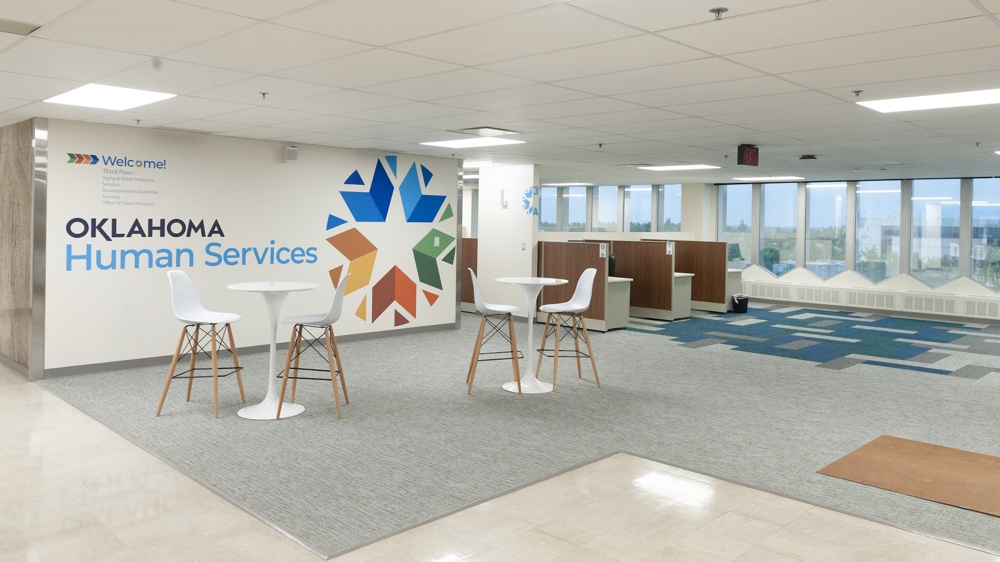
Oklahoma Human Services (OKDHS) modernized their service delivery by reducing their real estate footprint, designing trauma-informed and user-friendly spaces, and expanding an embedded worker program to improve accessibility and client experience. Through their "Service First" strategy, OKDHS aims to create more equitable and compassionate interactions, reaching vulnerable populations while addressing high occupancy costs.
The Digital Service Network (DSN) spoke with Daniel Soto, principal management analyst at the City of Santa Ana, to learn more about how digital service innovation can occur in government organizations without formally codified or centralized digital service teams.
The team explored the performance of various AI chatbots and LLMs in supporting the adoption of Rules as Code for SNAP and Medicaid policies using policy data from Georgia and Oklahoma.
The team developed an application to simplify Medicaid and CHIP applications through LLM APIs while addressing limitations such as hallucinations and outdated information by implementing a selective input process for clean and current data.
This publication from the Digital Service Network (DSN) explores how state and local leaders are tackling the challenge of finding, keeping, and growing digital service talent in government. Through real-world stories and actionable strategies, it highlights how teams are making the case for digital roles, improving hiring practices, and upskilling staff to build a strong, sustainable digital workforce.