This policy brief explores how federal privacy laws like the Privacy Act of 1974 limit demographic data collection, undermining government efforts to conduct equity assessments and address algorithmic bias.
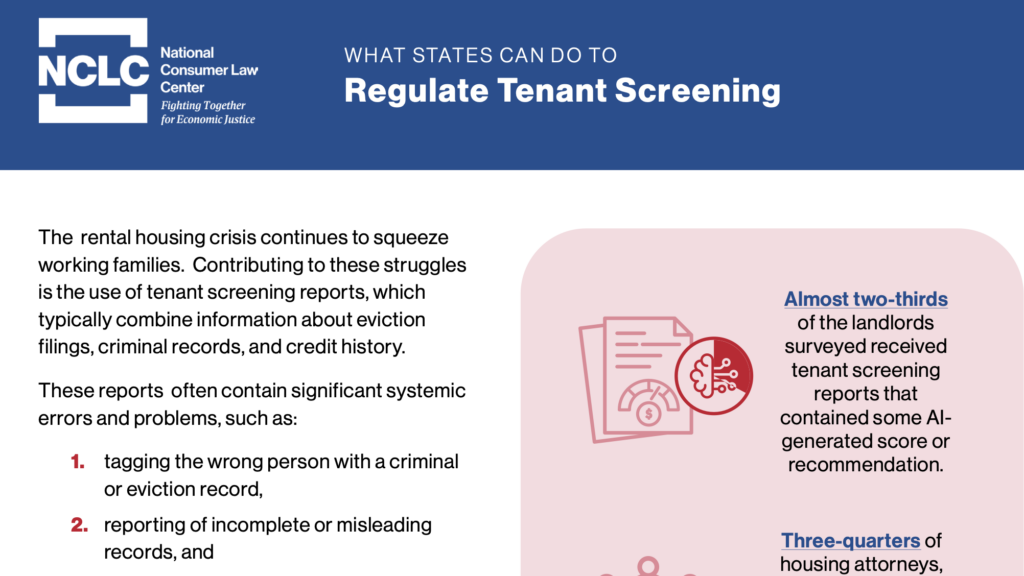
A policy brief outlining concrete actions states can take to regulate tenant screening practices and reduce harm from inaccurate reports, automated scoring, and discriminatory impacts in the rental housing market.
This article examines how Chile’s SUSESO is balancing cost-focused procurement criteria with ethical AI concerns in its medical claims automation process.
This report examines how governments use AI systems to allocate public resources and provides recommendations to ensure these tools promote equity, transparency, and fairness.
This toolkit provides guidance to protect participant confidentiality in human services research and evaluation, including legal frameworks, risk assessment strategies, and best practices.
U.S. Department of Health and Human Services (HHS)
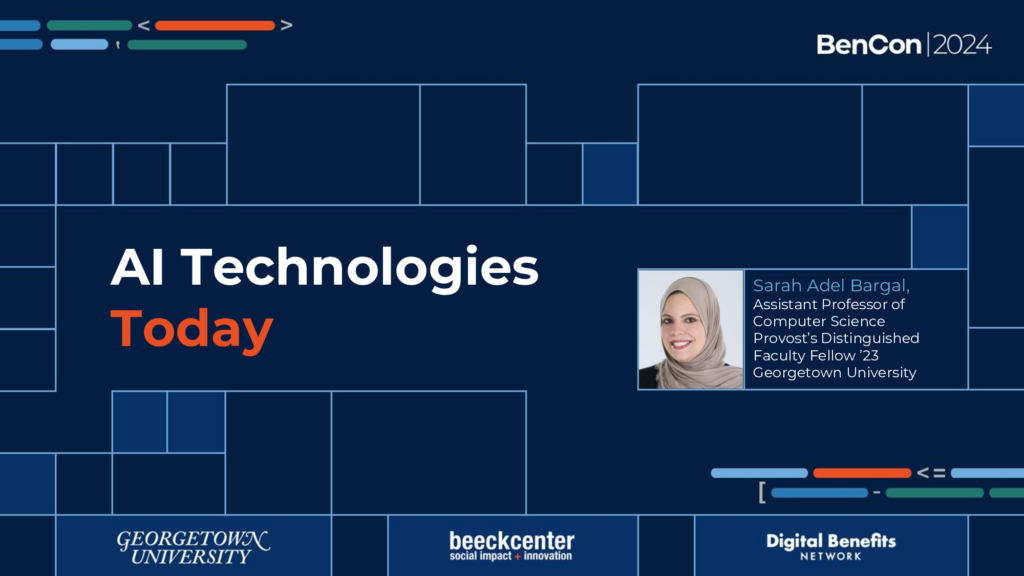
Sarah Bargal provides an overview of AI, machine learning, and deep learning, illustrating their potential for both positive and negative applications, including authentication, adversarial attacks, deepfakes, generative models, personalization, and ethical concerns.
This report analyzes lawsuits that have been filed within the past 10 years arising from the use of algorithm-driven systems to assess people’s eligibility for, or the distribution of, public benefits. It identifies key insights from the various cases into what went wrong and analyzes the legal arguments that plaintiffs have used to challenge those systems in court.
This guide, directed at poverty lawyers, explains automated decision-making systems so lawyers and advocates can better identify the source of their clients' problems and advocate on their behalf. Relevant for practitioners, this report covers key questions around automated decision-making systems.
This guidebook offers an introduction to the risks of discrimination when using automated decision-making systems. This report also includes helpful definitions related to automation.
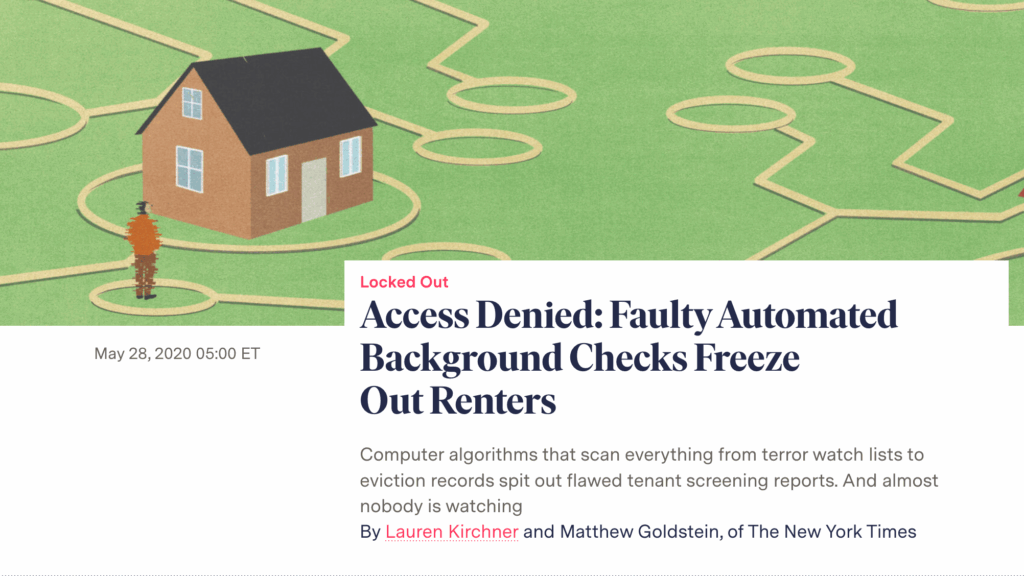
This reporting explores how algorithms used to screen prospective tenants, including those waiting for public housing, can block renters from housing based on faulty information.