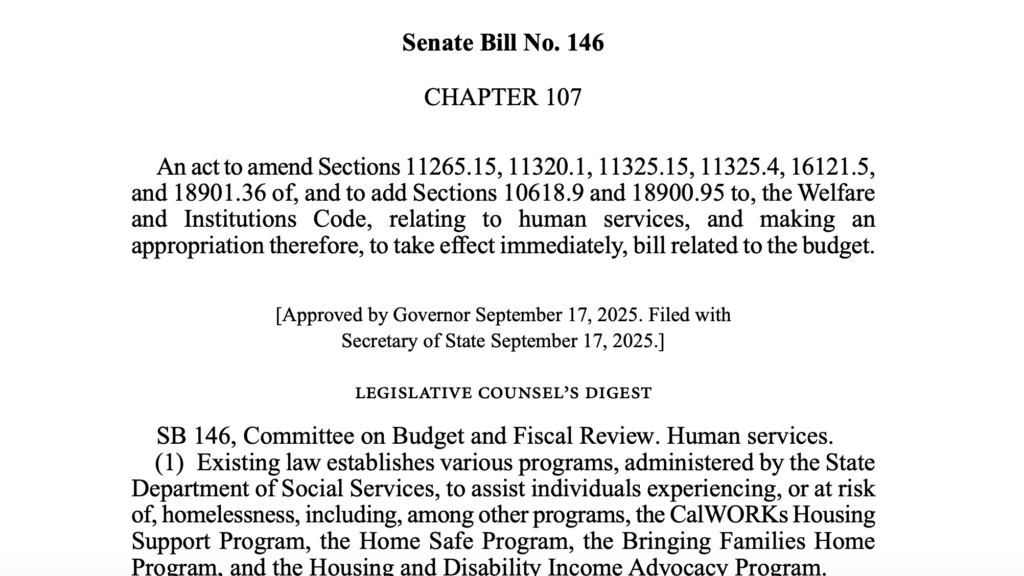
A comprehensive human services policy that strengthens due process, transparency, and administrative fairness across housing assistance, CalWORKs, and CalFresh programs while funding system changes to reduce payment errors and administrative burden.
This guide helps UK public bodies understand how to responsibly procure, develop, and use AI while meeting their legal duties to prevent discrimination and promote equality under the Public Sector Equality Duty (PSED).
This blog introduces the GSA’s Public Benefits Studio, which partnered with agencies to build shared tools—starting with a multi-channel notifications service—to improve coordination and access across federal public benefits programs.
This page describes how the GSA’s 10x team supported digital trust and security across federal services by building shared tools, automating compliance, and exploring privacy-preserving techniques.
This page describes the agency’s investments in digital tools and services aimed at reducing friction in how people find, apply for, and maintain eligibility for federal benefits.
The portfolio page outlines federal projects focused on elevating how people interact with government services by prioritizing user needs, accessibility, equity, and consistency across agencies.
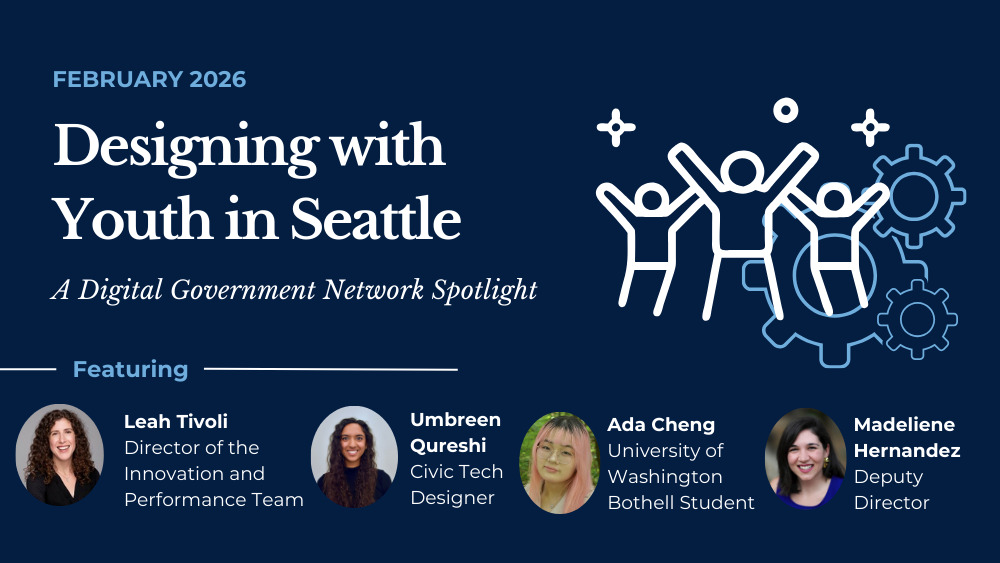
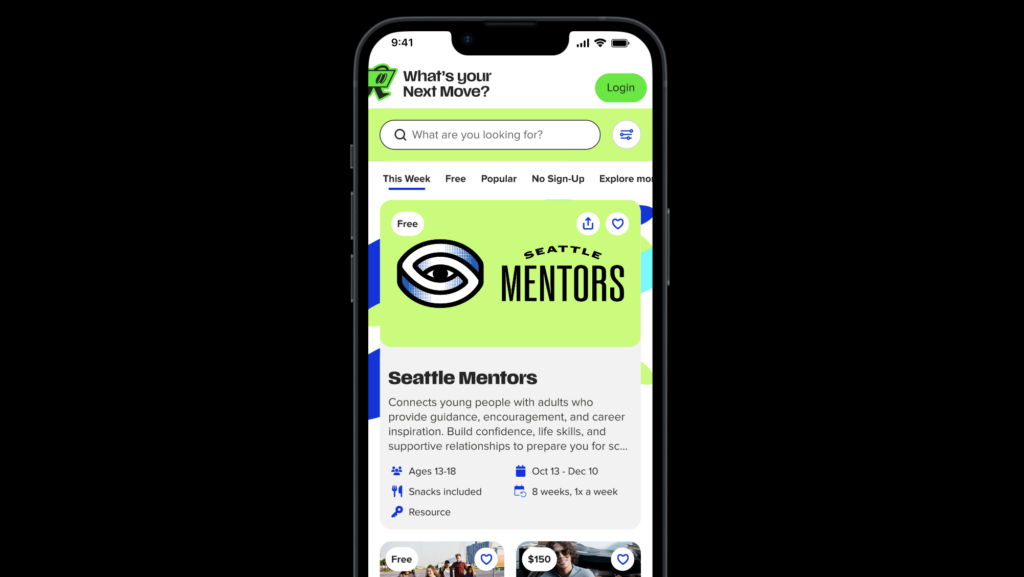
DGN Spotlights highlight innovative digital initiatives transforming how government connects with the public. This story explores Seattle’s Youth Connector—a youth-informed digital platform and outreach strategy that aims to make youth programs easier to find, access, and trust.
The article examines the effects of Arkansas’s Medicaid work requirements, finding substantial coverage losses and no significant increase in employment, compounded by widespread confusion among beneficiaries about the policy.
An interactive prototype that illustrates a user interface concept for the Seattle Next Move service, showcasing screen flows and interactions for mobile/web user journeys.
A reusable UI design template showcasing key interface patterns, components, and layout structures for the Seattle Next Move digital service to support consistent, user-centered design across screens.