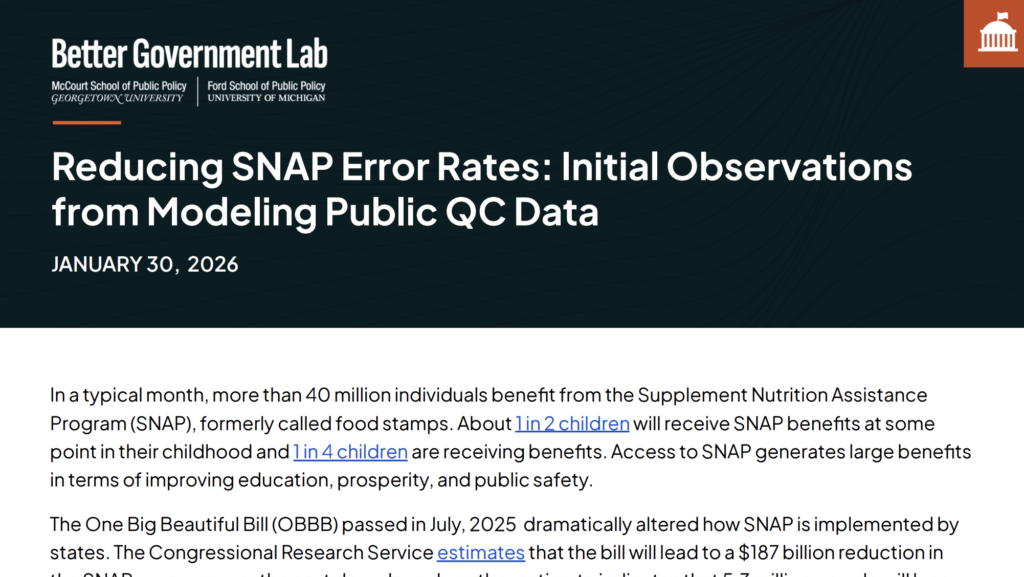
This technical brief uses predictive analytics to identify the primary drivers of SNAP payment error rates (PER) following the implementation of the One Big Beautiful Bill (OBBB).
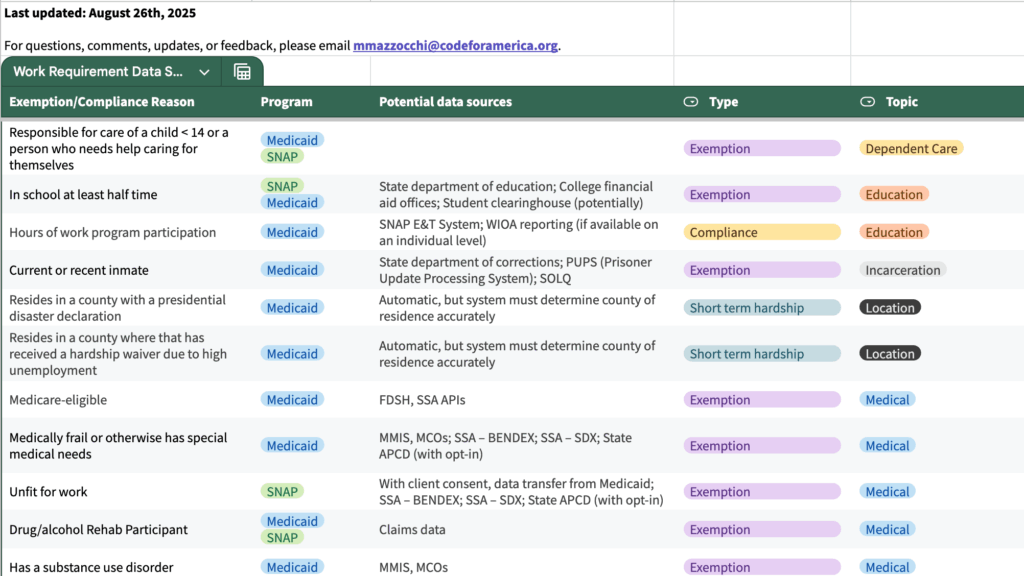
This presentation focuses on data-driven and analytic strategies for identifying and verifying medical frailty exemptions within Medicaid work requirements.
This publication offers a starting point into the current research and practice landscape on data interoperability for public benefits administration. It identifies key takeaways for those looking to advance such efforts in their jurisdiction. In particular, it pinpoints what the research reveals about key challenges benefits agencies face, as well as recommendations for addressing those challenges and examples of states and localities that have done so.
This toolkit is designed to assist state and local TANF agencies in accessing, linking, and analyzing employment data from unemployment insurance (UI) systems.
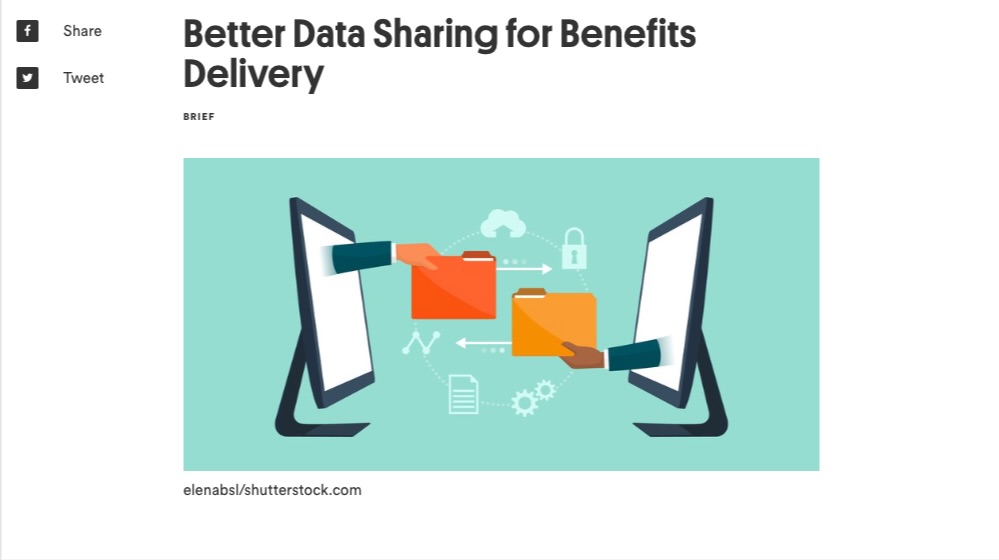
This policy brief outlines how improved data sharing between federal agencies, state and local governments, and institutions can leverage existing data from other benefits programs to streamline eligibility processes and benefits uptake for the Affordable Connectivity Program (ACP) and other programs.
This issue brief describes the Pennsylvania case study, outlines the historical context, and offers strategies and recommendations for successfully implementing Fast Track.
This presentation from Steph White, Cross Enrollment Coordinator at the Michigan Department of Health and Human Services offers an in-depth example on implementing cross enrollment with WIC and general tools for cross enrollment.
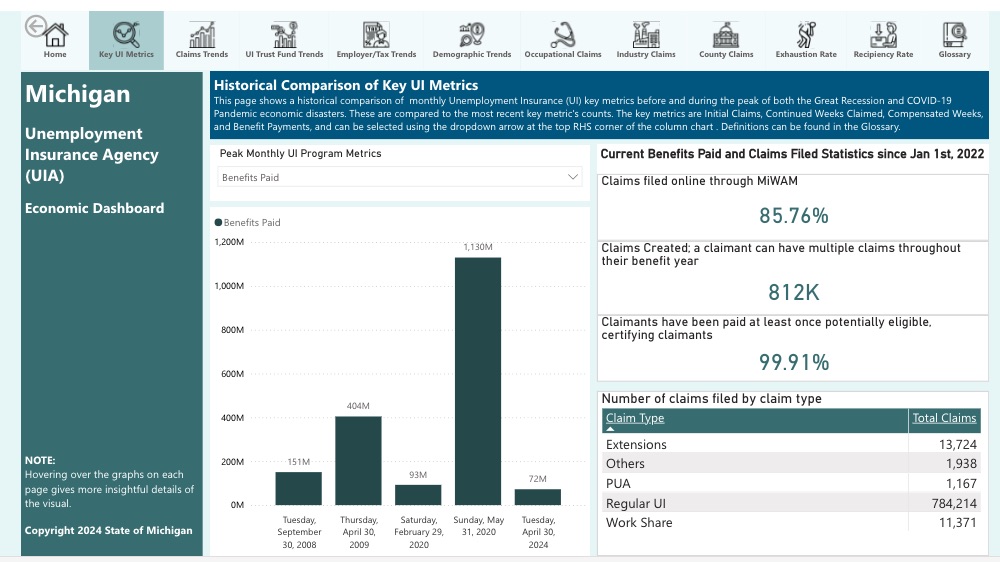
This dashboard provides a comprehensive view of underlying trends in unemployment across Michigan. It serves as an invaluable resource for understanding the impacts of unemployment on various industries, occupations, and communities. By providing detailed insights into sectors experiencing layoffs, claimant demographics, and the regions most affected, the dashboard equips us with the data needed to develop targeted solutions tailored to the needs of Michiganders.
This report offers a detailed assessment of how AI and emerging technologies could impact the Social Security Administration’s disability benefits determinations, recommending guardrails and principles to protect applicant rights, mitigate bias, and promote fairness.