A pre-launch survey brief that documents the financial, emotional, and physical well-being of a local child care workforce before the start of a wage boost pilot.
A case study that reflects on the design, implementation, and early outcomes of a local child care wage boost pilot aimed at improving job quality and retention in the child care workforce.
The Digital Service Network (DSN) spoke with three staff members from the Digital Transformation Team in Montgomery County Public LIbraries—Maddie Schellhardt, Raymond Bryson, and Emily Lamancusa, to learn more about the county's efforts to advance digital service delivery and inclusion
This example examines Miami-Dade County's initiative to streamline digital applications for LIHEAP, aiming to improve accessibility and efficiency for residents seeking energy assistance.
This report explores how state and local agencies can enhance customer service in health and human services by implementing technologies such as web-based tools, mobile applications, and call center innovations, aiming to streamline processes and improve client interactions.
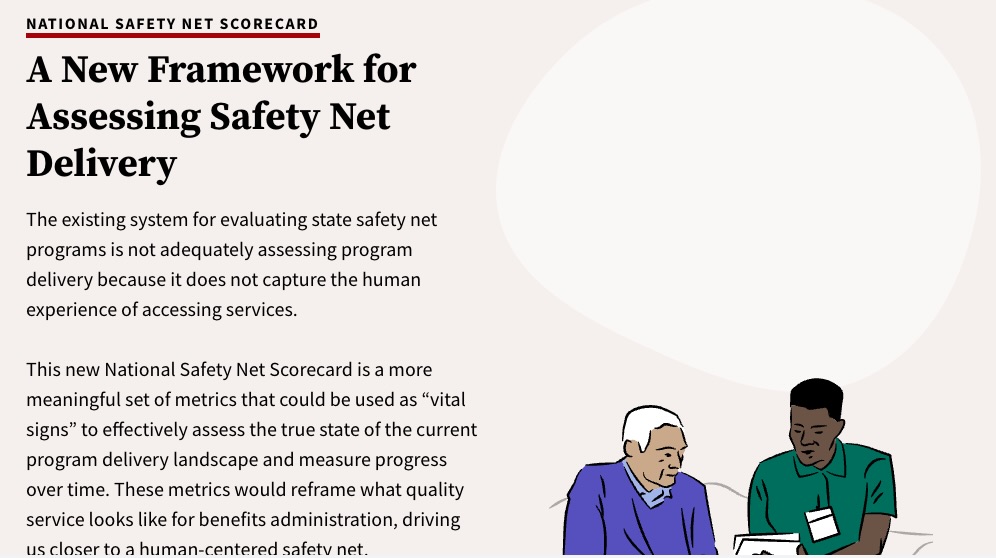
The existing system for evaluating state safety net programs does not adequately capture the human experience of accessing services. This new National Safety Net Scorecard is a more meaningful set of metrics that can effectively asses the true state of the current program delivery landscape and measure progress over time, creating a more human-centered safety net.
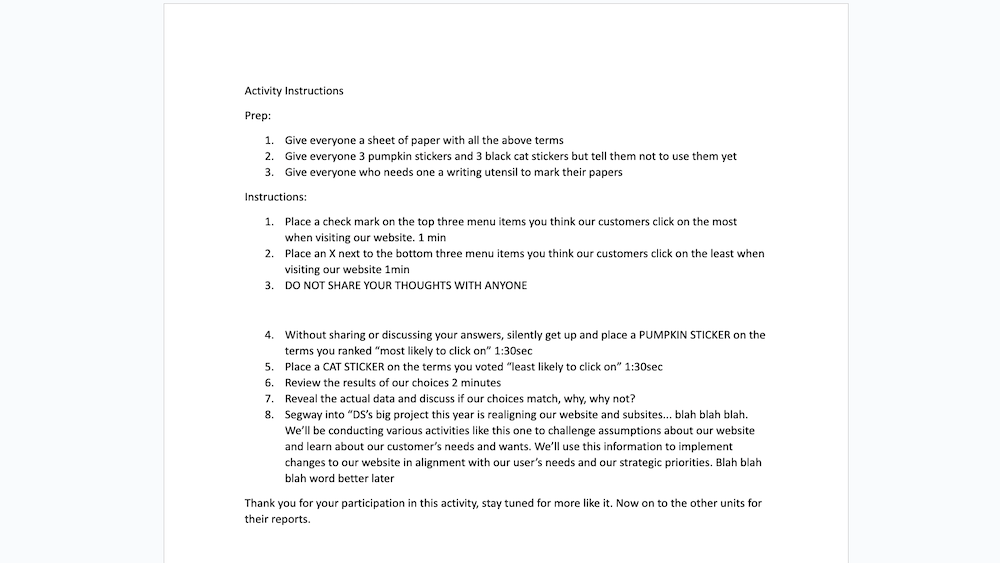
This exercise engages participants in selecting the most and least clicked website menu items by marking their choices with stickers, followed by a group review to compare assumptions with actual data.
Montgomery County Public Library (MCPL) Digital Strategies Team
This webinar session discusses the importance of using CX metrics to guide agency-level decisions and how to gather, analyze, and apply customer feedback to optimize products and services.
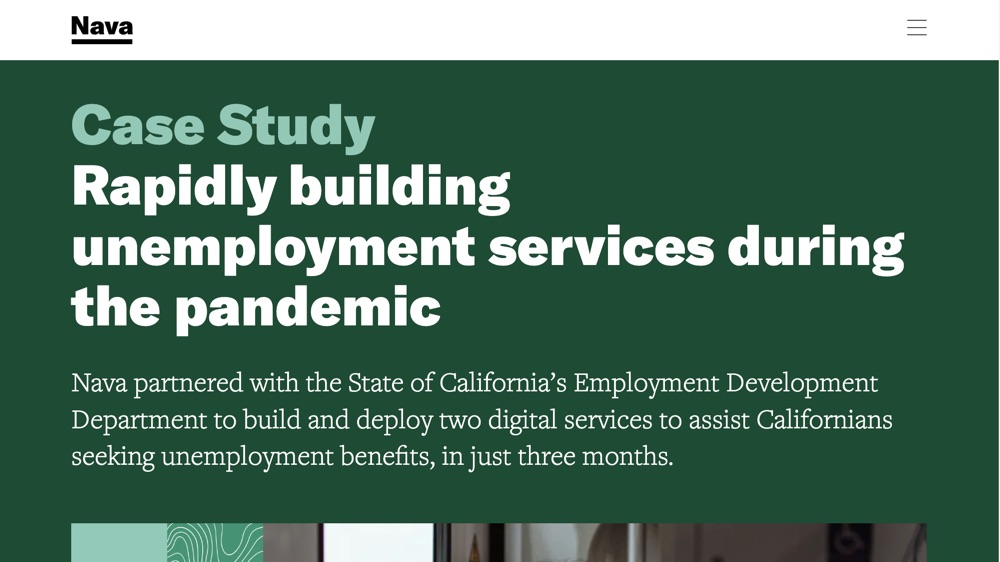
Nava partnered with California's Employment Development Department (EDD) to rapidly develop two cloud-based digital services, enhancing unemployment benefit access during the COVID-19 pandemic.