This study highlights a 2.2% increase in citizen satisfaction with federal services, reaching a seven-year high, driven by improvements in digital experiences, government processes, and complaint handling.
This report details the use of the historic investment of $1 billion in funding from the American Rescue Plan Act (ARPA) to the Department of Labor and state unemployment (UI) agencies to modernize state UI programs.
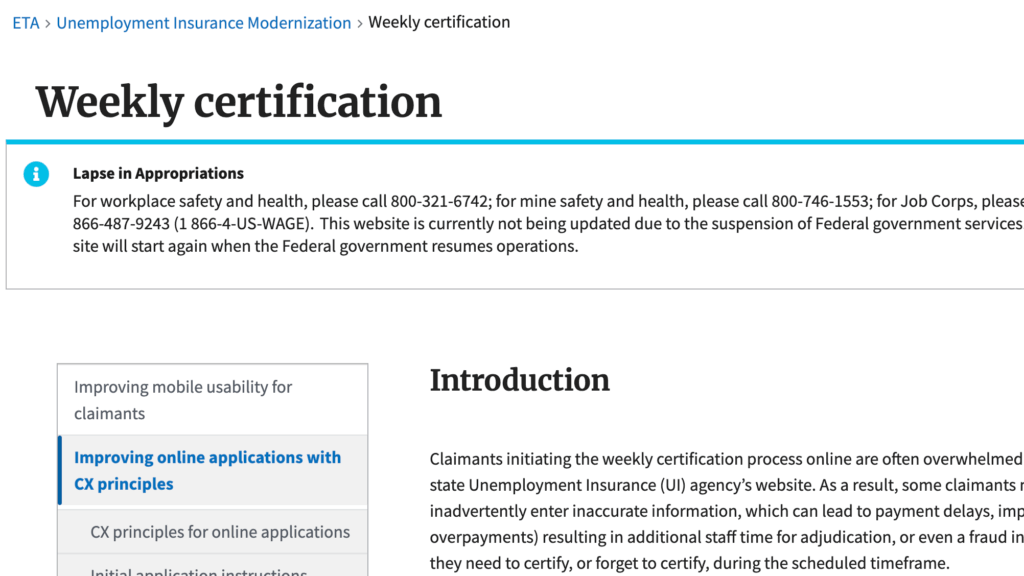
This resource provides guidance and best practices for the weekly or bi-weekly certification process that claimants must complete to maintain eligibility for unemployment insurance (UI) benefits.
This case study highlights a collaborative effort to enhance Nevada’s unemployment insurance (UI) program by simplifying claimant-facing communications and improving user experiences through behavioral science and human-centered design.
National Association of State Workforce Agencies (NASWA)
An outline of the opportunities for modernizing SNAP to better meet participant needs by streamlining enrollment, improving digital access, and enhancing coordination with other safety net services.
A web-based platform that provides design principles, accessible UI components, and guidance to help teams across the UK government create consistent, user-centered digital services.
A framework that helps policy and digital service teams interpret legislation by identifying user needs, intent, and implementation challenges to support more effective, human-centered government service delivery.
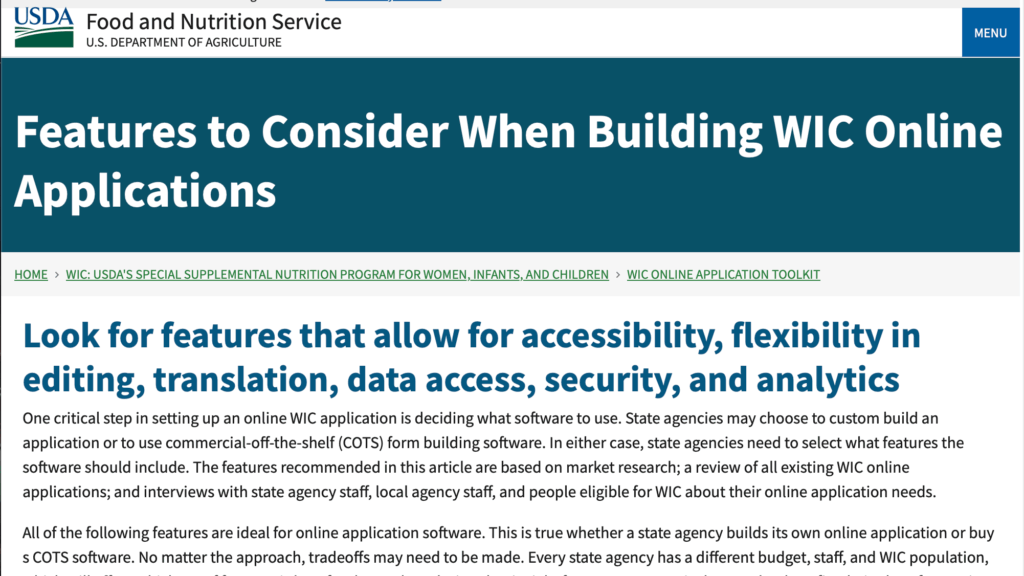
Key functionalities and design elements recommended for creating effective online WIC applications, focusing on usability, accessibility, and compliance to improve participant experience and streamline agency operations.
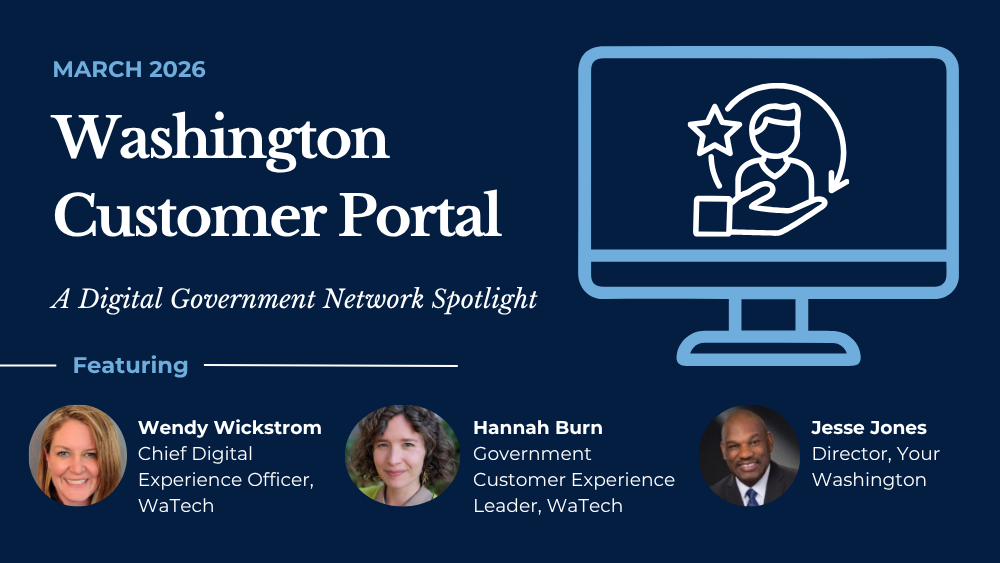
DGN Spotlights highlight innovative digital initiatives transforming how the government connects with the public. This story explores Washington State’s Customer Portal, a platform representing a major step toward unifying digital service access across state agencies.
Government leaders discuss how to ensure seamless access to public benefits through breaking down silos, user-friendly digital identities, and privacy-focused security measures.
The New York Experience – or “NYX” – aims to transform the customer experience across New York State agencies making our government work better for our people.