Article announcing five new projects by the Office of Management and Budget that will improve experiences the public has with the government during significant movements in their lives. These “life experience” projects are at the center of a new model for how the Federal Government should better design and deliver benefits, services, and programs to the American people during the moments in their lives that matter most.
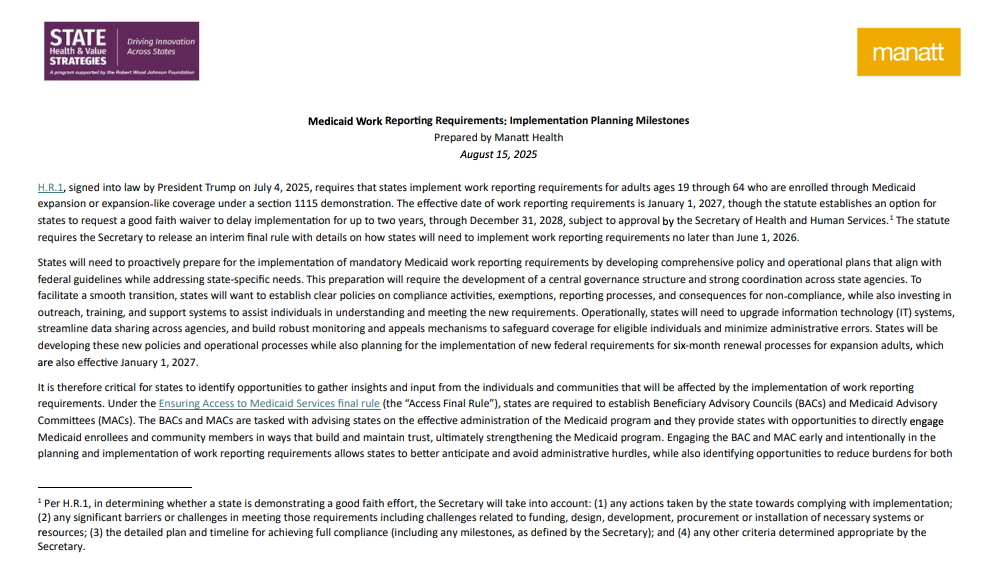
This milestone table outlines a detailed roadmap for states to implement mandatory Medicaid work reporting requirements under H.R. 1 by January 1, 2027.
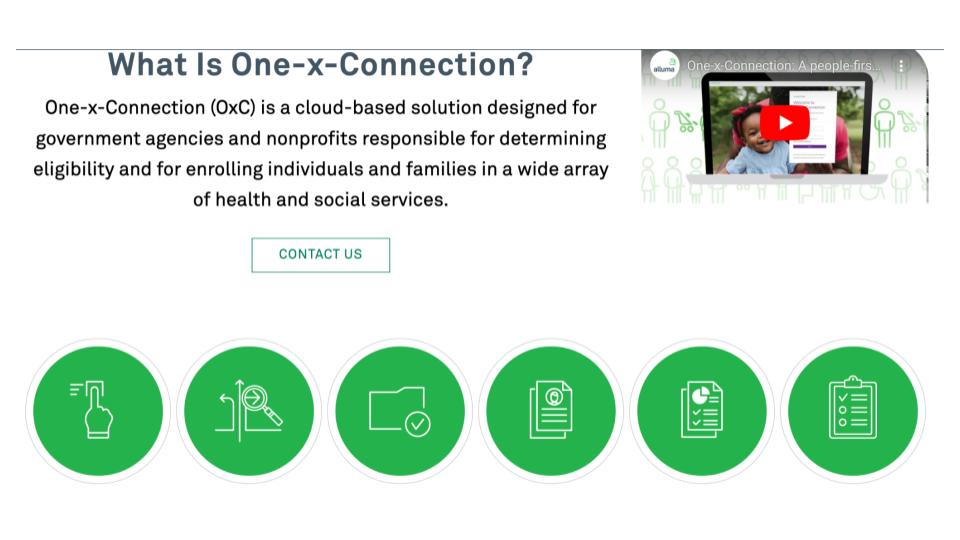
Alluma is a nonprofit that provides digital solutions to simplify eligibility screening and enrollment for social benefit programs, supporting cross-benefit access in 45 counties and two states. Their One-x-Connection product suite streamlines Medicaid and SNAP applications using a business rules engine, with a focus on human-centered design and anonymous, simplified eligibility checks, having helped screen over 10 million individuals and submitted over 67 million applications.
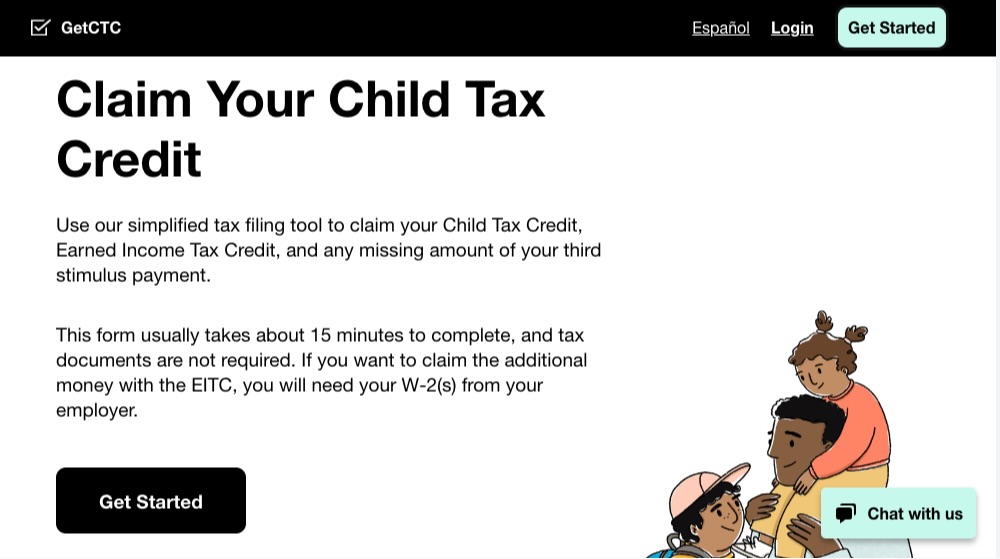
Code for America’s simplified tax filing tool that allows users to claim their Child Tax Credit and any missing amount of their third stimulus payment.
This resource examines how improvements in customer service experiences in public benefit programs like Medicaid, CHIP, and TANF can help better meet enrollees’ needs and build trust in government.
In this report, the Strike Team outlines its recommendations and suggested next steps for the EDD to address the backlog and improve on future processing of unemployment claims.
A case study of the Hawai‘i Career Acceleration Navigator — an accessible, data-driven and full-service government platform for unemployed people and other jobseekers to search for jobs and access supportive service benefits.
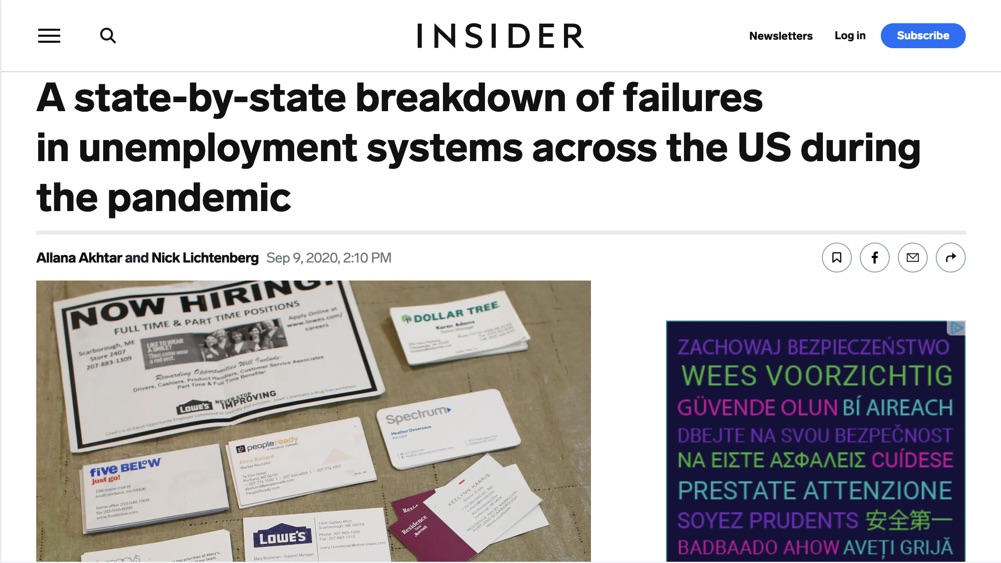
This article examines how outdated state unemployment insurance (UI) systems struggled during the COVID-19 pandemic, leading to delays, technical failures, and widespread frustration for job seekers.
Innovators inside and outside of government are working to improve access to the social safety net using data, technology, and design. This report highlights innovations carried out by The Rockefeller Foundation’s Data and Technology grantees from 2018 to 2021, including extraordinary efforts to meet the challenges of the pandemic. Those grantees are: Benefits Data Trust, Code for America, Georgetown University’s Beeck Center for Social Impact and Innovation, U.S. Digital Response, and the Digital Innovation and Governance Initiative at New America. In 2020, these projects secured more than $200 million in benefits for close to 100,000 people across at least 36 states, and helped millions more through policy change, training, and guidance.
This resource provides guidance on streamlining enrollment across public benefit programs to improve efficiency, reduce administrative burdens, and enhance access for eligible individuals and families.
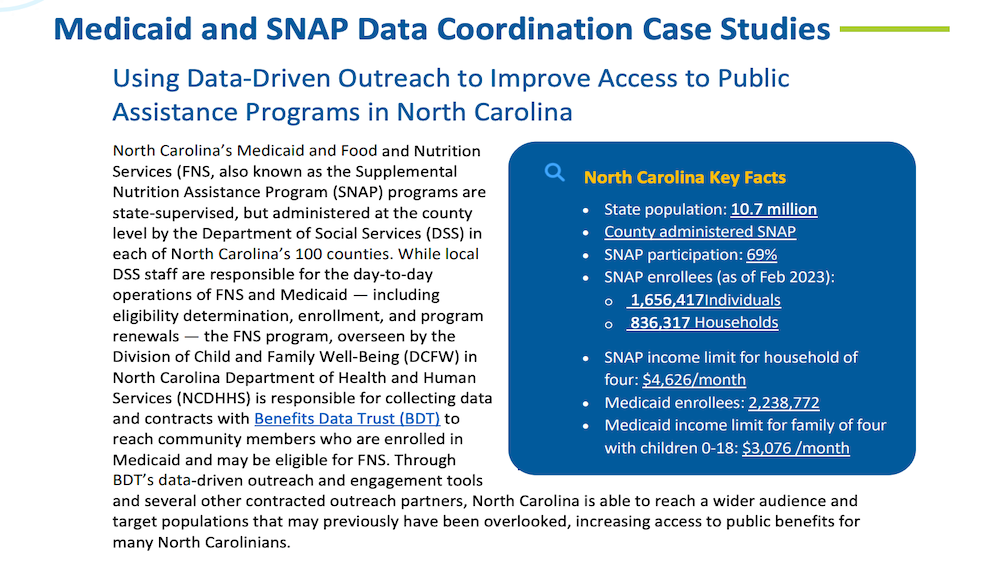
This case study series highlights innovative state strategies to improve data coordination between SNAP and Medicaid agencies and increase access for eligible people.