This guide provides practical insights for benefits administrators on redesigning benefits systems using human-centered design to ensure all eligible residents can access crucial social safety net resources.
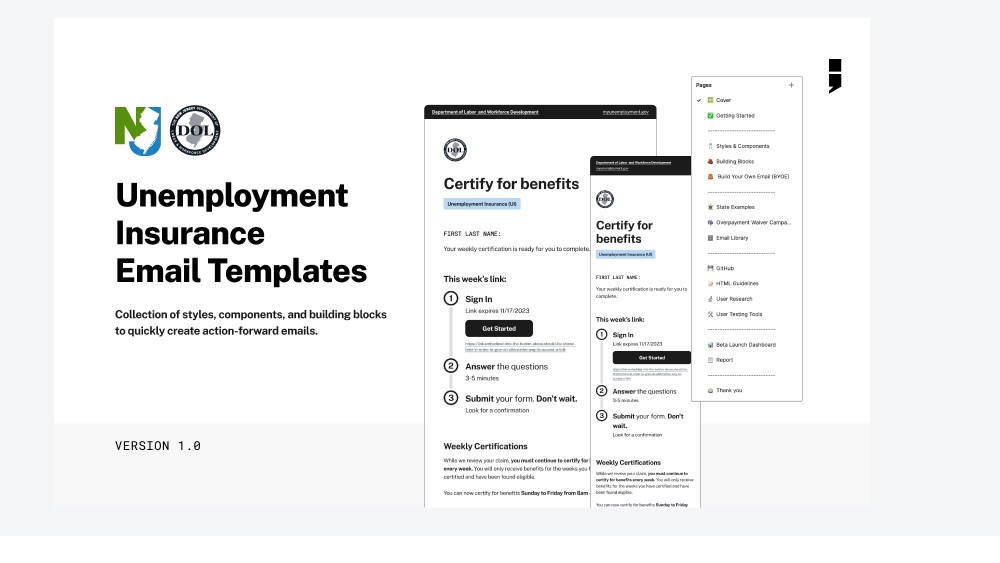
This kit contains a collection of styles, components, and building blocks to quickly create action-forward emails for Unemployment Insurance programs within the U.S.
This report summarizes progress made with agencies and members of the public to identify and reduce burdens that individuals, families, and small businesses face every day when interacting with government programs.
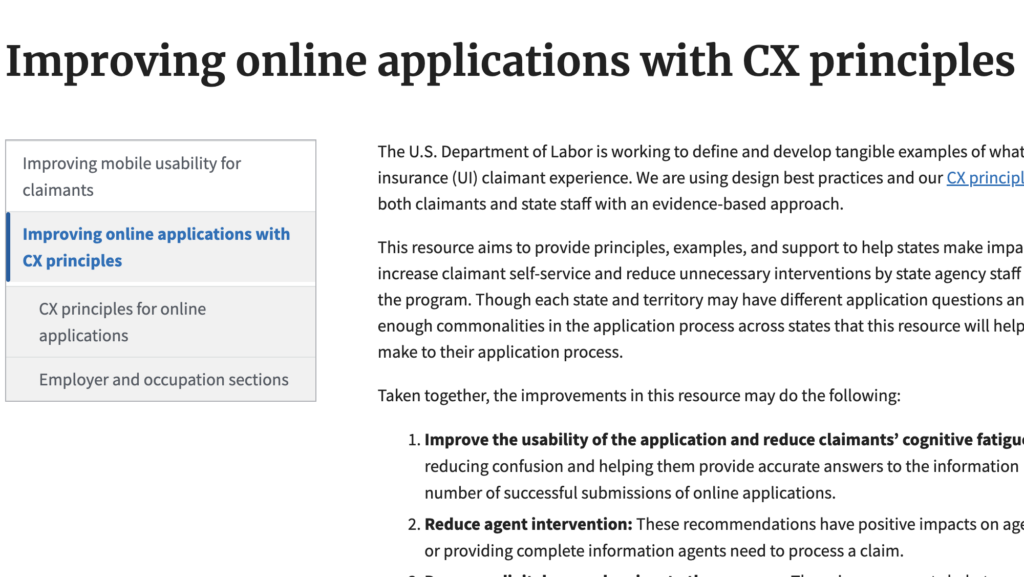
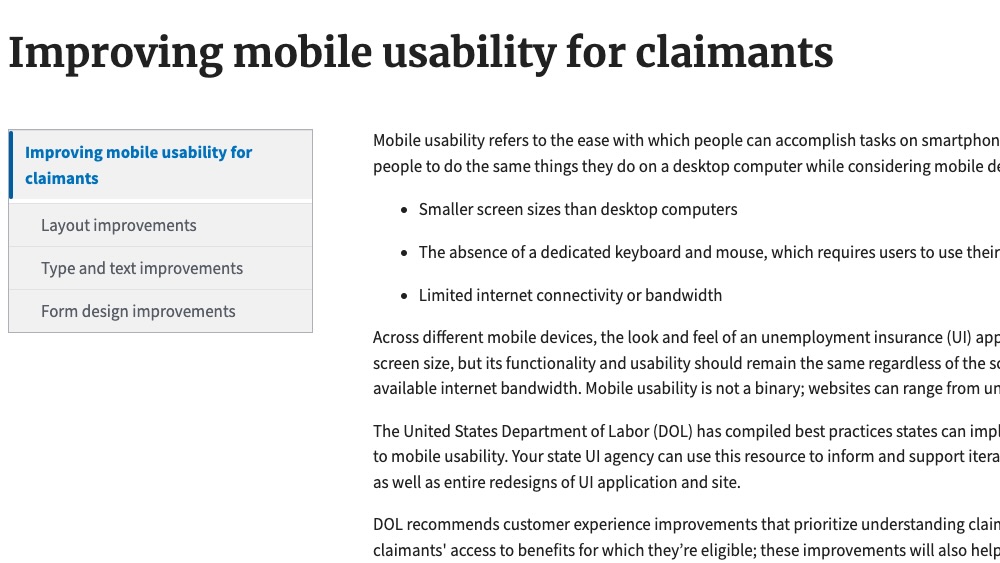
This webpage from the U.S. Department of Labor (DOL) provides guidance on improving mobile usability for Unemployment Insurance (UI) systems to enhance customer experience and accessibility.
The Medicaid Renewals Playbook offers strategies for technologists assisting states in streamlining Medicaid renewal processes during the COVID-19 Public Health Emergency unwinding.
Code for America offers government agencies a general overview of getting started with implementing text messaging services for clear, responsive communication during the COVID-19 pandemic.
The Digital Service Network (DSN) spoke with GC Forms’ Senior Product Manager Stevie-Ray Talbot and Acting Head Ioana Contu to learn more about the team's approach to building GC Forms.
This interview template includes questions designed to help teams conduct exploratory, semi-structured interviews with government stakeholders involved in program delivery to gather information that can help them evaluate the status quo of digital delivery in their organization.