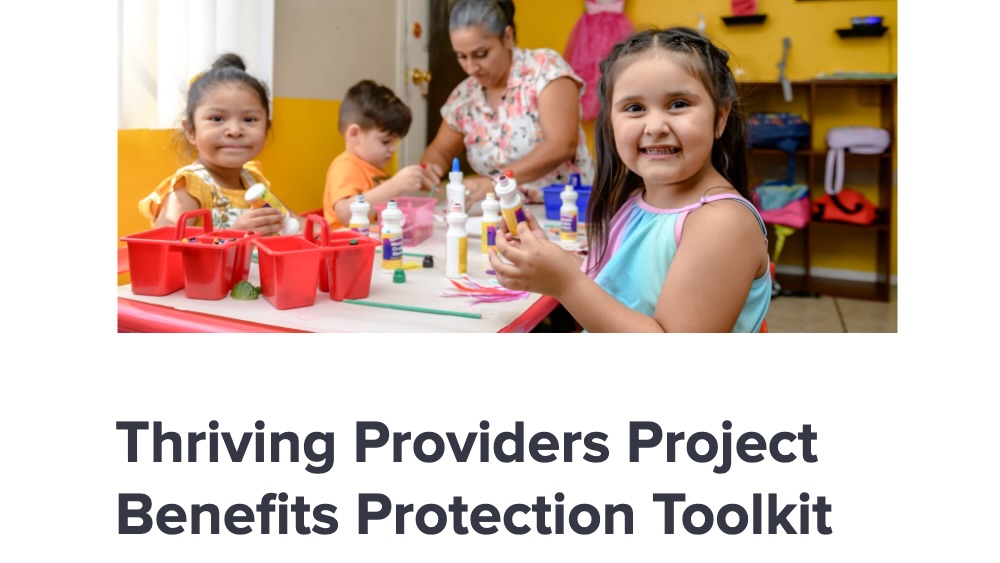
This benefits protection toolkit is a step-by-step guide to develop and integrate a benefits protection strategy into your Direct Cash Transfer (DCT) program design. This toolkit includes a set of customizable templates, letters, and other tools which should be downloaded and modified for your pilot and local context.
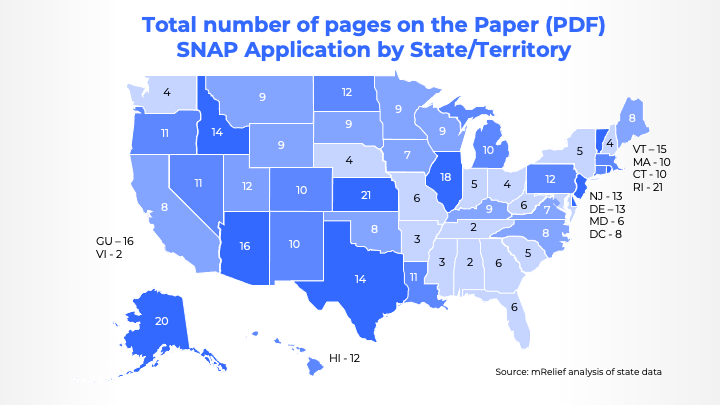
The Average Food Stamp Application is 17 Pages Long article by mRelief highlights the extensive length and complexity of Supplemental Nutrition Assistance Program (SNAP) applications, which can deter eligible individuals from applying for benefits.
This toolkit is designed to assist state and local TANF agencies in accessing, linking, and analyzing employment data from unemployment insurance (UI) systems.
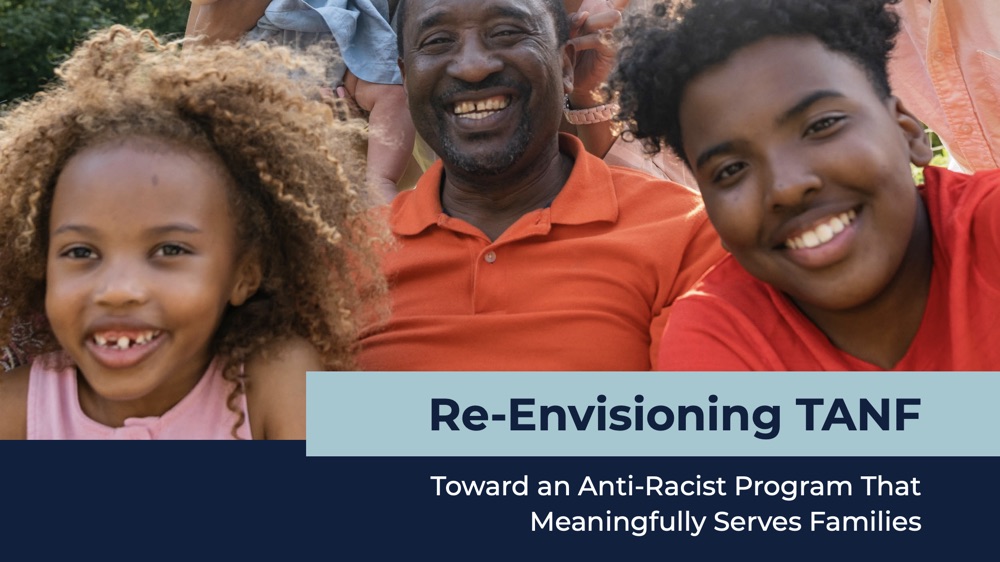
An America where no one experiences poverty is possible. Already, the U.S. has programs with the potential to make this vision a reality, including programs that provide cash assistance, like Temporary Assistance for Needy Families (TANF). The current TANF program provides very little cash assistance and is marked by stark racial disparities, but it has the potential to reduce child poverty, increase economic security, and advance racial equity. This report offers a vision for an anti-racist approach to the TANF program, with new statutory goals and policy recommendations to advance racial justice.
The Increasing Stimulus Payment Take-up in California report by the California Policy Lab examines barriers to accessing federal stimulus payments and provides strategies to increase take-up among eligible Californians, particularly low-income and non-filers.
This report summarizes 19 SNAP policy options (in effect as of Oct. 1, 2023) and waivers (implemented as of July 1, 2023) chosen by SNAP state agencies (50 states, the District of Columbia, Guam, and Virgin Islands) in federal fiscal year (FY) 2023.
This case study highlights how Illinois is modernizing its student data infrastructure and interagency data sharing to increase access to SNAP and Summer EBT benefits for eligible children and families, particularly those facing systemic barriers.
American Public Human Services Association (APHSA)
A framework that helps policy and digital service teams interpret legislation by identifying user needs, intent, and implementation challenges to support more effective, human-centered government service delivery.
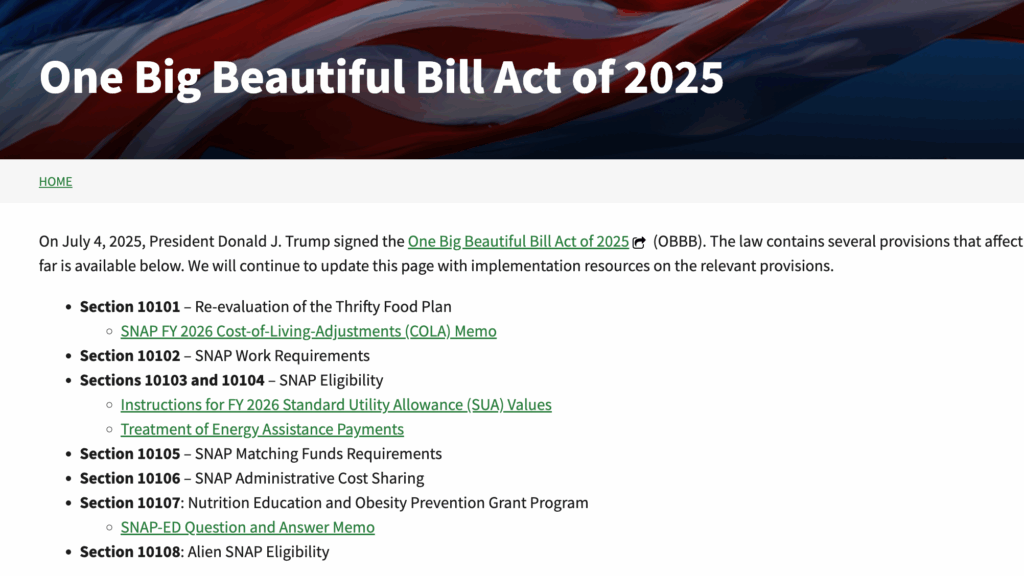
This webpage provides state agency resources and policy memos detailing how the One Big Beautiful Bill Act (H.R. 1) of 2025 affects SNAP implementation.
This report catalogs the policy choices, demonstration projects, and waivers each state uses to administer SNAP, highlighting how states adapt federal rules to local needs.