A policy directive that establishes standards and guidance for federal executive agencies to manage, secure, and deliver public websites and digital services that are user-centered, accessible, and data-driven.
This memorandum provides guidance to Federal agencies on how to broaden public participation and community engagement to improve government decision-making, enhance transparency, and build trust by engaging with communities, especially underserved groups.
This session from FormFest 2024 focuses on accessibility, featuring British Columbia’s work to improve legal form usability and tips from the Wisconsin Department of Public Instruction on making forms more accessible overall.
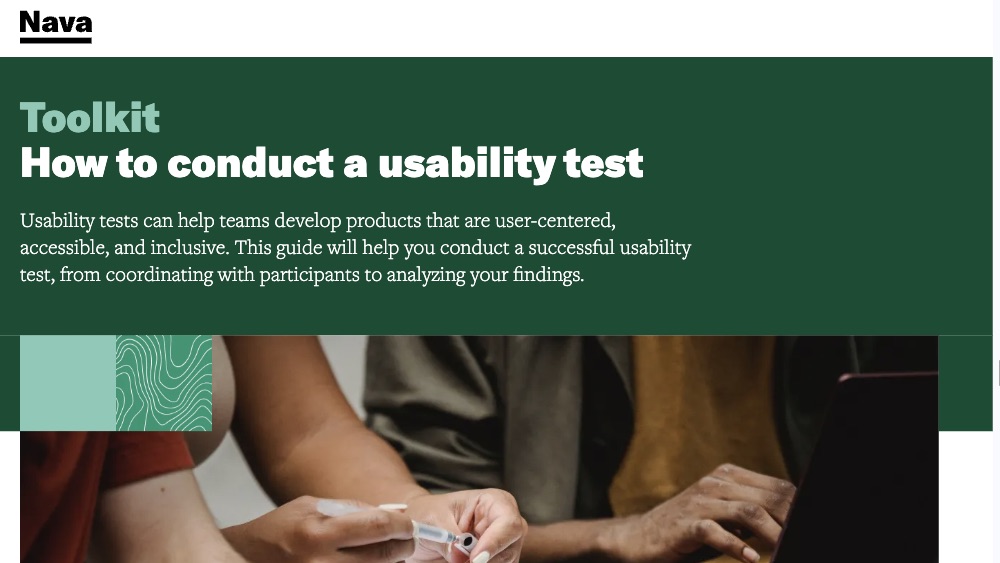
Usability tests can help teams develop products that are user-centered, accessible, and inclusive. This guide will help you conduct a successful usability test, from coordinating with participants to analyzing your findings.
The article discusses key takeaways from BenCon 2023, highlighting the importance of creating equitable and ethical public benefits technology. It emphasizes the need for tech solutions that address systemic inequalities, ensure accessibility, and promote inclusivity for underserved communities in accessing public services.
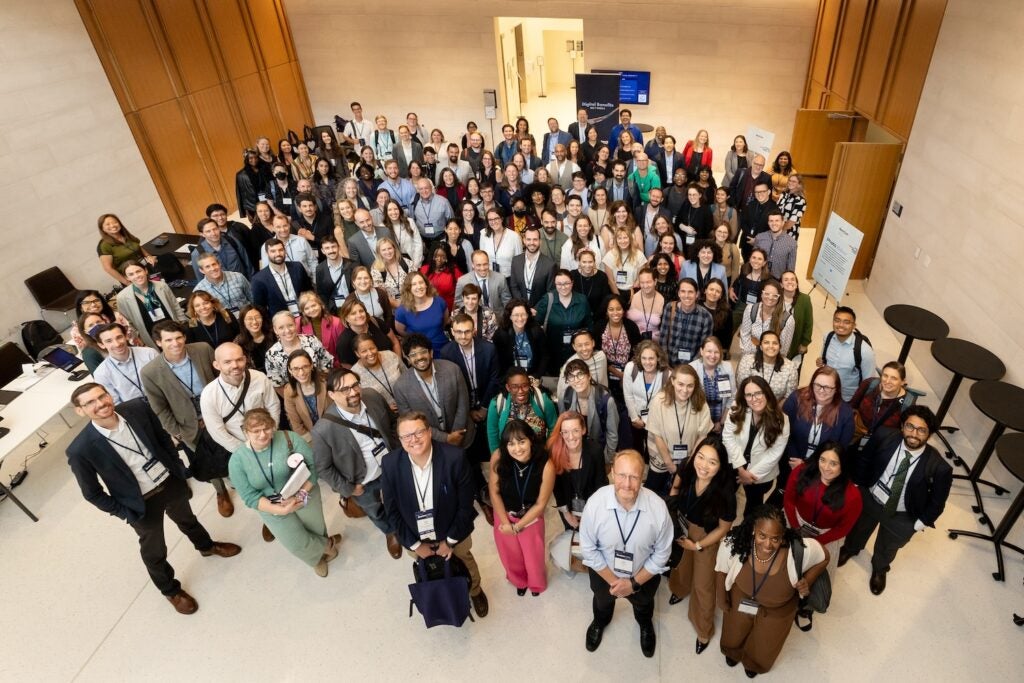
A recap of the two-day conference focused on charting the course to excellence in digital benefits delivery hosted at Georgetown University and online.
The Seattle.gov website's new Assistance and Discounts page centralizes information on city benefits and services, offering a user-friendly and consistent experience across 7,000 pages.
This design system accessibility checklist ensures that all components and design tokens meet or exceed the WCAG 2.1 AA standards, aligning fully with Government of Canada accessibility requirements.
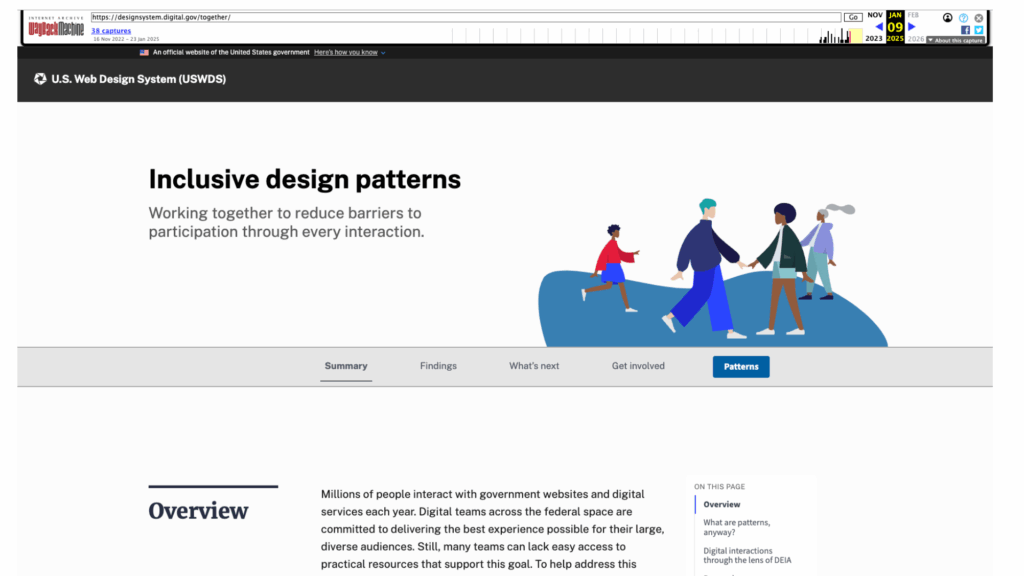
USWDS provides a new library of guidance and examples focused on key digital interactions that foster effective. inclusive, and equitable digital experiences.