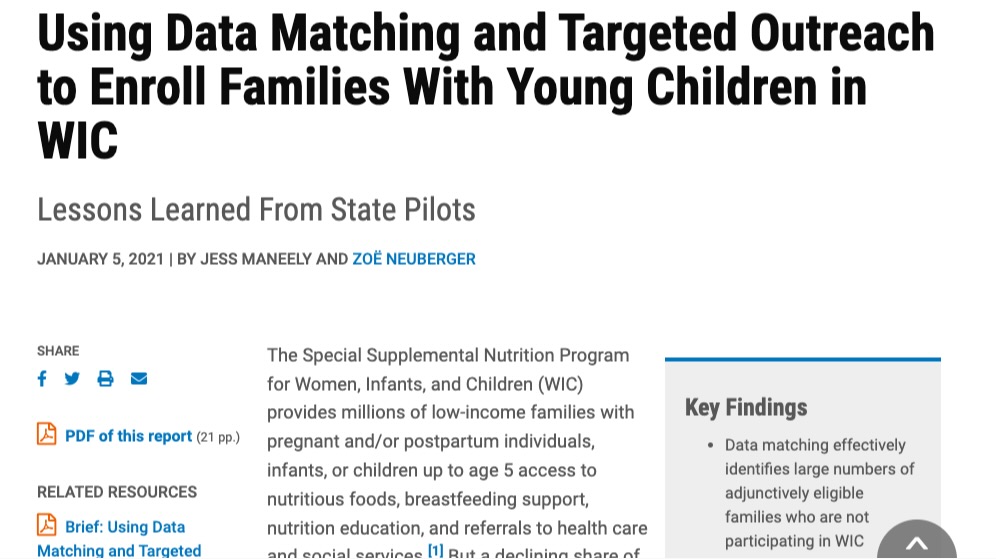
The report examines pilot projects in multiple states that utilized data matching and targeted outreach to enroll eligible families with young children in the WIC program, demonstrating the effectiveness of this approach in increasing participation rates.
This issue brief describes the Pennsylvania case study, outlines the historical context, and offers strategies and recommendations for successfully implementing Fast Track.
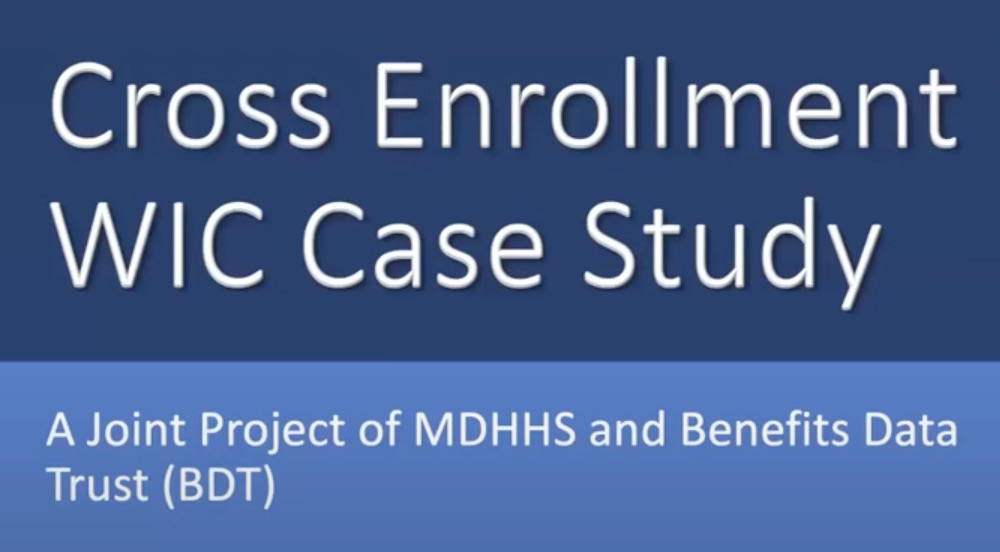
This presentation from Steph White, Cross Enrollment Coordinator at the Michigan Department of Health and Human Services offers an in-depth example on implementing cross enrollment with WIC and general tools for cross enrollment.
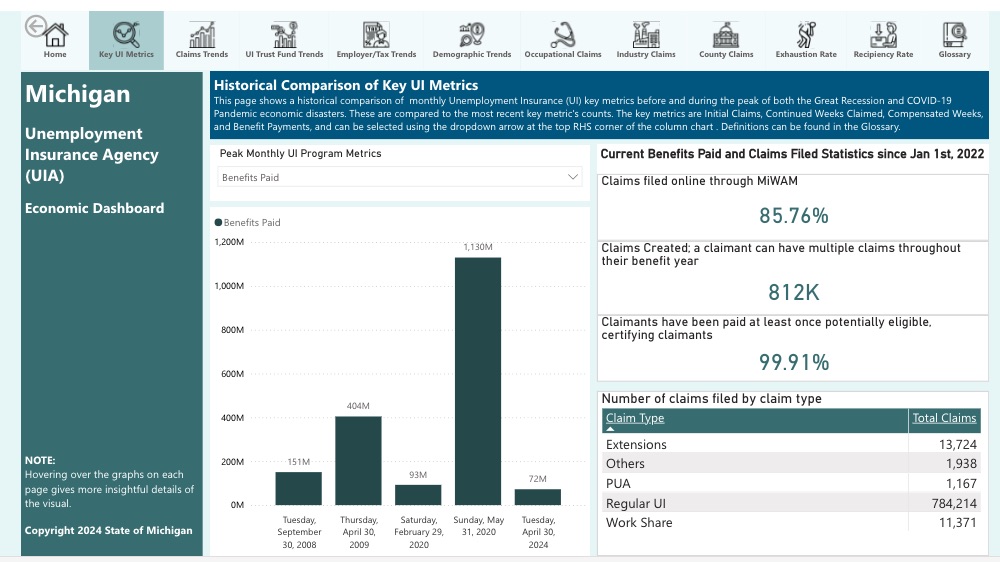
This dashboard provides a comprehensive view of underlying trends in unemployment across Michigan. It serves as an invaluable resource for understanding the impacts of unemployment on various industries, occupations, and communities. By providing detailed insights into sectors experiencing layoffs, claimant demographics, and the regions most affected, the dashboard equips us with the data needed to develop targeted solutions tailored to the needs of Michiganders.
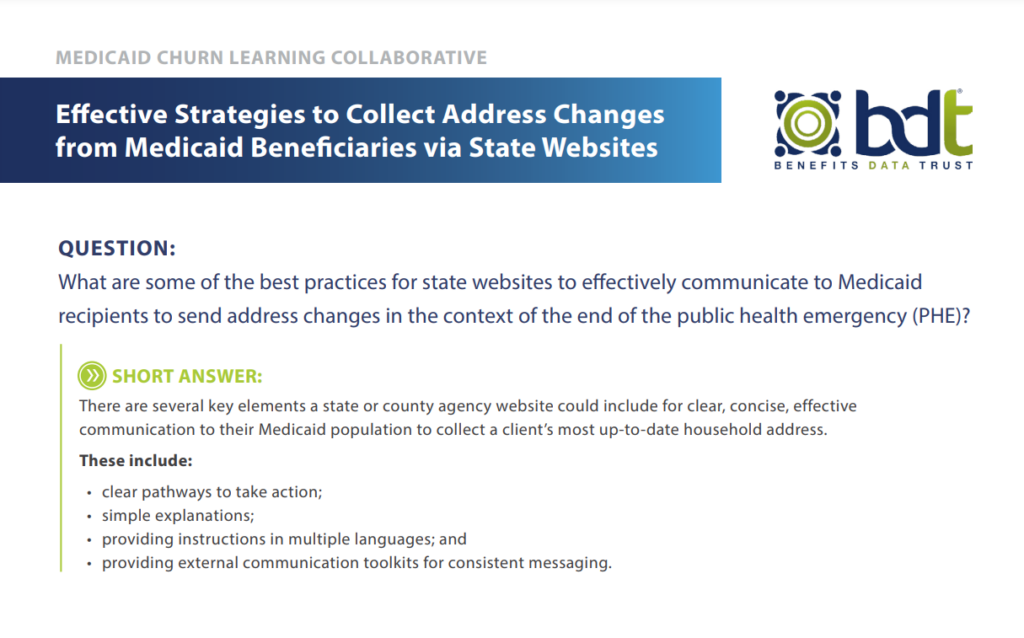
As a part of Benefit Data Trust (BDT)’s Medicaid Churn Learning Collaborative, BDT has created a memo describing strategies for states to collect current mailing addresses of Medicaid beneficiaries in advance of the Medicaid continuous coverage requirement — in effect under the federal public health emergency — unwinding.