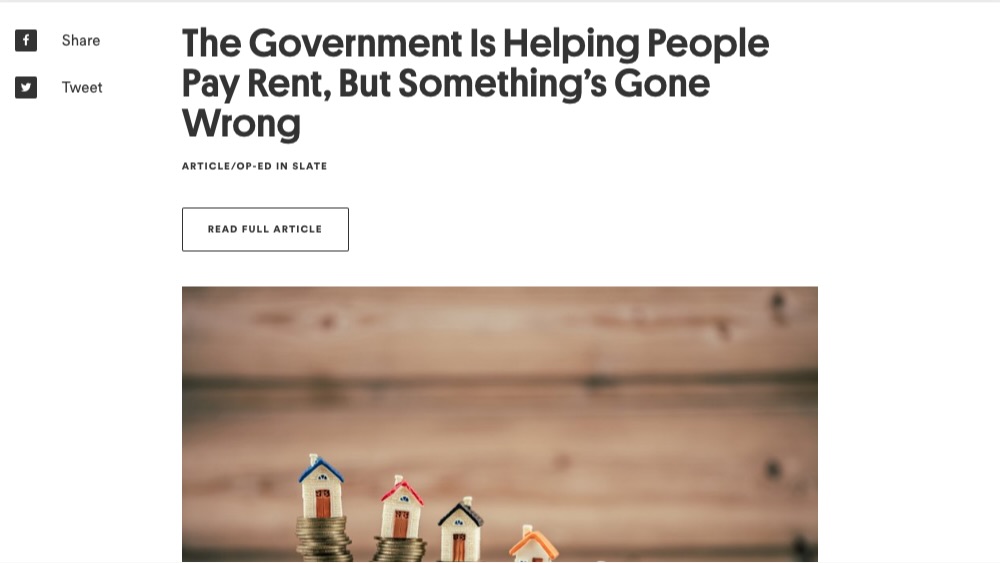
Through deeply reported case studies and insights from focus groups, this report provides an in-depth look at the impact of pandemic-era government spending on families.
Delve into our exploration of the executive orders, legislation, and administrative rules and guidance that shape government digital transformation across states and territories with our database and visualization tools.
This report describes key elements of the American Rescue Plan Act and how it would reduce the projected poverty rate for 2021. Various projections regarding the effects of the policy are described in this report.
The Advancing Economic Mobility for Low-Income Families report, published by the National Governors Association (NGA) Center for Best Practices, provides policy options for governors to strengthen economic security, workforce participation, and wealth-building opportunities for low-income families.
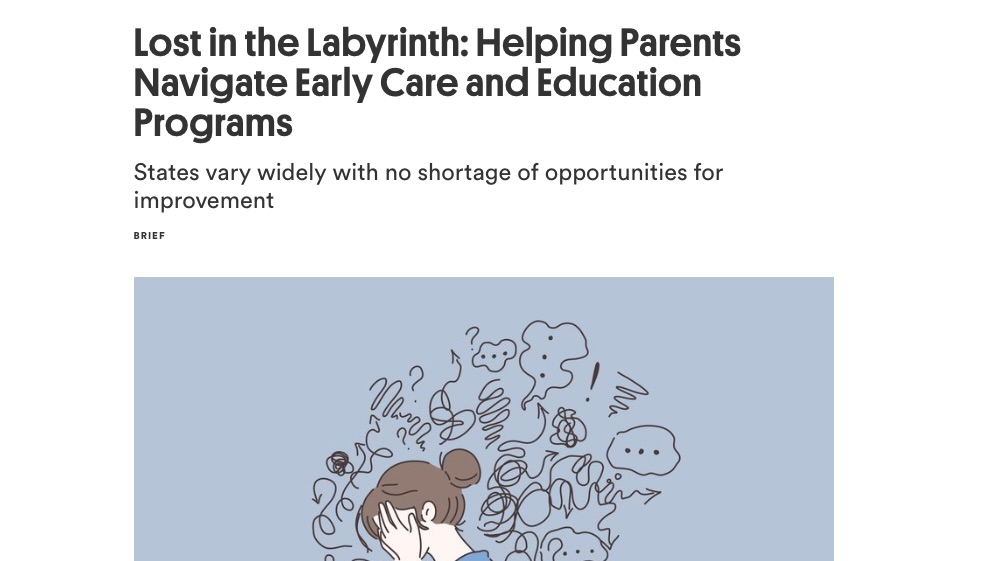
The Lost in the Labyrinth brief examines how fragmented early care and education (ECE) programs across the U.S. create challenges for families seeking services for young children.
The Pandemic Electronic Benefits Transfer (P-EBT) program was launched as an effort to address the loss of access to free and reduced-price school meals due to widespread school closures at the onset of the COVID-19 pandemic. As schools reopened in a shifting mix of fully virtual, hybrid, and inperson formats and families lacked consistent access to school meals, these benefits were extended through the 2020–21 school year and were highly valuable to families in buffering the full extent of food insecurity they may have faced during this uncertain time. However, the complexity of administering this program was a fundamental barrier in providing timely support to families, who ultimately went without benefits for at least half of the school year. In this report, we dive into the challenges state administrators faced in launching this new program during the 2020–21 school year and reflect on considerations for the future.
This article analyzes the strategic use of public policy as a tool for reshaping public opinion. Though progressive revisionists in the 1990s argued that reforming welfare could produce a public more willing to invest in anti-poverty efforts, welfare reform in the 1990s did little to shift public opinion. This study investigates the general conditions under which mass feedback effects should be viewed as more or less likely.
This Blueprint is a whole-of-government effort that aims to provide a resource to assist federal decisionmakers in leveraging social and behavioral science to improve policy and program design and delivery.