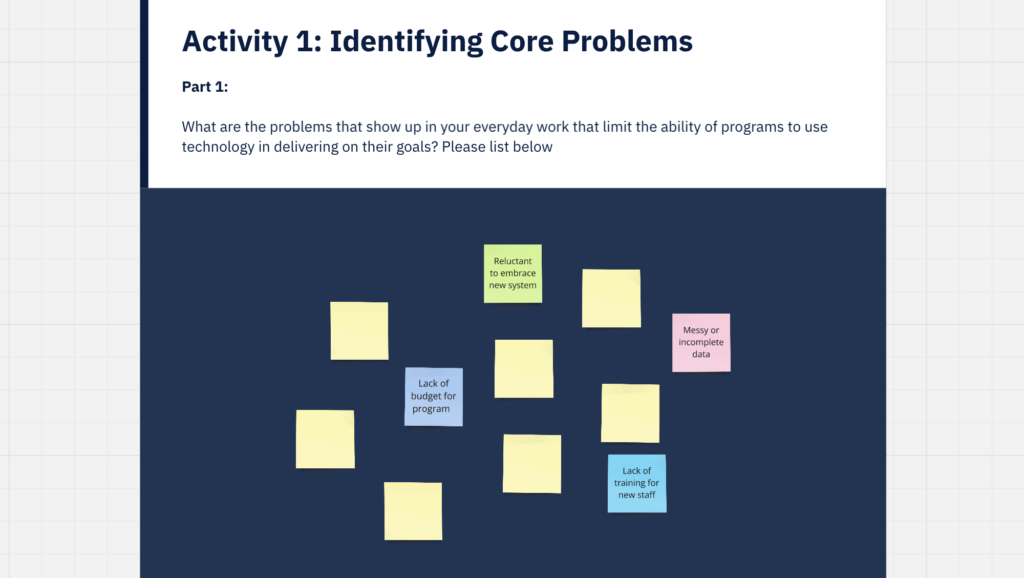
This workshop guide offers teams an opportunity to jointly work toward understanding core problems impacting digital delivery in their organization. The guide is structured in two parts: (1) a Miro template and (2) a Facilitation Guide.
Guidance outlining how Australian government agencies can train staff on artificial intelligence, covering key concepts, responsible use, and alignment with national AI ethics and policy frameworks.
The Digital Service Network worked closely with stakeholders from the Texas Education Academy (TEA) to develop resources for a structured approach in helping identify and better understand core challenges in government digital delivery.
Join host Gen Lambert as she welcomes Annie Goodwin and Amy Kirtay to the table for this special edition #DigitalBC Livestream, "Walking the Walk: Lessons learned from developing policy in the open."
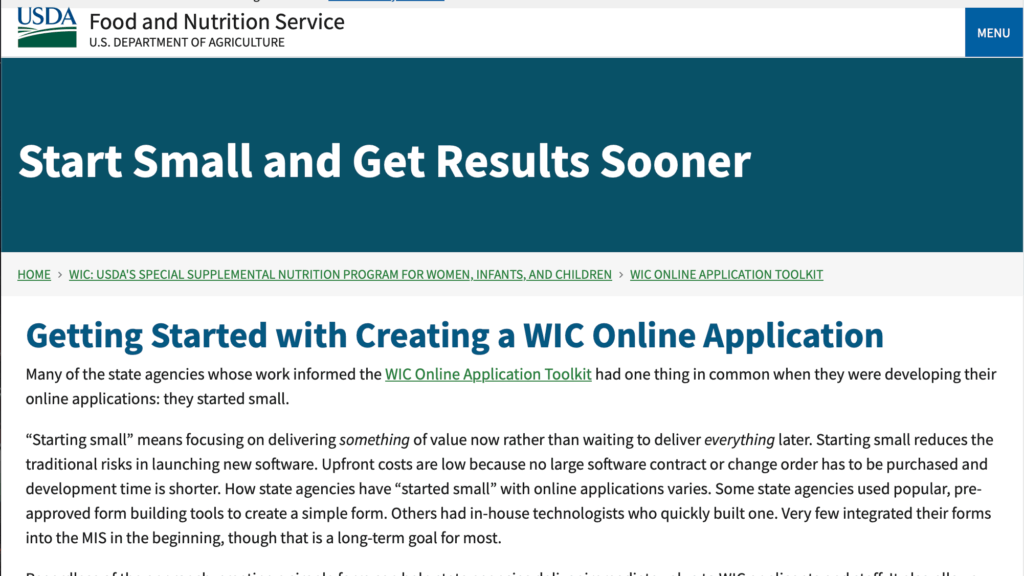
The “Start Small” approach encourages agencies to begin with targeted, manageable improvements in their WIC application process before expanding changes more broadly, fostering easier implementation and measurable early successes.
Delve into our exploration of the executive orders, legislation, and administrative rules and guidance that shape government digital transformation across states and territories with our database and visualization tools.
This report shares the progress of the Biden-Harris Administration on health care access, prescription drug affordability, mental health, maternal health, and public health investments.
A statewide framework to improve data literacy among Oregon public sector employees by identifying core competencies, learning goals, and implementation strategies across various roles and skill levels.