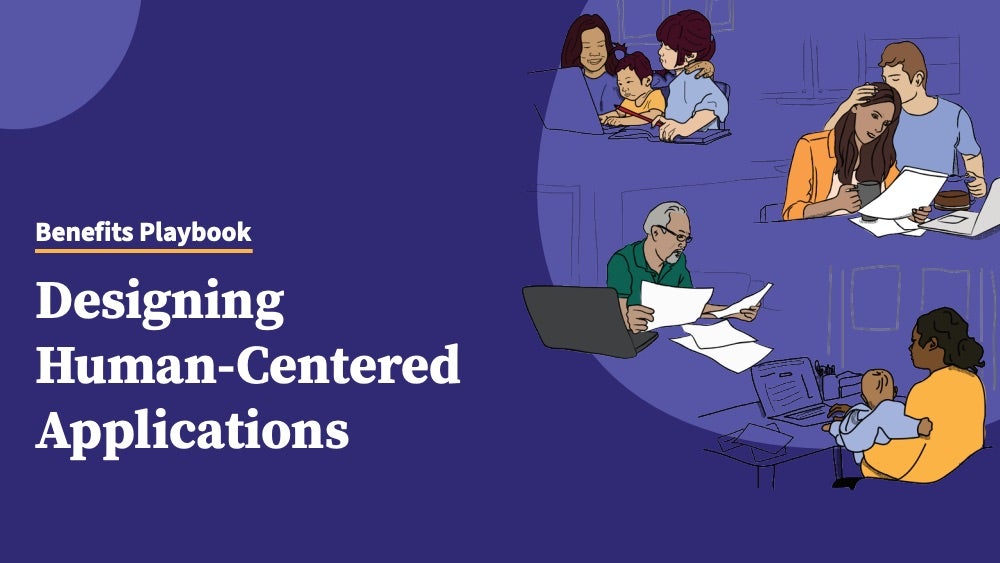
A case study documenting how a human-centered claimant portal was developed for the New Jersey Department of Labor (NJDOL) to modernize unemployment insurance access using agile development and API technology.
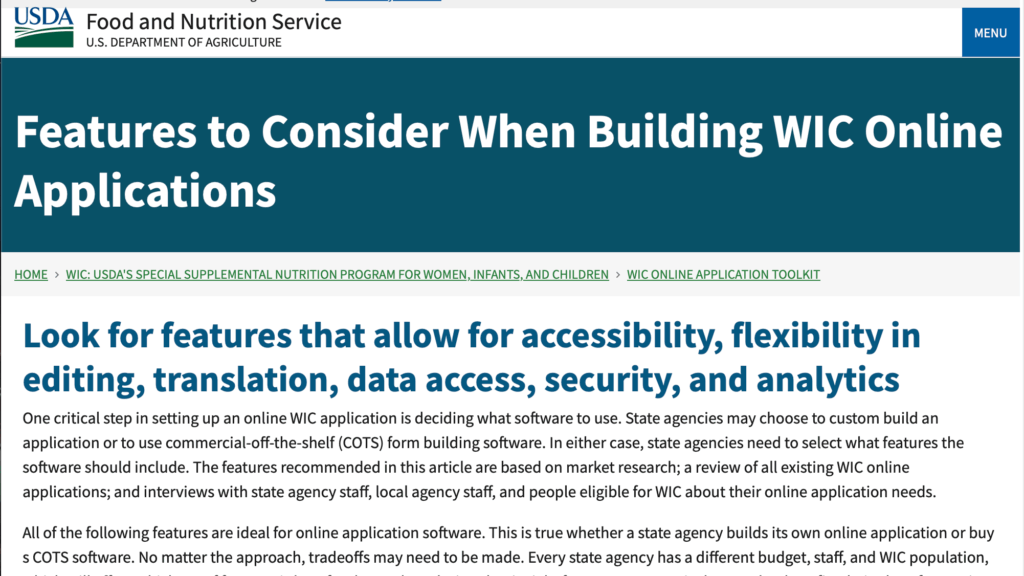
Key functionalities and design elements recommended for creating effective online WIC applications, focusing on usability, accessibility, and compliance to improve participant experience and streamline agency operations.
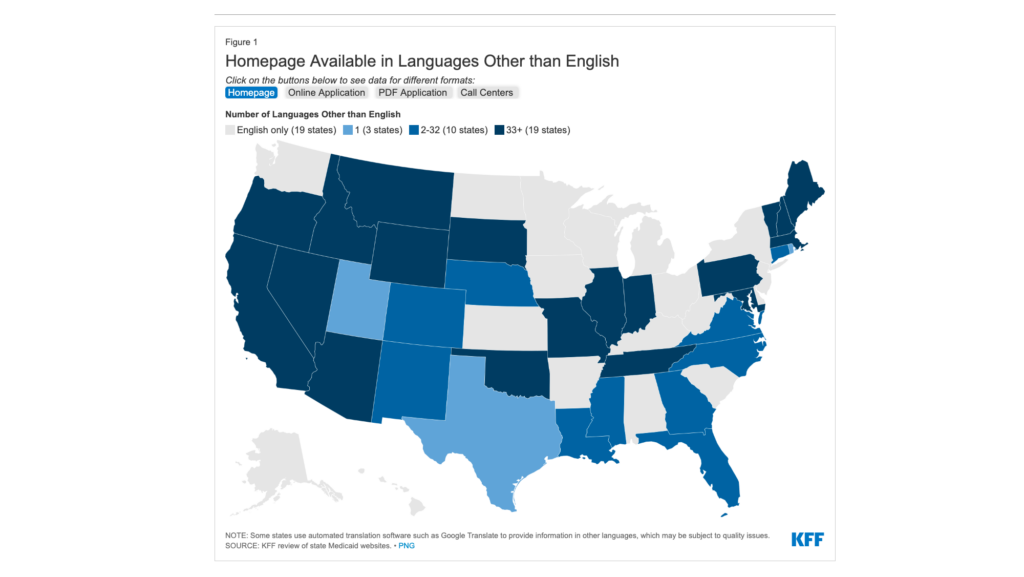
While most states provide basic digital accessibility, this review warns that persistent gaps in language services and disability accommodations create significant barriers for enrollees as pandemic-era Medicaid protections expire.
Sheev Davé, Product Manager at Notify.gov (GSA), provides an overview of what makes an effective multilingual translation through the principles of designing tools that have the ability to have conversations, meeting communities where they are, use of plain language and prioritize tricky topics, key life events and using trusted delivery sources.
This document is the Spanish-language version of the Model WIC Online Application. It provides a full set of translated application questions and instructions for applying to the Special Supplemental Nutrition Program for Women, Infants, and Children (WIC).
The U.S. Digital Response collaborated with a state workforce agency to develop a multilingual, user-friendly system for retroactive Pandemic Unemployment Assistance (PUA) applications, enhancing claimant comprehension and reducing administrative strain.
When COVID-19 hit, the State of New Jersey recognized the need to both receive data on the spread of the disease from the public and provide information to them on how to mitigate it.
This brief synthesizes the manner in which the political and social service environments affect the intergenerational stability of non-citizen families, offering insights into programmatic supports.
American Public Human Services Association (APHSA)
This publication shares ten ways states can improve start-to-finish customer experience for unemployment insurance claimants. These approaches can increase overall equitable access and system integrity for UI administration.