The study investigates how state agencies administering SNAP comply with Title VI of the Civil Rights Act by providing language access for individuals with limited English proficiency (LEP).
This article examines how Chile’s SUSESO is balancing cost-focused procurement criteria with ethical AI concerns in its medical claims automation process.
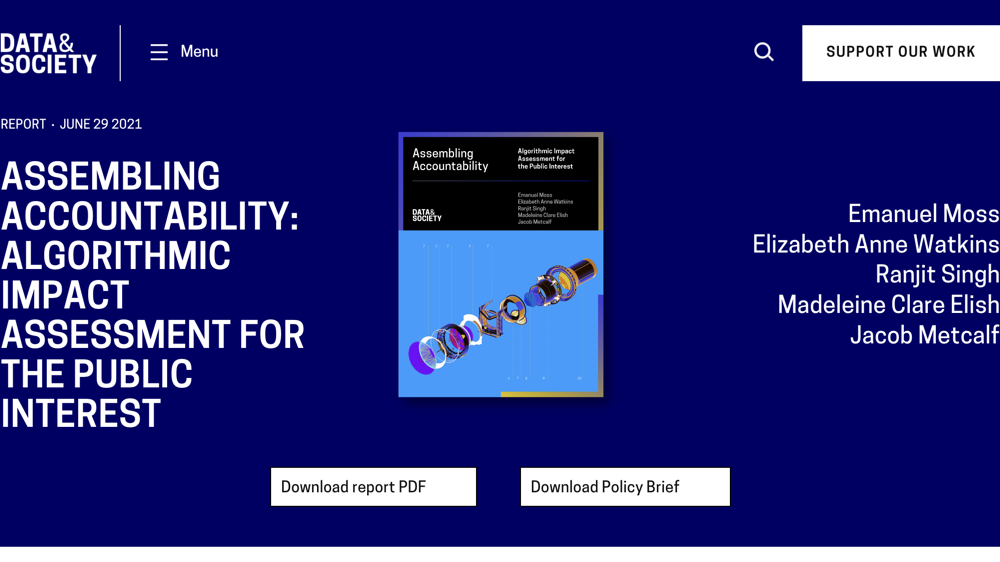
This report offers a critical framework for designing algorithmic impact assessments (AIAs) by drawing lessons from existing impact assessments in areas like environment, privacy, and human rights to ensure accountability and reduce algorithmic harms.
This report explores how despite unresolved concerns, an audit-centered algorithmic accountability approach is being rapidly mainstreamed into voluntary frameworks and regulations.
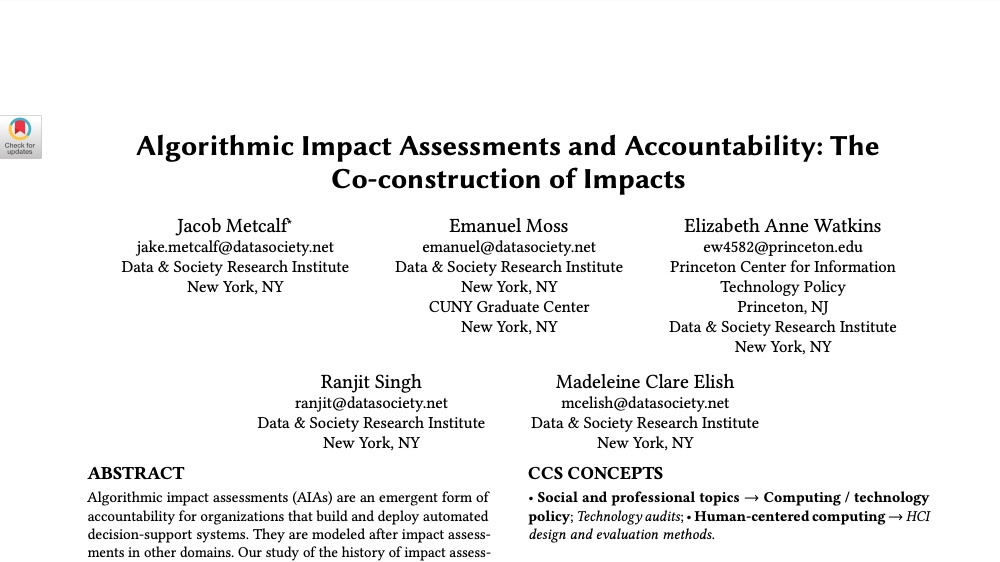
Algorithmic impact assessments (AIAs) are an emergent form of accountability for organizations that build and deploy automated decision-support systems. This academic paper explores how to co-construct impacts that closely reflects harms, and emphasizes the need for input of various types of expertise and affected communities.
ACM Conference on Fairness, Accountability, and Transparency (ACM FAccT)
A report assessing City of San José's AI governance practices against the NIST AI Risk Management Framework, identifying gaps, and outlining recommendations to strengthen AI oversight and accountability.
This review evaluates the UK public sector's use of digital technology, identifying successes and systemic challenges, and proposes reforms to enhance service delivery.
This report provides an overview of the task force’s work in assessing, guiding, and recommending policies for the safe, ethical, and effective use of generative AI across Alabama’s executive-branch agencies.
State of Alabama Generative Artificial Intelligence (GenAI) Task Force