This blog post discusses strategies that states can implement to make public assistance applications more accessible during the COVID-19 crisis, emphasizing the importance of flexibility in application processes to accommodate increased demand and social distancing measures.
This research paper explores how government design systems function as the “translation layer” of digital public infrastructure, transforming technical systems into accessible, trustworthy citizen experiences.
This blog post describes the launch of NJ.gov/disabilities, an accessible, co-created online hub that centralizes information and services for individuals with disabilities.
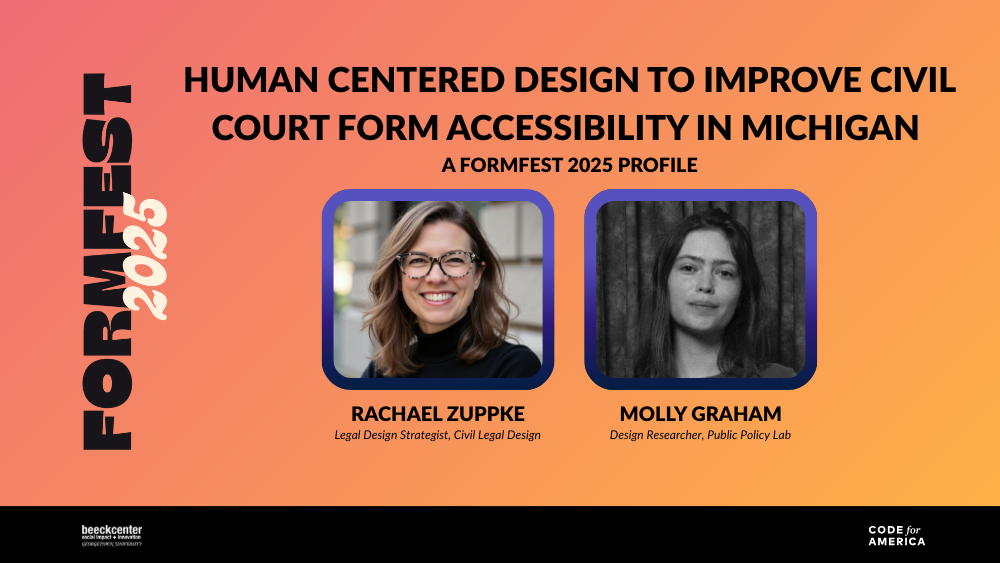
This FormFest profile highlights Rachael Zuppke and Molly Graham’s work to redesign Michigan’s civil court forms using human-centered design, making them more accessible for people who must represent themselves in critical cases like eviction, family law, and guardianship.
A policy directive that establishes standards and guidance for federal executive agencies to manage, secure, and deliver public websites and digital services that are user-centered, accessible, and data-driven.
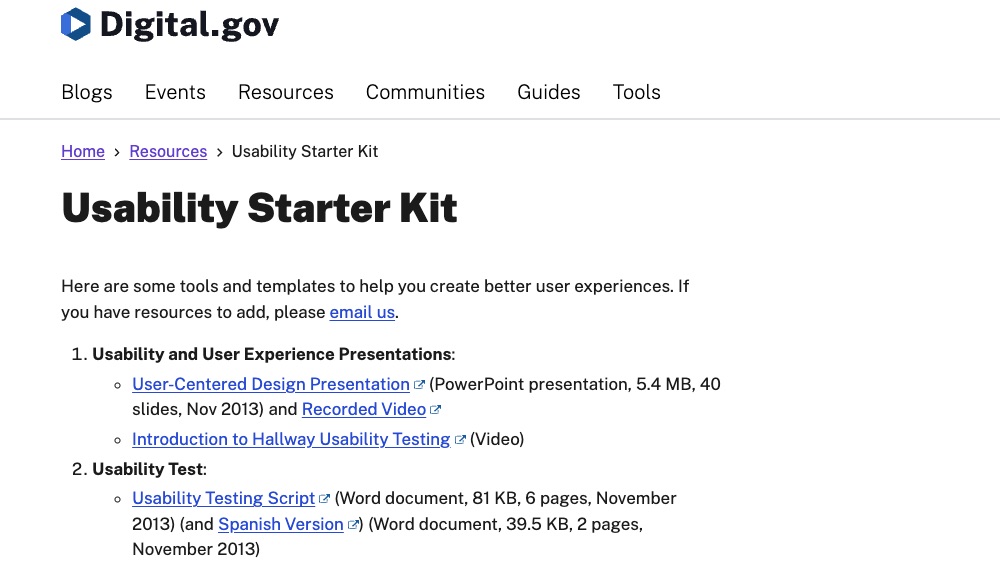
The DigitalGov Usability Starter Kit offers a comprehensive collection of tools and templates designed to assist in creating user-centered digital experiences.
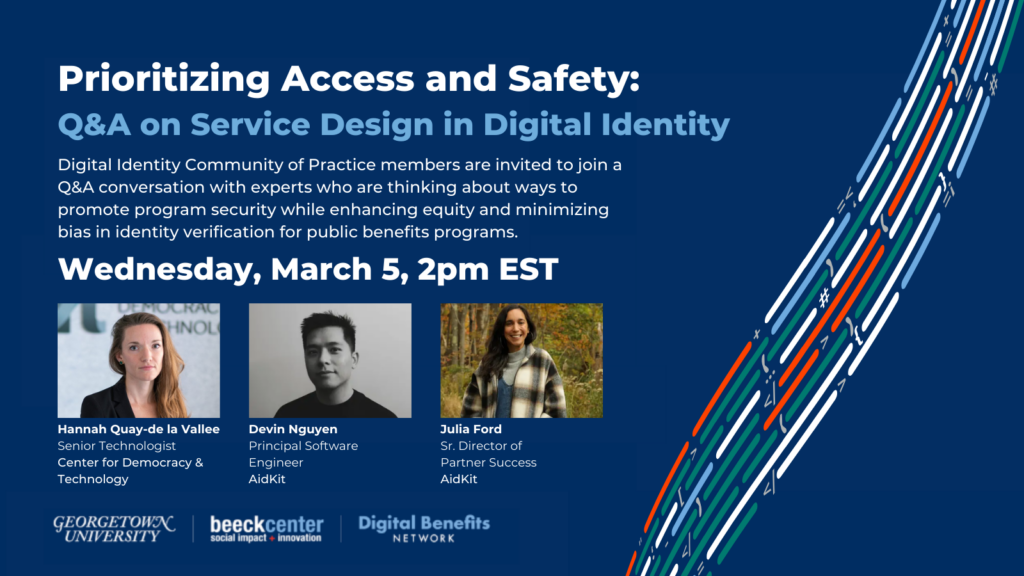
The Digital Benefit Network's Digital Identity Community of Practice held a session to hear considerations from civil rights technologists and human-centered design practitioners on ways to ensure program security while simultaneously promoting equity, enabling accessibility, and minimizing bias.
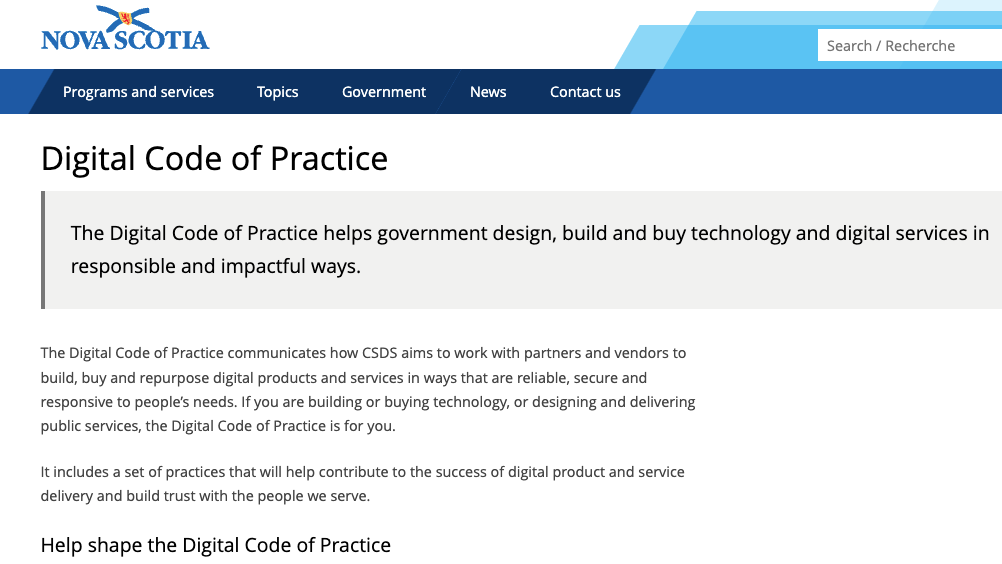
A guiding framework for designing, building, buying, and maintaining digital government services in Nova Scotia that emphasizes trust, inclusivity, sustainability, and public value.