The study investigates how state agencies administering SNAP comply with Title VI of the Civil Rights Act by providing language access for individuals with limited English proficiency (LEP).
These principles and best practices for AI developers and employers to center the well-being of workers in the development and deployment of AI in the workplace and to value workers as the essential resources they are.
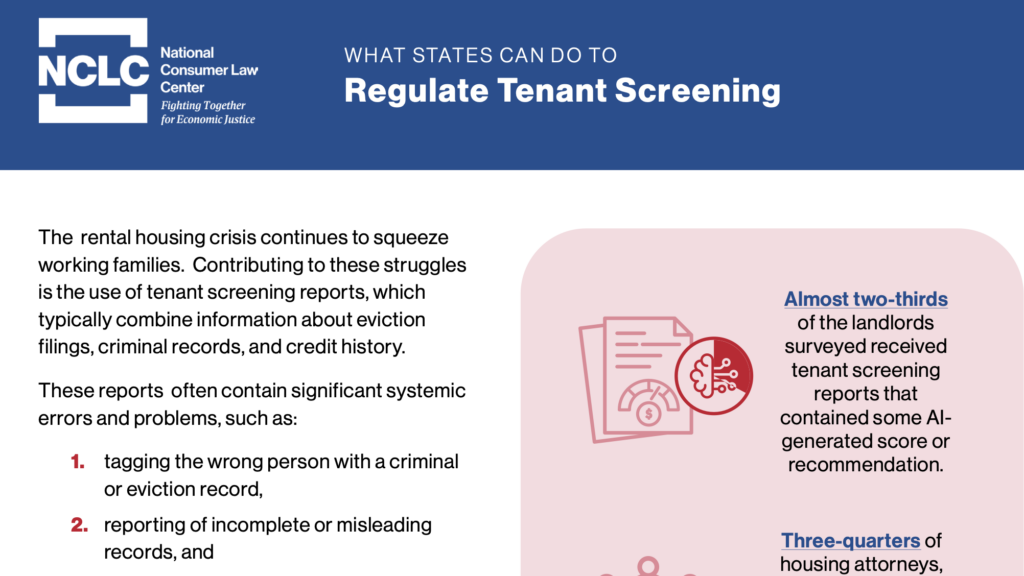
A policy brief outlining concrete actions states can take to regulate tenant screening practices and reduce harm from inaccurate reports, automated scoring, and discriminatory impacts in the rental housing market.
This article examines how Chile’s SUSESO is balancing cost-focused procurement criteria with ethical AI concerns in its medical claims automation process.
This policy brief explores how federal privacy laws like the Privacy Act of 1974 limit demographic data collection, undermining government efforts to conduct equity assessments and address algorithmic bias.
This report examines how governments use AI systems to allocate public resources and provides recommendations to ensure these tools promote equity, transparency, and fairness.
This product validation summary deck explores federal opportunities to automate cross-program enrollment proofs and reduce manual verification burdens.
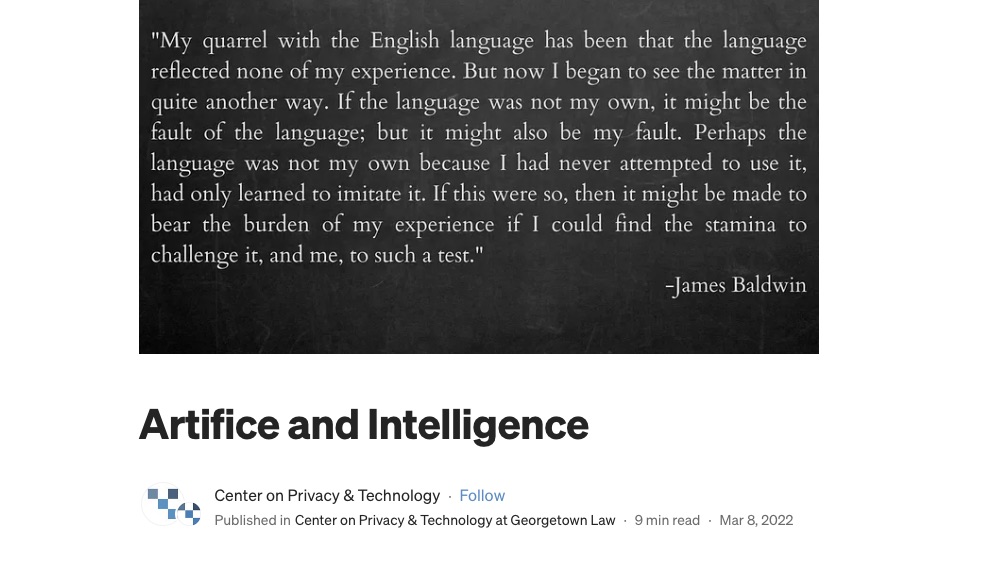
This essay explains why the Center on Privacy & Technology has chosen to stop using terms like "artificial intelligence," "AI," and "machine learning," arguing that such language obscures human accountability and overstates the capabilities of these technologies.
The team conducted experiments to determine whether clients would be responsive to proactive support offered by a chatbot, and identify the ideal timing of the intervention.
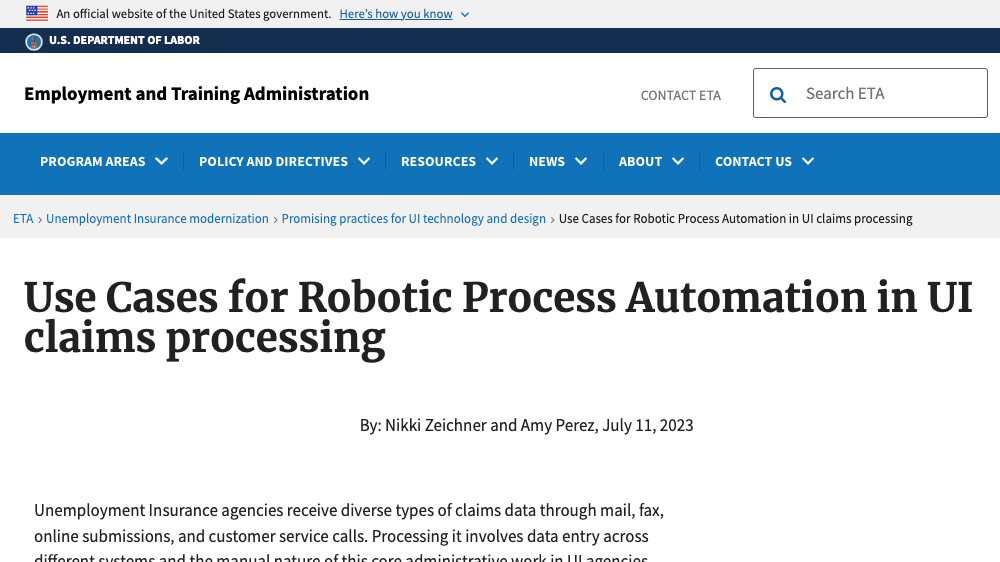
For the past year, modernization teams at the Department of Labor (DOL) have been helping states identify opportunities to automate rote, non-discretionary, manual tasks, with the goal of helping them speed up the time that it takes to process claims. This post provides more context on Robotic Process Automation (RPA) and potential use cases in unemployment insurance.
This publication seeks to answer one of the most common questions that CIOs ask: “What are other states doing with generative AI and what is the role of the state CIO?”
National Association of State Chief Information Officers (NASCIO)
This post introduces EPIC's exploration of actionable recommendations and points of agreement from leading A.I. frameworks, beginning with the National Institute of Standards and Technology's AI Risk Management Framework.