Dana Chisnell describes work leading a team of researchers to interview people from across the US on their experiences applying for unemployment and other benefits during the pandemic.
The report beings by briefly describing the challenge that disabled workers face in accessing UI and the benefits of reforming the system to better serve these workers. The report then presents a list of considerations for UI reform in the areas of administrative process and technology improvements as well as considerations for policy change.
This report explores the Maine Department of Labor’s (MDOL) remarkable response to this layoff through collaboration with the Peer Workforce Navigator project—a coalition of community-based organizations in partnership with the MDOL—which made a huge difference in the lives of these laid off workers. The report also examines aspects of the state’s unemployment insurance (UI) system that might be improved to account for similar situations in the future.
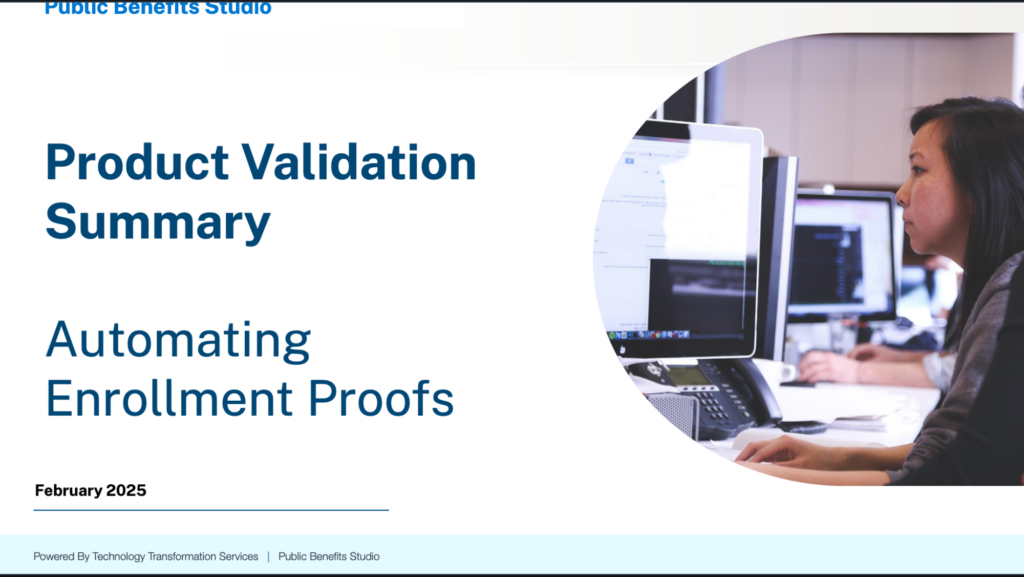
This product validation summary deck explores federal opportunities to automate cross-program enrollment proofs and reduce manual verification burdens.
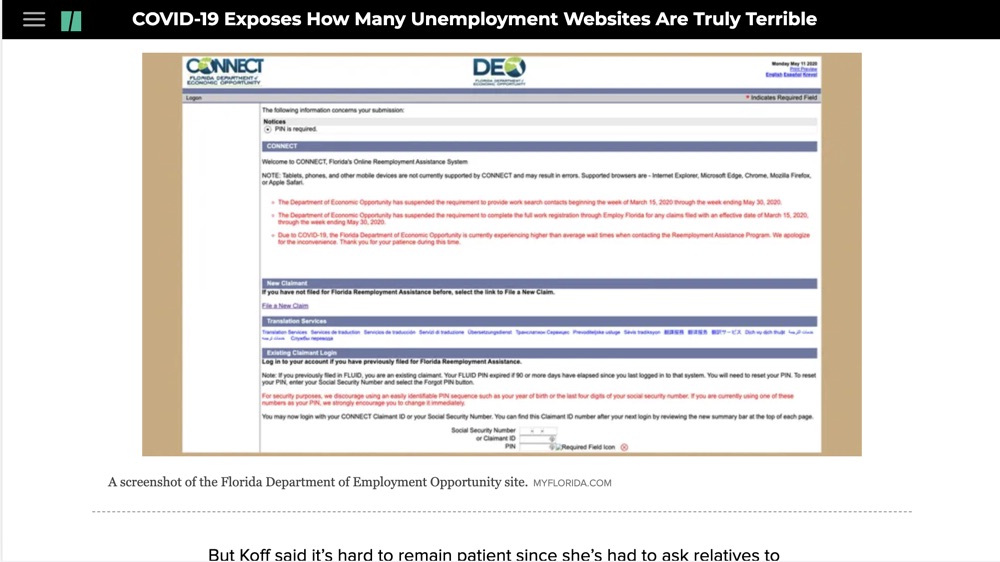
This HuffPost article investigates the widespread failures of state unemployment websites during the COVID-19 pandemic, highlighting outdated technology, accessibility issues, and the human impact of these systemic breakdowns.
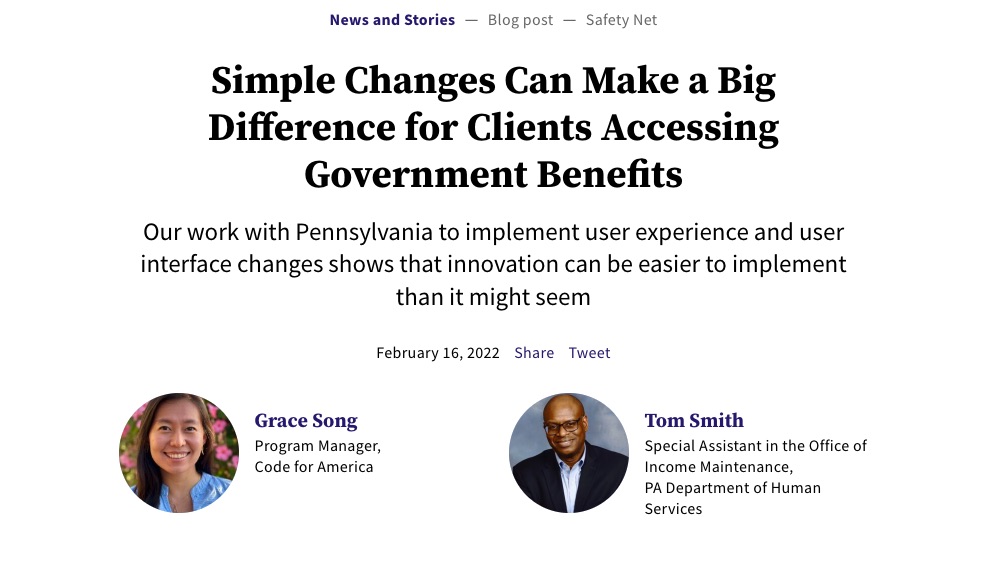
Our work with Pennsylvania to implement user experience and user interface changes shows that innovation can be easier to implement than it might seem.
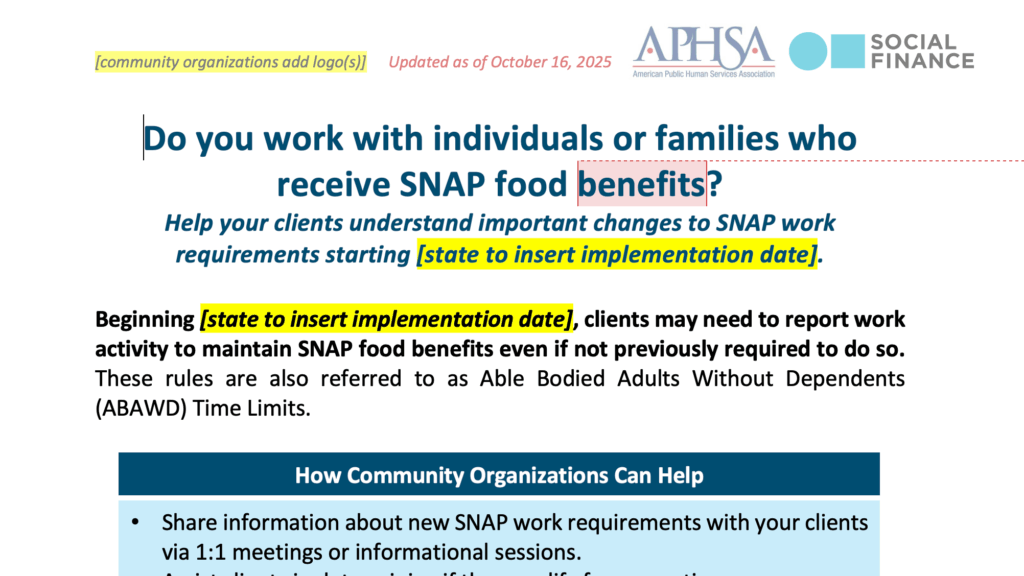
This document is a template for creating a community-based organization (CBO)-facing flyer that explains HR1 work requirements changes and how CBOs can help spread the work and screen SNAP participants and applicants.
American Public Human Services Association (APHSA)
In 2024, the Center on Budget and Policy Priorities and Digital Benefits Network led a workshop to explore key terms related to digital identity, and provide ecosystem-level context on how authentication and identity proofing may show up in the online benefits experience and impact clients. This resource links to the presentation slides.