A recent study challenges the common belief that income support programs like SNAP reduce employment, finding that for individuals with a work history, receiving SNAP benefits can actually increase long-term employment.
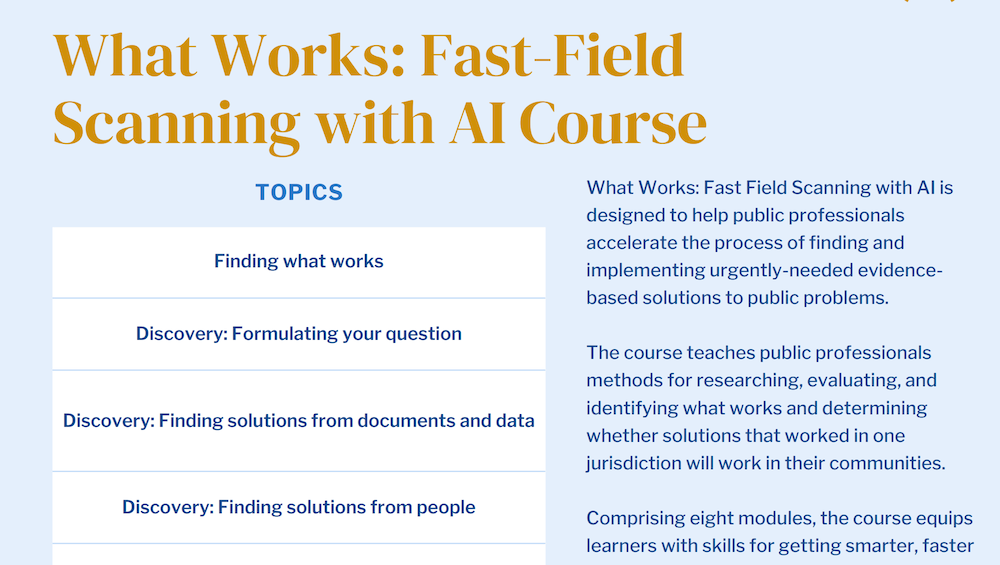
This course is designed to help public professionals accelerate the process of finding and implementing urgently-needed evidence-based solutions to public problems.
This panel discussion from the Academy's 2025 Policy Summit explores the intersection of artificial intelligence (AI) and public benefits, examining how technological advancements are influencing policy decisions and the delivery of social services.
This report outlines best practices for developing transparent, accessible, and standardized public sector AI use case inventories across federal, state, and local governments
In this panel conversation from the Better Identity Coalition’s 2022 policy forum, “Identity, Authentication, and the Road Ahead," representatives from industry and government discuss priorities for authentication and identity management.
In this summary, the authors use WBNS data to provide updated estimates of chilling effects in 2023 among immigrant families (i.e., in which the respondent or a family member living with them was not born in the US).
This is the summary version of a report that documents four experiments exploring if AI can be used to expedite the translation of SNAP and Medicaid policies into software code for implementation in public benefits eligibility and enrollment systems under a Rules as Code approach.
Led by the Digital Benefits Network in partnership with Public Policy Lab, the Digital Doorways research project amplifies the lived experiences of beneficiaries to provides new insights into people’s experiences with digital identity processes and technology in public benefits. This executive summary gives an overview of the project’s findings.
Led by the Digital Benefits Network in partnership with Public Policy Lab, the Digital Doorways research project amplifies the lived experiences of beneficiaries to provide new insights into people’s experiences with digital identity processes and technology in public benefits. This report details the project’s findings, directly highlighting the voices of beneficiaries through videos and photos.