This study describes the potential of human-centered design principles to identify burdens, reducing the effects of what we label as administrative checkpoints.
This report details the development and deployment of My File, an open-source digital document management tool designed to help individuals securely store and share documents needed to access public services.
This blog discusses a resource developed by the Digital Service at the Centers for Medicare & Medicaid Services (CMS) to assist individuals in navigating mental health, drug, or alcohol issues and connecting with appropriate support services.
U.S. Department of Health and Human Services (HHS)
This guide provides practical financing strategies for governments to build, maintain, and expand integrated data systems (IDS) and evaluation capacity using federal and non-federal funding sources.
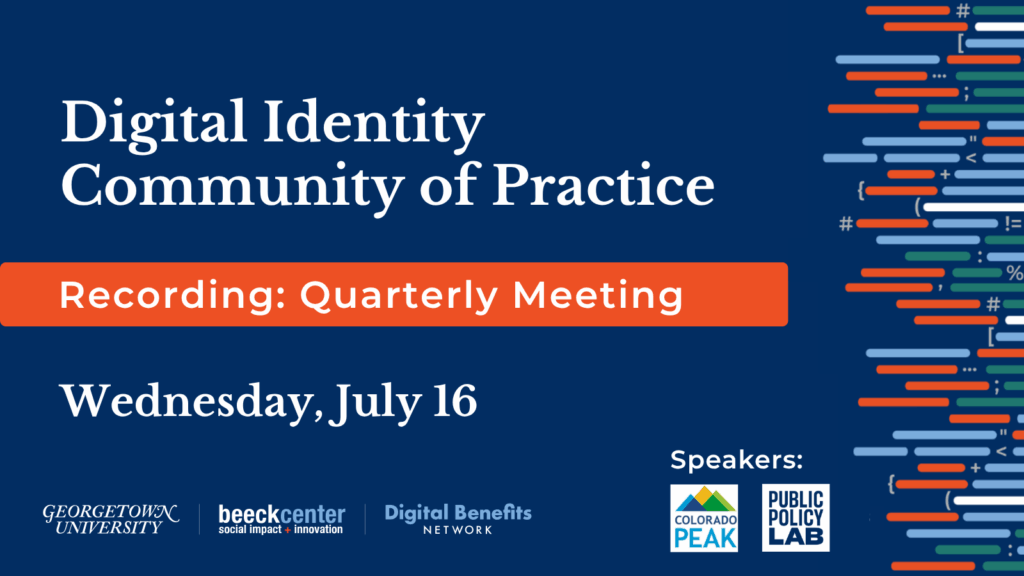
On July 16, members of the Digital Identity Community of practice gathered to learn how peers are gathering beneficiary feedback on their experiences with accounts and proving their identity.
Led by the Digital Benefits Network in partnership with Public Policy Lab, the Digital Doorways research project amplifies the lived experiences of beneficiaries to provide new insights into people’s experiences with digital identity processes and technology in public benefits. This report details the project’s findings, directly highlighting the voices of beneficiaries through videos and photos.
A practical how-to guide explaining how agencies can use a streamlined small-business contracting pathway to quickly procure digital services and pilot modern delivery approaches.