The team explored using LLMs to interpret the Program Operations Manual System (POMS) into plain language logic models and flowcharts as educational resources for SSI and SSDI eligibility, benchmarking LLMs in RAG methods for reliability in answering queries and providing useful instructions to users.
This session from FormFest 2024 focused on improving service delivery by hearing about work in multiple cities to rapidly digitize service delivery and work by the Department of Veteran Affairs around implementing service design principles in form revisions.
The article presents the True Cost of Economic Security (TCES) measure, showing that over half of U.S. families struggle to meet the comprehensive costs required to thrive, highlighting significant disparities based on family type, location, and race.
This article explores how anticipatory logics—drawing from foresight, futures thinking, and design—are shaping the future of government by creating space for innovative policy approaches, public participation, and proactive governance.
This resource provides strategies, practical examples, and templates for attracting, developing, and retaining a high-performing digital service workforce.
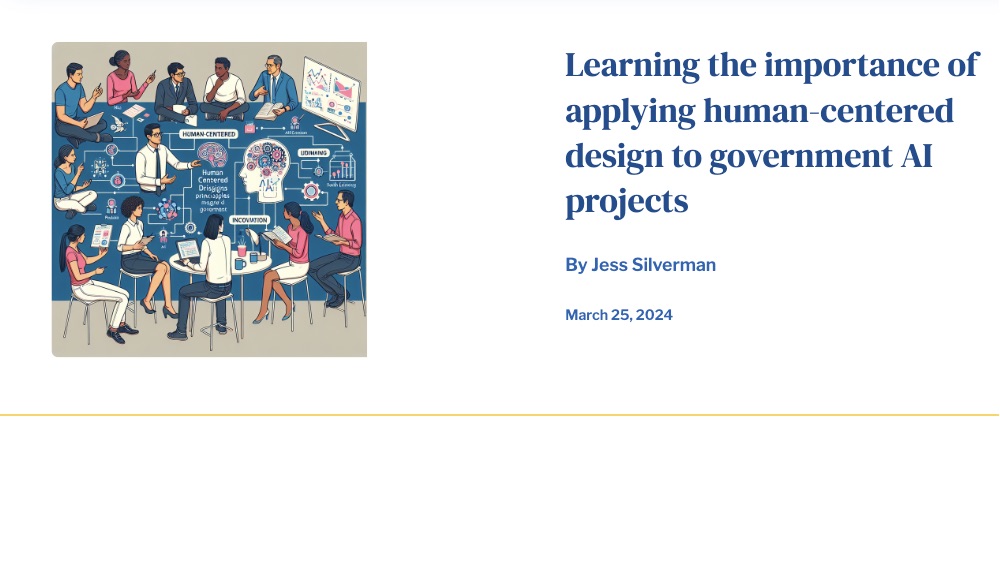
Takeaways from a workshop focusing on applying human-centered design to government artificial intelligence (AI) projects, led by Elham Ali, Researcher from the Beeck Center for Social Impact and Innovation.
This guide provides practical insights for benefits administrators on redesigning benefits systems using human-centered design to ensure all eligible residents can access crucial social safety net resources.
This report explores innovative solutions and insights from CMS Innovation Center's Hackathon series to address the unique healthcare challenges faced by rural, Tribal, and geographically isolated communities.
The "Public Sector AI Playbook" provides public sector officers with practical guidance on adopting and implementing AI technologies to improve government operations, service delivery, and policymaking.
Sheev Davé, Product Manager at Notify.gov (GSA), provides an overview of what makes an effective multilingual translation through the principles of designing tools that have the ability to have conversations, meeting communities where they are, use of plain language and prioritize tricky topics, key life events and using trusted delivery sources.